Faulted for lack of attention to pedestrian and bike advocates, the Oregon Department of Transportation will soon have opportunities to redeem itself.


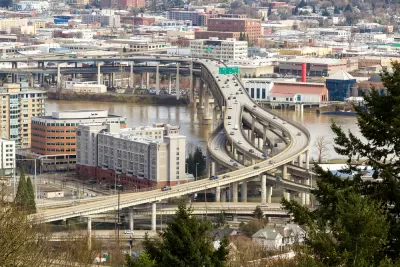
Andrew Theen reports on the findings of a recent audit of Oregon Department of Transportation (ODOT) planning processes for highways over the past three years. The audit, performed by the Oregon Secretary of State's office, faulted ODOT for not doing enough outreach to bike and pedestrian advocates.
The report comes as the state is expecting to enter some of the busiest construction years in decades, buoyed by the 2017 statewide transportation package, which calls for several large-scale projects in the Portland area. Those may include the contentious Rose Quarter freeway project, which is expected to cost more than $715 million, and others on key roads in the Portland area.
The Rose Quarter freeway project lost critical local support earlier this year when the citizen group Albina Vision Trust withdrew support for the plan.
ODOT will also have a chance to improve its focus on safety and engagement if voters approve a $7 billion transportation plan this November, as proposed by the Metro Council, the metropolitan planning organization for the Oregon portion of the Portland area.
Read the full story: Oregon could better reach out to bike, pedestrian groups before construction projects, audit finds


New Details for Portland's Transit Plan as Voters Head to the Polls
Voters in Portland-area voters will decide on a transportation funding measure for the "Get Moving 2020" plan, with details of four bus rapid transit project targeted for funding announced within weeks of the election.
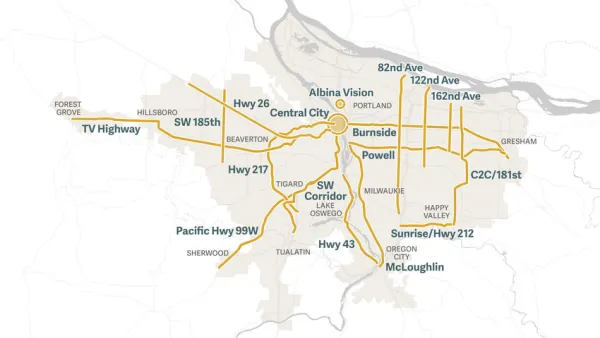
Portland Voters to Consider Largest Ever Transportation Investment in November
The Get Moving 2020 transportation plan will face voters in thee Portland, Oregon region in November.

Downtown Omaha Planning for its Post-One-Way-Streets Era
The Omaha City Council has decided to reverse the transportation model adopted in the city in the 1950s, for the benefit of traffic safety and local retail activity.

Planetizen Federal Action Tracker
A weekly monitor of how Trump’s orders and actions are impacting planners and planning in America.

California plans to bury El Niño’s downpour
If the state plays its cards right, it may be able to store a billion acre-feet of El Niño’s water in aquifers.

Chicago breaks ground on $3 billion megadevelopment
The new neighborhood, titled Foundry Park, will one day host 3,700 residences.

California High-Speed Rail Authority CEO resigns after $600,000 scandal
Under Ian Choudri, the authority used taxpayer dollars to fund first class flights and trips to nightclubs.

Want to study the Missouri River? Soon, you may need unanimous approval from 10 states
Legislation would require 10 governors’ permission to study or build projects moving water outside the basin.

Desperate measures: Advocates weigh draining Lake Powell to fill Colorado River
Draining the reservoir could reduce evaporation losses by a couple hundred thousand acre-feet.

FREE Course: Walkable City 1: Why Walkability?
After describing his path towards focusing on walkability as the essence of good planning, Jeff Speck marches through his five principal reasons for making more walkable places.
Reinventing Malls: Planning Alchemy—Turning Gray Fields Into Gold
The course focuses on the opportunities and imperatives that shape reinvention of mall sites.

City of Rosemead
Rutgers University, Edward J. Bloustein School of Planning and Public Policy
One Hundred Miles
Hunter College, City University of New York (CUNY)
The Architects Foundation
University of Cincinnati Online
City of Cambridge
Montrose County
The Pocatello Development Authority