The car-centric status quo is continuing unabated even as Fairfax County commits to more urban thinking on transportation and land use planning.


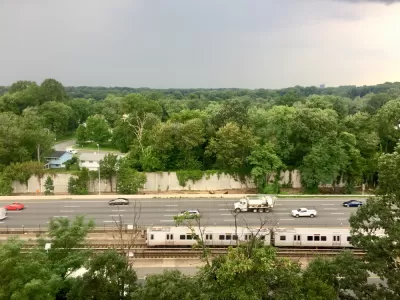
Evan Williams writes that plans in Fairfax County to widen roads could further position the area "as a suburban locale and perpetuate existing traffic safety and environmental problems," despite other recent efforts to urbanize the county.
Fairfax County has made great progress on urbanizing the area. They have begun transforming Tysons into an urban city center; a road diet program is operating to make streets safer for cyclists; and there are two major Bus Rapid Transit (BRT) projects on the books (Route 7 and Richmond Highway).
Williams specifically calls out two road widening plans: 1) plans to widen the southern end of Route 28 from four to six lanes in the Centreville area and 2) an expansion of Fairfax County Parkway from four to six lanes.
The fact that these roads are being widened after a long history of road construction and road widening in Fairfax County is, according to Williams, proof of the unsustainability of car-centric transportation planning.
FULL STORY: Plans to widen roads in Fairfax County threaten the urbanization of Virginia suburbs


$3.1 Billion for California Transportation Infrastructure
Federal and state funds were recently awarded to a large number of road projects around California.
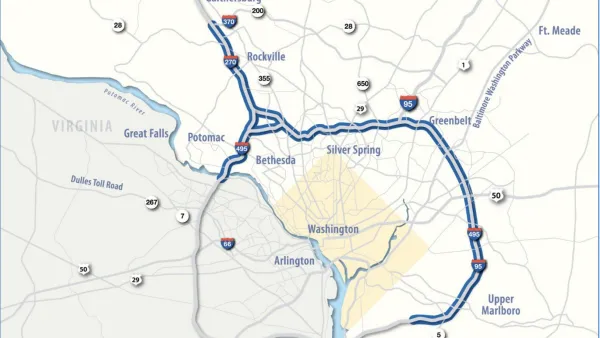
Maryland Highway Widening Plans Moving Forward Under New Governor
Maryland Governor Wes Moore is differentiating his new administration from his predecessor’s, but some projects, like the widening of federal highways in the Capital Beltway, stay the same.
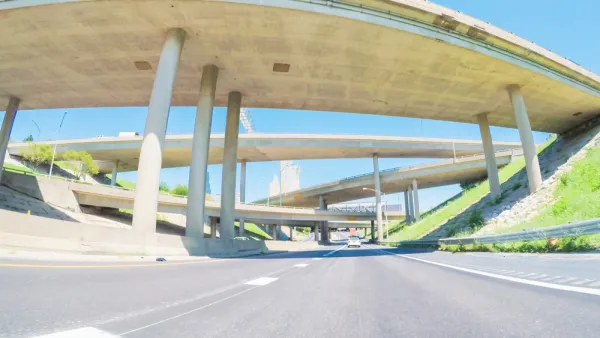
Missouri to Spend $2.8 Billion Widening I-70
Missouri Gov. Mike Parson had a $859 million vision to expand I-70 in key parts of the state. State legislators had an even more ambitious vision.

Planetizen Federal Action Tracker
A weekly monitor of how Trump’s orders and actions are impacting planners and planning in America.

The state-sanctioned urbicide of Austin
People don’t kill cities. Freeways do.

US to reduce Colorado River water deliveries to Mexico
A new Colorado Treaty amendment reduces Mexico’s Colorado River water allocation by 250,000 acre feet.

5 New England states march closer to 800 megawatt wind energy project
Securing federal approval for the project may be complicated under the Trump administration, which has historically been hostile towards domestic wind power.

Baltimore to break ground on $50 million Transit Priority Project
The project will bring faster bus trips, safer streets and better bike connections to Baltimore.

Airbnb launches $250 million 'last-dollar financing' housing accelerator, makes first investment in Austin
The company will put $6.4 million towards affordable housing development in Texas’ capital.

FREE Course: Walkable City 1: Why Walkability?
After describing his path towards focusing on walkability as the essence of good planning, Jeff Speck marches through his five principal reasons for making more walkable places.
Reinventing Malls: Planning Alchemy—Turning Gray Fields Into Gold
The course focuses on the opportunities and imperatives that shape reinvention of mall sites.

Eagle County Government
Harvard University Graduate School of Design
Nashville Planning Department
The Architects Foundation
University of Cincinnati Online
The Pocatello Development Authority
The Urban Renewal Agency of the City of Pocatello
Journal of the American Planning Association