Federal and state funds were recently awarded to a large number of road projects around California.



The California Transportation Commission recently allocated more than $3.1 billion in transportation infrastructure around the Golden State, including $1.8 billion from the federal Infrastructure Investment and Jobs Act (IIJA).
“California has received more than $22 billion since the IIJA’s passage in November 2021,” reports Thomas Gase for the Times-Herald. The majority of Gase’s coverage is devoted to detailing the funding allocated to projects in the North Bay Area. A press release from Caltrans lists the specific project allocations in the Bay Area, organized by county. A separate article published by Random Lengths News provides specifics for a few projects in Southern California. None of the projects listed on includes any projects devoted to public transit or active transportation projects. Still, Caltrans touts the investments as devoted to making the state’s transportation systems “safer, more sustainable and more reliable.”
The recent allocation also includes $200 million in funding from SB 1, the Road Repair and Accountability Act of 2017. “SB 1 provides $5 billion in transportation funding annually that is shared equally between the state and local agencies,” according to the Caltrans press release.
More information about the state’s investments of SB 1 and IIJA funding can be found at the Rebuilding California website.

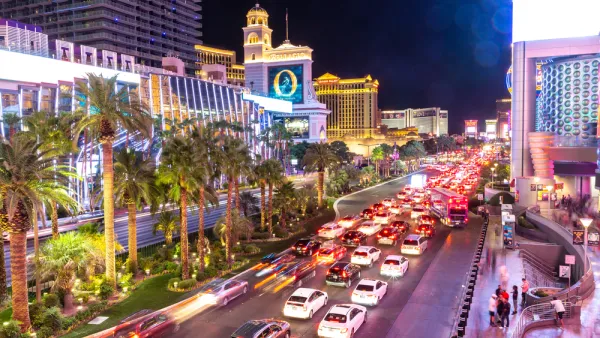
Infrastructure Bill’s Emission Reductions Allotments Fund Highway Projects Instead
The Infrastructure Investment and Jobs Act of 2021 promised to achieve major progress on emissions reductions and climate resilience. A total of 38 states used the bill to fund emissions- and pollution-producing car-centric infrastructure instead.
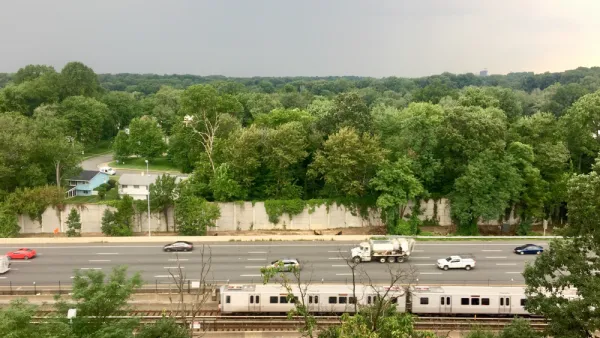
Road Widening Plans Criticized in Fairfax County Virginia
The car-centric status quo is continuing unabated even as Fairfax County commits to more urban thinking on transportation and land use planning.
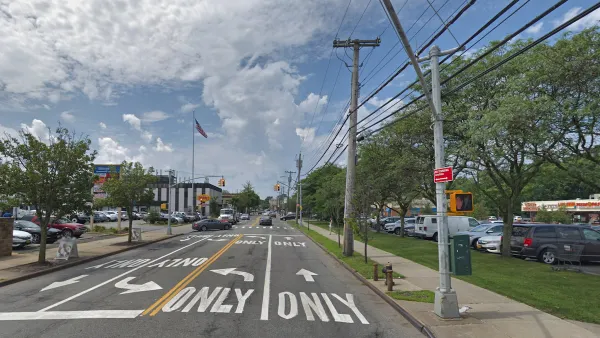
Staten Island Road Widening Project Moves Forward
New York’s Department of Transportation plans to double the width of a Staten Island street to accommodate more vehicular traffic.

Planetizen Federal Action Tracker
A weekly monitor of how Trump’s orders and actions are impacting planners and planning in America.

The state-sanctioned urbicide of Austin
People don’t kill cities. Freeways do.

US to reduce Colorado River water deliveries to Mexico
A new Colorado Treaty amendment reduces Mexico’s Colorado River water allocation by 250,000 acre feet.

5 New England states march closer to 800 megawatt wind energy project
Securing federal approval for the project may be complicated under the Trump administration, which has historically been hostile towards domestic wind power.

Baltimore to break ground on $50 million Transit Priority Project
The project will bring faster bus trips, safer streets and better bike connections to Baltimore.

Airbnb launches $250 million 'last-dollar financing' housing accelerator, makes first investment in Austin
The company will put $6.4 million towards affordable housing development in Texas’ capital.

FREE Course: Walkable City 1: Why Walkability?
After describing his path towards focusing on walkability as the essence of good planning, Jeff Speck marches through his five principal reasons for making more walkable places.
Reinventing Malls: Planning Alchemy—Turning Gray Fields Into Gold
The course focuses on the opportunities and imperatives that shape reinvention of mall sites.

Eagle County Government
Harvard University Graduate School of Design
Nashville Planning Department
The Architects Foundation
University of Cincinnati Online
The Pocatello Development Authority
The Urban Renewal Agency of the City of Pocatello
Journal of the American Planning Association