The National Association of City Transportation Officials (NACTO) is providing guidance for cities struggling to reckon with the sudden evolution of transportation modes in urban areas.


Jason Plautz reports on updated guidelines [pdf] from the National Association of City Transportation Officials (NACTO) to help local governments manage shared micromobility fleets, like electric scooters and bikes.
"To more nimbly regulate the industry and meet transportation goals, the guide recommends flexible permitting structures, including incentive-based performance clauses around issues like shifting trips or increasing options for underserved communities," according to Plautz.
That's probably the easy part of the report's recommendations, however, as the report also calls for the redesign of city streets to better accommodate the safety of shared micromobility users.
FULL STORY: After rise of scooters, NACTO updates micromobility guidance

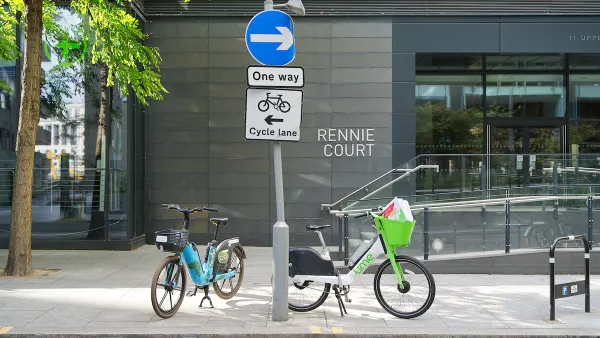
Dockless Bikes Seized as City of London Cracks Down on Parking
Lime and Forest paid £25,000 in fines to retrieve their property and are negotiating solutions with transportation authorities.
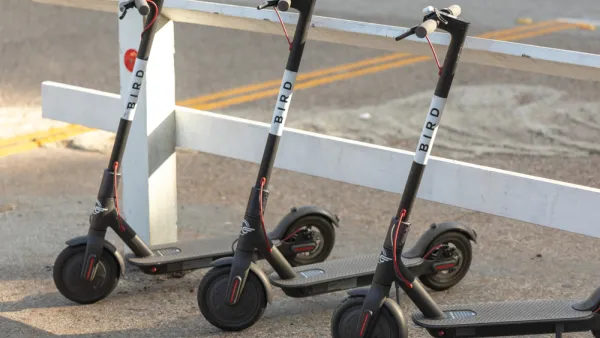
Scooter-Share Company Tosses Financial Reports
Bird was counting money in customers’ digital “wallets” as revenue, and has admitted that financial statements from 2020 and 2021 “should no longer be relied upon.”
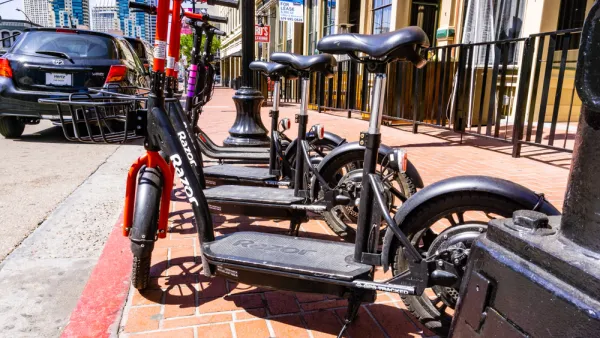
A Local's Guide to Micromobility
Local governments struggling to keep up with the fast-paced innovations of the micromobility industry can make use of a new report from the National league of Cities.

The state-sanctioned urbicide of Austin
People don’t kill cities. Freeways do.

US to reduce Colorado River water deliveries to Mexico
A new Colorado Treaty amendment reduces Mexico’s Colorado River water allocation by 250,000 acre feet.

New Jersey’s second-largest city bans standalone data centers
Jersey City will continue to allow co-location facilities, such as those meant for research institutions that store their own data.

Amtrak not solely to blame for New Jersey commuter rail's unreliability, report finds
A new study from the Garden State Initiative found that NJ Transit’s budget grew 20% across a 4 year period, but reliability declined significantly over the same period.

EPA erases limits on planet-warming pollution from power plants
Under Monday’s plan, power plants would still have some limits on how much mercury, arsenic and other contaminants they can emit.

Phoenix announces new on-demand transit service, more frequent RAPID buses
Both new services will launch in October, and are part of Phoenix's Project Effective Access Solutions for Easing Congestion.

FREE Course: Walkable City 1: Why Walkability?
After describing his path towards focusing on walkability as the essence of good planning, Jeff Speck marches through his five principal reasons for making more walkable places.
Reinventing Malls: Planning Alchemy—Turning Gray Fields Into Gold
The course focuses on the opportunities and imperatives that shape reinvention of mall sites.

Eagle County Government
Harvard University Graduate School of Design
Nashville Planning Department
The Architects Foundation
University of Cincinnati Online
The Pocatello Development Authority
The Urban Renewal Agency of the City of Pocatello
Journal of the American Planning Association