Local governments struggling to keep up with the fast-paced innovations of the micromobility industry can make use of a new report from the National league of Cities.


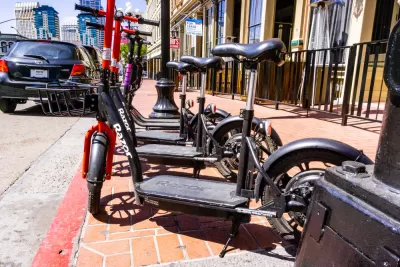
The National League of Cities recently released a guide to micromobility, called "Micromobility in Cities: A History and Policy Overview."
"The guide goes over micromobility challenges and factors that cities should take into consideration such as public space overcrowding and users strewing dockless devices in public spaces," according to an article by Katie Pyzyk that shares the news about the new report. "It also provides seven recommendations, including focusing on equity, developing a plan and agreement for trip data and learning from other cities' experiences."
Collaboration is a common theme in the report according to Pyzyk. The report does not recommend private micromobility companies continue launching operations without working with local authorities first.
The new report from NLC marks a trend of national organization releasing information on the subject of scooters, bike share, and dockless bike share. The National Association of City Transportation Officials also released a report detailing ridership figures for micromobility devices.

NACTO Releases Updated Guidelines for Shared Micromobility
The National Association of City Transportation Officials (NACTO) is providing guidance for cities struggling to reckon with the sudden evolution of transportation modes in urban areas.
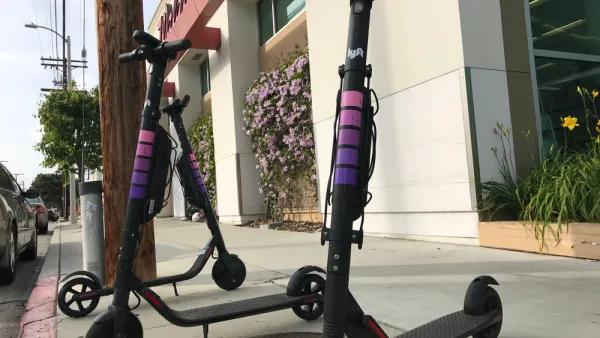
Lyft Pulls Micromobility From Los Angeles Area
The company will no longer provide shared bikes and scooters in the L.A. region, citing a ‘lack of longterm commitment’ from cities.
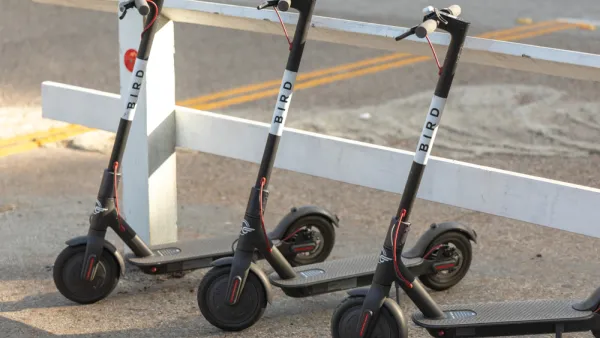
Scooter-Share Company Tosses Financial Reports
Bird was counting money in customers’ digital “wallets” as revenue, and has admitted that financial statements from 2020 and 2021 “should no longer be relied upon.”

Planetizen Federal Action Tracker
A weekly monitor of how Trump’s orders and actions are impacting planners and planning in America.

California plans to bury El Niño’s downpour
If the state plays its cards right, it may be able to store a billion acre-feet of El Niño’s water in aquifers.

Desperate measures: Advocates weigh draining Lake Powell to fill Colorado River
Draining the reservoir could reduce evaporation losses by a couple hundred thousand acre-feet.

NYC bus network redesign speeds up Queens buses
Rush routes have seen a 4.6% speed increase after the redesign.

California High-Speed Rail Authority picks trainset manufacturer
The California High-Speed Rail Authority aims to start servicing passengers by 2033.

LA may place emergency ban on karaoke room permits
If Councilwoman Heather Hutt’s proposal passes, the moratorium would last between 45 days and one year.

FREE Course: Walkable City 1: Why Walkability?
After describing his path towards focusing on walkability as the essence of good planning, Jeff Speck marches through his five principal reasons for making more walkable places.
Reinventing Malls: Planning Alchemy—Turning Gray Fields Into Gold
The course focuses on the opportunities and imperatives that shape reinvention of mall sites.

City of Rosemead
Rutgers University, Edward J. Bloustein School of Planning and Public Policy
One Hundred Miles
Hunter College, City University of New York (CUNY)
The Architects Foundation
University of Cincinnati Online
City of Cambridge
Montrose County
The Pocatello Development Authority