Environmentalists worry that the latest action by the Trump administration on the environment will set a dangerous precedent that is difficult to overturn with a more conservative Supreme Court.


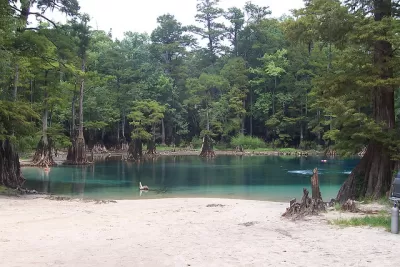
"The Trump administration on Thursday announced the repeal of a major Obama-era clean water regulation that had placed limits on polluting chemicals that could be used near streams, wetlands and other bodies of water," report Lisa Friedman and Coral Davenport.
Add it to the list: Trump administration has spent the first three years of its time in office undoing multiple of Obama era environmental regulations, like rules for methane, fracking, coal-fired power plants, automobile emissions, lead ammunition, and more, despite a ongoing legal resistance led by states like California.
As a consequence of the Trump administration's adjustments to the clean water rule, "polluters will no longer need a permit to discharge potentially harmful substances into many streams and wetlands." As noted by Friedman and Davenport, the consequences of the new rule reach further: "critics fear could be difficult for future administrations to undo because the ideological balance of the Supreme Court has shifted to the right."
FULL STORY: Trump Administration Rolls Back Clean Water Protections

Trump Finally Comes for the 'Waters of the United States' Rule
The Trump administration is finally delivering on a promise to rescind the Waters of the United States act enacted during the Obama administration to expand the reach of the federal Clean Water Act.
Manchin’s Permitting Bill, Supreme Court Case Could Dramatically Alter the Clean Water Act
The future of the Clean Water Act could look much different after fossil fuel interests and the Supreme Court done with it.
Judge Tosses Trump Administration's Rollback of 'Waters of the United States' Protections
The Trump administration's Navigable Waters Protection Rule was sloppy, and it would have done "serious environmental harm," according to a recent court ruling.

Planetizen Federal Action Tracker
A weekly monitor of how Trump’s orders and actions are impacting planners and planning in America.

The state-sanctioned urbicide of Austin
People don’t kill cities. Freeways do.

US to reduce Colorado River water deliveries to Mexico
A new Colorado Treaty amendment reduces Mexico’s Colorado River water allocation by 250,000 acre feet.

Mamdani overhauls NYC's Vision Zero plan with 100 new policy goals
The overhaul aims to reduce traffic deaths and make streets safer for pedestrians, cyclists and drivers through lower speed limits, new safety infrastructure and more.

Amtrak not solely to blame for New Jersey commuter rail's unreliability, report finds
A new study from the Garden State Initiative found that NJ Transit’s budget grew 20% across a 4 year period, but reliability declined significantly over the same period.

EPA erases limits on planet-warming pollution from power plants
Under Monday’s plan, power plants would still have some limits on how much mercury, arsenic and other contaminants they can emit.

FREE Course: Walkable City 1: Why Walkability?
After describing his path towards focusing on walkability as the essence of good planning, Jeff Speck marches through his five principal reasons for making more walkable places.
Reinventing Malls: Planning Alchemy—Turning Gray Fields Into Gold
The course focuses on the opportunities and imperatives that shape reinvention of mall sites.

Eagle County Government
Harvard University Graduate School of Design
Nashville Planning Department
The Architects Foundation
University of Cincinnati Online
The Pocatello Development Authority
The Urban Renewal Agency of the City of Pocatello
Journal of the American Planning Association