California is pushing back against federal actions by enforcing state rules and standards that it says have precedence.


The Trump administration is working to curtail environmental regulations, but California officials are taking steps to counter the rollbacks. "Armed with some of the strongest environmental laws in the nation, California has been a leader in the Trump resistance," writes Bettina Boxall.
For example, the state is arguing that a proposal to raise the Shasta Dam in Northern California would affect protected areas and violate state regulations, says Boxall:
California authorities say the Shasta plan is clearly subject to a section of the 1902 Reclamation Act that requires federal irrigation projects in the West to comply with state laws that relate "to the control, appropriation, use, or distribution of water used in irrigation." Exceptions can be made only if Congress directly exempts a project from that mandate.
The administration is also taking aim at wetlands protections through changes to the Clean Water Act. But the state water board is considering stricter regulations that would supersede federal rules.
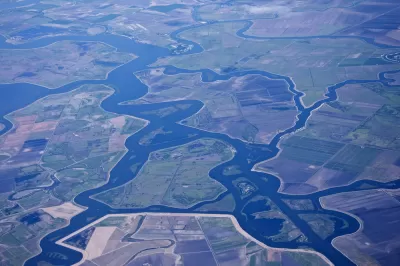
Another target of the federal government is protection of endangered fish in the Sacramento-San Joaquin Delta. Easing these restrictions would allow more water from the delta to go to irrigation. However, notes Boxall, the state can uphold regulations related to salinity levels and water volume that would then protect fish habitats.
FULL STORY: How California is defying Trump’s environmental rollbacks

The Trump Administration's Trail of Broken Environmental Regulations
Critics of the Trump administration who chide the president for a lack of accomplishments should check the environmental record.
Report Quantifies the Effects of Trump's Environmental Policy Changes
With the signs of climate change all around, the effects of the Trump administration's environmental regulation rollbacks look increasingly dire.
Federal Judge Liberates the Obama Era Clean Water Rule
The Trump administration cannot legally delay the Waters of the U.S. (WOTUS) rule, according to a ruling by a federal judge this week.

Planetizen Federal Action Tracker
A weekly monitor of how Trump’s orders and actions are impacting planners and planning in America.

The state-sanctioned urbicide of Austin
People don’t kill cities. Freeways do.

US to reduce Colorado River water deliveries to Mexico
A new Colorado Treaty amendment reduces Mexico’s Colorado River water allocation by 250,000 acre feet.

5 New England states march closer to 800 megawatt wind energy project
Securing federal approval for the project may be complicated under the Trump administration, which has historically been hostile towards domestic wind power.

Baltimore to break ground on $50 million Transit Priority Project
The project will bring faster bus trips, safer streets and better bike connections to Baltimore.

Airbnb launches $250 million 'last-dollar financing' housing accelerator, makes first investment in Austin
The company will put $6.4 million towards affordable housing development in Texas’ capital.

FREE Course: Walkable City 1: Why Walkability?
After describing his path towards focusing on walkability as the essence of good planning, Jeff Speck marches through his five principal reasons for making more walkable places.
Reinventing Malls: Planning Alchemy—Turning Gray Fields Into Gold
The course focuses on the opportunities and imperatives that shape reinvention of mall sites.

Eagle County Government
Harvard University Graduate School of Design
Nashville Planning Department
The Architects Foundation
University of Cincinnati Online
The Pocatello Development Authority
The Urban Renewal Agency of the City of Pocatello
Journal of the American Planning Association