An initial environmental assessment for a project to widen I-5 in Portland claimed the project would improve air quality, congestion, and traffic safety. Critics of the project weren't convinced.


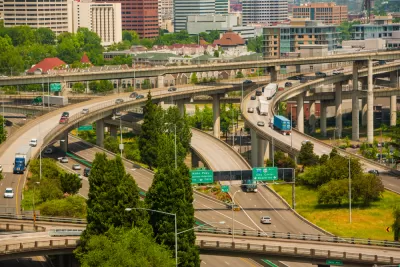
Nigel Jaquiss reports from Oregon, where the controversy over an environmental assessment of a proposed widening of Interstate 5 through the Rose Quarter of Portland is continuing to draw attention.
The latest news details the current status of the environmental assessment as the Oregon Department of Transportation and the Federal Highway Administration consider whether to decide a "finding of no significant impact" of to order a full environmental impact study.
"Critics of the proposed $450 million-dollar expansion of Interstate 5 through the Rose Quarter are convinced state transportation officials are prepared to conduct a full-blown environmental impact study for the project," according to Jaquiss.
Jaquiss lists organization opposing the projects, like Albina Vision and Portland Public Schools, which have voiced opposition to eh project at recent public hearings.
Jonathan Maus followed up on the scoop by Jaquiss by also reporting sources that indicate a full environmental impact statement is imminent.
The I-5 Rose Quarter Improvement Project, as the project is called, gained national attention earlier this year when the initial environmental assessment promised benefits, like improved air quality, reduced congestion, and better traffic safety outcomes, that counter the majority of research about the outcomes of freeway expansion.
Read the full story: Critics of ODOT’s I-5 Rose Quarter Project Believe The Agency Will Conduct A Full Environmental Impact Statement
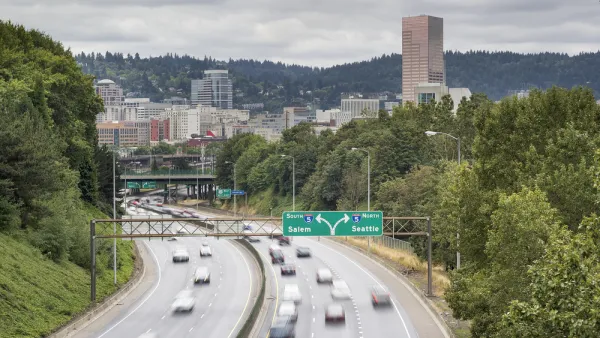
Feds Toss the Environmental Assessment for Portland Controversial Freeway Widening Project
It's back to the drawing board for the I-5 Rose Quarter Improvement Project.
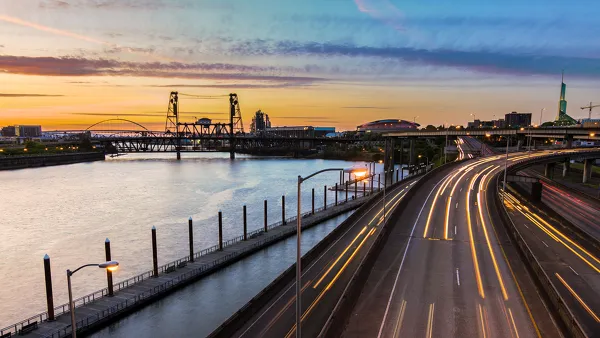
Plan to Widen I-5 in Portland Loses Critical Local Support
The I-5 Rose Quarter project has proven controversial throughout the study and planning process, and now it's losing key local political support.
Environmental Assessment for I-5 Improvement Project in Portland Promises Air, Traffic, Safety Benefits
The environmental assessment for the I-5 Rose Quarter Improvement Project, released on February 15, 2019, promises to be controversial.

Planetizen Federal Action Tracker
A weekly monitor of how Trump’s orders and actions are impacting planners and planning in America.

California plans to bury El Niño’s downpour
If the state plays its cards right, it may be able to store a billion acre-feet of El Niño’s water in aquifers.

Desperate measures: Advocates weigh draining Lake Powell to fill Colorado River
Draining the reservoir could reduce evaporation losses by a couple hundred thousand acre-feet.

In Texas, data centers are swallowing promised parkland
Residents who moved to Taylor, Texas for a rural community now have to contend with three data centers in their backyard.

How a Chicago-sized wind farm beat the odds and powered on
The project spanned five presidential administrations and a standoff with a U.S. military base.

MTA gives itself 30 days to transform pit into basketball court
The site has been under construction since 2022; the city originally estimated it would finish the court in 2024.

FREE Course: Walkable City 1: Why Walkability?
After describing his path towards focusing on walkability as the essence of good planning, Jeff Speck marches through his five principal reasons for making more walkable places.
Reinventing Malls: Planning Alchemy—Turning Gray Fields Into Gold
The course focuses on the opportunities and imperatives that shape reinvention of mall sites.

City of Rosemead
Rutgers University, Edward J. Bloustein School of Planning and Public Policy
One Hundred Miles
Hunter College, City University of New York (CUNY)
The Architects Foundation
University of Cincinnati Online
City of Cambridge
Montrose County
The Pocatello Development Authority