Five cities will help the National Association of City Transportation Officials (NACTO) prove that urban streets can provide the location for a drastic shift in the carbon emissions status quo.


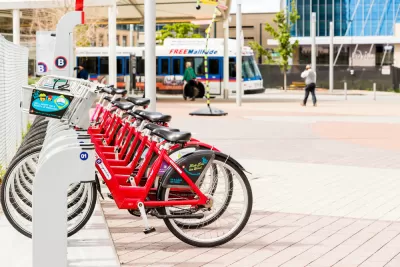
"The National Association of City Transportation Officials (NACTO), today announced a partnership with five cities—Atlanta, Boston, Denver, Minneapolis, and Philadelphia—to accelerate the implementation of high-quality bike and transit corridors by the end of 2020," according to a press release by NACTO.
"This work, part of the American Cities Climate Challenge, will help the cities meet, or beat, their near-term carbon reduction goals," by "tackling climate change from the street up."
"The partnerships will build on NACTO’s Accelerator model, which helps cities vision, refine, and build internal consensus for bike and transit projects, and gives them the design training necessary to realize their transportation goals."
Michael R. Bloomberg, UN Special Envoy for Climate Action and former mayor of New York City, is quoted in the press release noting the need for local governments to step up in lieu of the federal government's "complete failure to act on climate change."

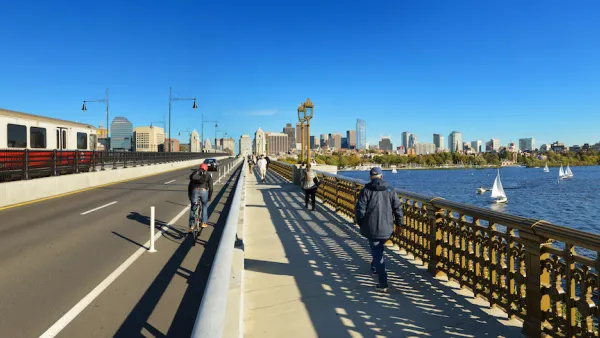
Progress Report: Boston Strong on Street Safety, Slow to Reduce Emissions
A new report assesses the city’s progress halfway through implementation of the ‘Go Boston 2030’ long-range transportation plan.
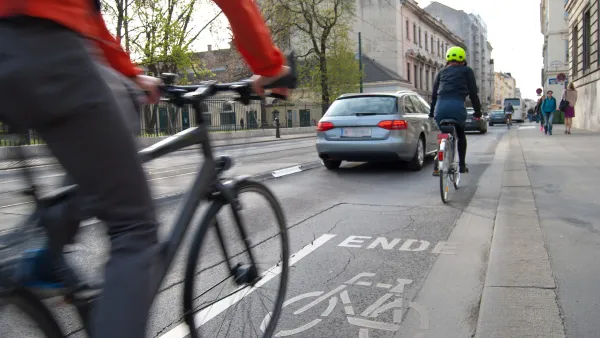
Biking's Billion-Dollar Value, Right Under Our Wheels
A strategic switch to biking would dramatically reduce the depth of roads, saving untold billions over the next generation.
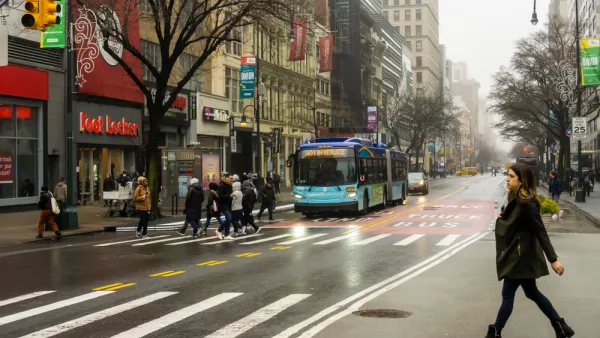
Survey Says New Yorker Want More Protected Bike and Bus Lanes, Less Parking
A new survey reveals broad support for a less car-centric approach to capital investment in the city of New York.

Planetizen Federal Action Tracker
A weekly monitor of how Trump’s orders and actions are impacting planners and planning in America.

The state-sanctioned urbicide of Austin
People don’t kill cities. Freeways do.

US to reduce Colorado River water deliveries to Mexico
A new Colorado Treaty amendment reduces Mexico’s Colorado River water allocation by 250,000 acre feet.

5 New England states march closer to 800 megawatt wind energy project
Securing federal approval for the project may be complicated under the Trump administration, which has historically been hostile towards domestic wind power.

Baltimore to break ground on $50 million Transit Priority Project
The project will bring faster bus trips, safer streets and better bike connections to Baltimore.

Airbnb launches $250 million 'last-dollar financing' housing accelerator, makes first investment in Austin
The company will put $6.4 million towards affordable housing development in Texas’ capital.

FREE Course: Walkable City 1: Why Walkability?
After describing his path towards focusing on walkability as the essence of good planning, Jeff Speck marches through his five principal reasons for making more walkable places.
Reinventing Malls: Planning Alchemy—Turning Gray Fields Into Gold
The course focuses on the opportunities and imperatives that shape reinvention of mall sites.

Eagle County Government
Harvard University Graduate School of Design
Nashville Planning Department
The Architects Foundation
University of Cincinnati Online
The Pocatello Development Authority
The Urban Renewal Agency of the City of Pocatello
Journal of the American Planning Association