The St. Paul Planning Commission will consider 32 proposed amendments to the Master Plan for a massive development project located at the former site of a Ford assembly plant.


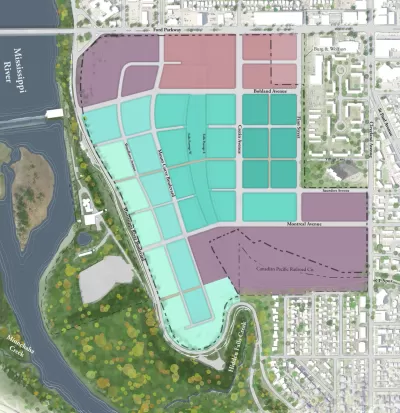
The developer of massive planned development at the former Ford site in Highland Park, St. Paul is seeking 32 amendments to a Master Plan approved in 2017.
"The 122-acre property is expected to be home to 3,800 proposed housing units, civic space, office and retail buildings," report Frederick Melo.
Minneapolis-based Ryan Cos., chosen as the master developer last summer, has proposed some controversial changes to the Master Plan.
According to Melo, instead of the multiple-unit homes of two to six dwellings per structure on Mississippi River Boulevard as proposed by the Master Plan, Ryan officials "have asked to be allowed to construct 35 single-family homes, with the intent of creating a more 'diverse blend of housing types and affordability levels.'"
"Public feedback has been mixed, with some neighborhood residents praising the idea and others calling it an about-face on Ryan’s commitment to housing density and affordability," according to Melo.
For more background on the land use and urban design ambitions of the planned development, see another article by Melo from October 2018.
FULL STORY: St. Paul planning commission to consider amendments to Ryan Cos. plans for Ford site

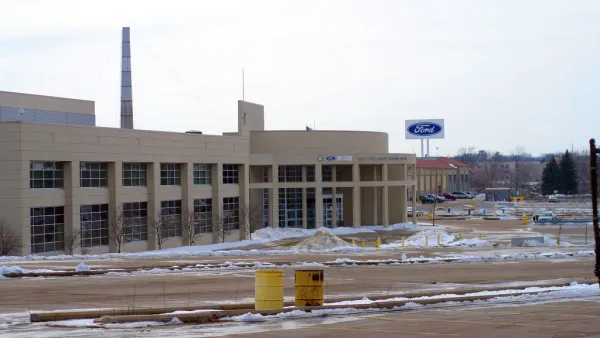
Controversial Green Neighborhood to Rise on Former Auto Plant Site
Plans for a sizable eco-friendly development on the site of St. Paul's Twin Cities Assembly Plant have drawn support from many, including the city's young mayor. But density opponents remain unconvinced.
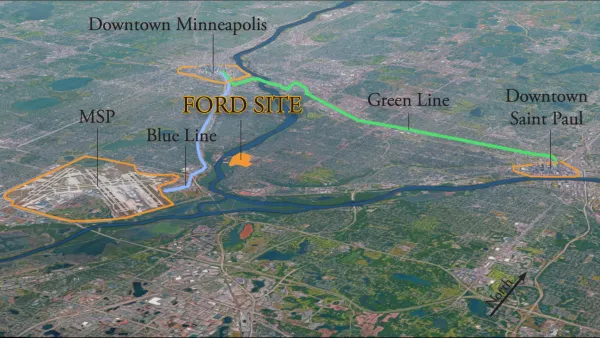
Former Ford Plant in St. Paul Taking Shape as a Massive Mixed-Use Development
A long-awaited plan for the former Ford plant along the Mississippi River is now open for public comment.

Looking Back on 60 Years of Land Development in the Twin Cities
In 1960, about 12 percent of the Twin Cities metro's land was already developed. By 2020, about 34 percent had been developed. Many factors influenced how the region has changed since 1960.

The state-sanctioned urbicide of Austin
People don’t kill cities. Freeways do.

US to reduce Colorado River water deliveries to Mexico
A new Colorado Treaty amendment reduces Mexico’s Colorado River water allocation by 250,000 acre feet.

New Jersey’s second-largest city bans standalone data centers
Jersey City will continue to allow co-location facilities, such as those meant for research institutions that store their own data.

Amtrak not solely to blame for New Jersey commuter rail's unreliability, report finds
A new study from the Garden State Initiative found that NJ Transit’s budget grew 20% across a 4 year period, but reliability declined significantly over the same period.

EPA erases limits on planet-warming pollution from power plants
Under Monday’s plan, power plants would still have some limits on how much mercury, arsenic and other contaminants they can emit.

Phoenix announces new on-demand transit service, more frequent RAPID buses
Both new services will launch in October, and are part of Phoenix's Project Effective Access Solutions for Easing Congestion.

FREE Course: Walkable City 1: Why Walkability?
After describing his path towards focusing on walkability as the essence of good planning, Jeff Speck marches through his five principal reasons for making more walkable places.
Reinventing Malls: Planning Alchemy—Turning Gray Fields Into Gold
The course focuses on the opportunities and imperatives that shape reinvention of mall sites.

Eagle County Government
Harvard University Graduate School of Design
Nashville Planning Department
The Architects Foundation
University of Cincinnati Online
The Pocatello Development Authority
The Urban Renewal Agency of the City of Pocatello
Journal of the American Planning Association