Local and state leadership finally agreed on a plan to fix the city of New York's struggling transit system.


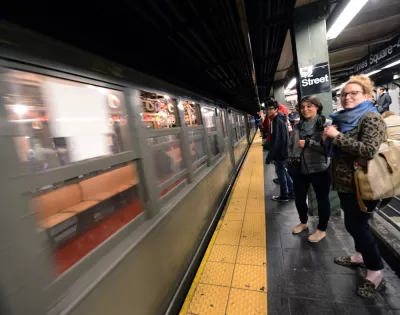
"New York City Mayor Bill de Blasio agreed to support Governor Andrew Cuomo’s push for congestion pricing in midtown Manhattan as part of a sweeping overhaul of the cash-strapped Metropolitan Transportation Authority, which manages the subway and bus system," reports Henry Goldman.
"Under the plan, to be instituted by 2020, electronic-tolling devices would be installed around Manhattan’s central business core south of 61st Street. It would take into account motorists who already paid bridge and tunnel tolls, and exclude the FDR Drive running north and south along the east side. Tolls would be variable, providing discounts for off-peak travel, and will also exempt emergency vehicles and transportation of disabled passengers," according to Goldman.
The agreement marks the potentially game changing conclusion of a long-standing feud between Governor Cuomo and Mayor de Blasio, centering in large part on the struggling MTA.
A statement released by Governor Cuomo to announce the agreement calls the deal a 10-point plan to "transform and fund" the MTA.
Amy Plitt provides additional new coverage to put the day's announcement in context of previous plans to fix the MTA and the political realities of congestion pricing.

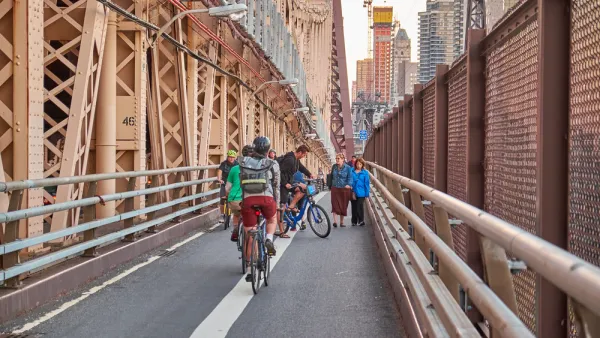
Op-Ed: Congestion Pricing Offers New York a 'Promising Path Forwards'
New York State Budget Director Robert Mujica penned a Sunday op-ed for the Daily News on the benefits of congestion pricing. On Tuesday, Gov. Cuomo broke the news on WNYC that he and Mayor de Blasio agreed on tolling the central business district.
New York MTA Upholds Pause on Congestion Pricing, Scales Back Projects
The agency will not be able to go forward with former plans to improve station facilities and transit safety, and expand service.
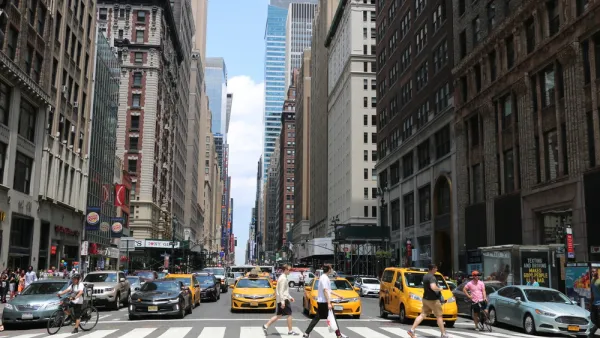
Breaking News: New York State Ready to Embrace Congestion Pricing, Finally
The New York State Legislature is preparing to reverse over a decade of reluctance regarding congestion pricing, according to reports from Albany.

The state-sanctioned urbicide of Austin
People don’t kill cities. Freeways do.

US to reduce Colorado River water deliveries to Mexico
A new Colorado Treaty amendment reduces Mexico’s Colorado River water allocation by 250,000 acre feet.

New Jersey’s second-largest city bans standalone data centers
Jersey City will continue to allow co-location facilities, such as those meant for research institutions that store their own data.

Amtrak not solely to blame for New Jersey commuter rail's unreliability, report finds
A new study from the Garden State Initiative found that NJ Transit’s budget grew 20% across a 4 year period, but reliability declined significantly over the same period.

EPA erases limits on planet-warming pollution from power plants
Under Monday’s plan, power plants would still have some limits on how much mercury, arsenic and other contaminants they can emit.

Phoenix announces new on-demand transit service, more frequent RAPID buses
Both new services will launch in October, and are part of Phoenix's Project Effective Access Solutions for Easing Congestion.

FREE Course: Walkable City 1: Why Walkability?
After describing his path towards focusing on walkability as the essence of good planning, Jeff Speck marches through his five principal reasons for making more walkable places.
Reinventing Malls: Planning Alchemy—Turning Gray Fields Into Gold
The course focuses on the opportunities and imperatives that shape reinvention of mall sites.

Eagle County Government
Harvard University Graduate School of Design
Nashville Planning Department
The Architects Foundation
University of Cincinnati Online
The Pocatello Development Authority
The Urban Renewal Agency of the City of Pocatello
Journal of the American Planning Association