The Hoosier State is on a roll, infrastructure speaking. Having passed its largest highway investment package last year based on a 10-cents per gallon gas tax hike, it initiated a study to determine the revenue potential for tolling interstates.


Like so many landmark state transportation funding bills, House Bill 1002, which was signed by Gov. Eric J. Holcomb (R) on April 27, 2017, uses a diversified approach to raising infrastructure revenue by relying on new and increased user fees. While the 10-cents gas tax increase, which took effect July 1, 2017, raises most of the $1.2 billion in new revenue, the bill also added two new annual registration fees of $50 and $150 for hybrid and electric vehicles, respectively, that pay less, if any, fuel taxes to maintain roads.
Five more taxes and fees are listed as bullets in the April 28, 2017 post on the bill's passage. One just took effect on July 1: a one-cent gas tax hike resulting from indexing fuel tax rates annually until July 1, 2024.
Another potential revenue measure took a major step last month when "the Indiana Department of Transportation (INDOT) signed a $9.6 million contract with infrastructure consultancy firm HNTB to study how much revenue the state could raise by charging tolls on interstate highways," reports Linnea Lueken for The Heartland Institute. a free-market think tank, on July 10. "The company is expected to deliver its findings to INDOT by November 2."
No commitment to tolling the interstates
According to Kaitlin Lange, statehouse reporter for the IndyStar, under HB 1002, "Holcomb is permitted to draft a strategic plan 'if the governor determines that tolling is the best means of achieving major interstate system improvements in Indiana.'"
"[The governor] wanted more information to make an informed decision and will use the strategic plan due Dec. 1 as a basis for that," said spokeswoman Stephanie Wilson. "If after reviewing the plan the governor determines that tolling is not the best option, the state won’t move forward with the remainder of the contract."
Lange describes the controversial aspects of tolling, with legislators expressing opposition to the tolling of interstates in their districts. She indicates that the Indianapolis area would likely be the best candidate to adopt tolling, which could be as early as 2021 according to HNTB's initial proposal.
Federal Highway Administration (FHWA) waiver required
Last October, Planetizen asked, "Will Indiana be the first state to add tolls to its interstate highways?" Since then, Oregon has stepped into the competition, and like Indiana, credit goes to a forward-thinking transportation funding bill, House Bill 2017. In both cases, the state departments of transportation must apply for waivers from FHWA to toll all the lanes of the interstate highways.
A major difference between the two programs, though, is that INDOT is looking to toll the interstates to recoup revenue to maintain them in an era of dwindling federal gas tax revenue. In the Portland area, the Oregon Department of Transportation sees value pricing as a means to manage traffic congestion and fund driving alternatives.
FULL STORY: Indiana Begins Studying Tolling On Interstate Highways

Tolling the Interstates: Will Indiana be the First?
Indiana is on track to be the first state to apply new tolls on all lanes of selected interstate highways if they are successful in their application for a waiver from the Federal Highway Administration.
High Cost of Maintenance Prompts Wyoming Legislators to Consider Tolling I-80
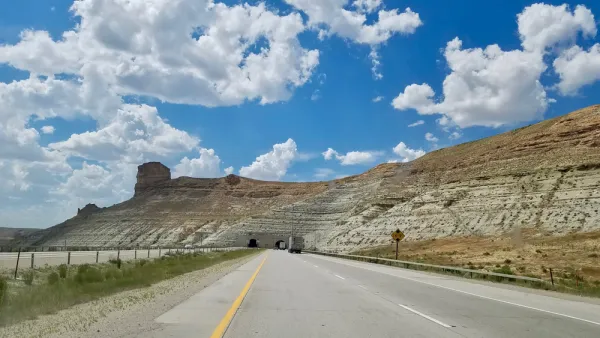
Over the objections of the oil and trucking industries, an interim committee voted to allow the Wyoming legislature to determine whether to toll all lanes on Interstate 80 due to a shortfall in the state transportation budget.
Nation's First Truck-Only Toll Program Off to Auspicious Start
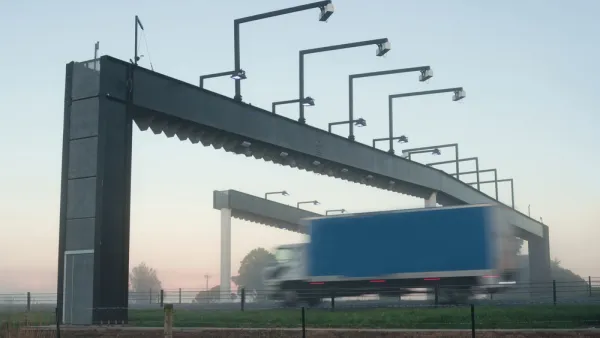
After the Rhode Island General Assembly passed controversial legislation in February 2016 spearheaded by Gov. Gina Raimondo (D), the first two of what will be 13 truck-only toll gantries became operational on June 11. Results are looking good.

The state-sanctioned urbicide of Austin
People don’t kill cities. Freeways do.

US to reduce Colorado River water deliveries to Mexico
A new Colorado Treaty amendment reduces Mexico’s Colorado River water allocation by 250,000 acre feet.

New Jersey’s second-largest city bans standalone data centers
Jersey City will continue to allow co-location facilities, such as those meant for research institutions that store their own data.

Amtrak not solely to blame for New Jersey commuter rail's unreliability, report finds
A new study from the Garden State Initiative found that NJ Transit’s budget grew 20% across a 4 year period, but reliability declined significantly over the same period.

EPA erases limits on planet-warming pollution from power plants
Under Monday’s plan, power plants would still have some limits on how much mercury, arsenic and other contaminants they can emit.

Phoenix announces new on-demand transit service, more frequent RAPID buses
Both new services will launch in October, and are part of Phoenix's Project Effective Access Solutions for Easing Congestion.

FREE Course: Walkable City 1: Why Walkability?
After describing his path towards focusing on walkability as the essence of good planning, Jeff Speck marches through his five principal reasons for making more walkable places.
Reinventing Malls: Planning Alchemy—Turning Gray Fields Into Gold
The course focuses on the opportunities and imperatives that shape reinvention of mall sites.

Eagle County Government
Harvard University Graduate School of Design
Nashville Planning Department
The Architects Foundation
University of Cincinnati Online
The Pocatello Development Authority
The Urban Renewal Agency of the City of Pocatello
Journal of the American Planning Association