Detailed reports on mode share, in real time and over time, are available with Replica.



Nick Bowden shares news of a "next generation urban planning tool" from Sidewalk Labs. Replica, as the new tool is called, is a "user-friendly modeling tool that uses anonymized mobile location data to give planning agencies a comprehensive portrait of how, when, and why people travel in urban areas."
"Replica provides a full set of baseline travel measures that are very difficult to gather and maintain today, including the total number of people on a highway or local street network, what mode they’re using (car, transit, bike, or foot), and their trip purpose (commuting to work, going shopping, heading to school, etc)," adds Bowden.
After explaining more about how Replica works, Bowden provides a case study from Main Street in Kansas City. There we see that Replica reports the number and percentage of trips in each mode (i.e., private auto, public transit, walking, biking, on demand auto, and other) and the changes in mode over time.
Sidewalk Labs wants Replica to eventually gain the capability of modeling the effects of service changes and interventions. Currently Replica is under development for deployment in support of Sidewalk Toronto.
Read the full story: Introducing Replica, a next-generation urban planning tool

The Four Design Teams Shortlisted for Quayside Redevelopment
After Alphabet-owned Sidewalk Labs dropped the project, Toronto is evaluating other proposals for redeveloping their waterfront.
Tech and the Post-Pandemic City
To steer American cities into the future, public and private sectors—and citizens—must work together to build broad, lasting support around complicated issues such as transparency and data privacy.
After Sidewalk Labs, a New Plan Emerges for Toronto's Waterfront
Just shy of a year after Sidewalk Labs pulled the plug on its "smart city" experiment for Quayside, Waterfront Toronto has a released a request for qualifications to move forward with a new, "people-centered" vision for the waterfront.

Amtrak, CN end decades-long dispute with eight-year agreement
The new operating agreement establishes an updated framework for the companies to work together, including processes to resolve disputes.

Judges permit Denver to divert 77,000 acre feet from the Colorado River for reservoir expansion
Overuse and climate change have caused the Colorado River’s water levels to plummet.
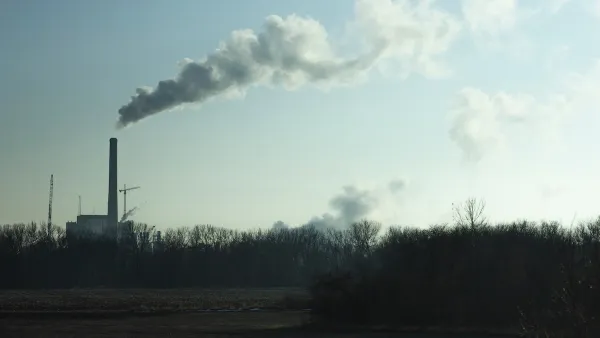
Nation's most wind-powered state turns to coal as data centers increase energy demand
For the first time in decades, Iowa has increased its generation of coal power.

Boston has spent millions making the Green Line more accessible — and there’s no end in sight
While the city has invested millions into expanding and adding platforms to the Green Line to make it more accessible, new train cars set to arrive next year will be too tall for disabled passengers to board without raising the current platforms.

Idaho may see an 18% drop in federal surface transit funding — the largest estimated cut in the US
Transit systems in rural communities are much more reliant on federal funding to provide their services.

How ‘post-disaster gentrification’ alters neighborhoods after natural calamities
After hurricanes, fires or other calamities, the original residents of a community are often replaced by younger, wealthier residents.

FREE Course: Walkable City 1: Why Walkability?
After describing his path towards focusing on walkability as the essence of good planning, Jeff Speck marches through his five principal reasons for making more walkable places.
Reinventing Malls: Planning Alchemy—Turning Gray Fields Into Gold
The course focuses on the opportunities and imperatives that shape reinvention of mall sites.


City of Wisconsin Rapids
Harvard University Graduate School of Design
KFH Group Inc.
The Architects Foundation
University of Cincinnati Online
The Pocatello Development Authority
The Urban Renewal Agency of the City of Pocatello