Though cities hope for an economic boost, these photos show it's far from guaranteed.


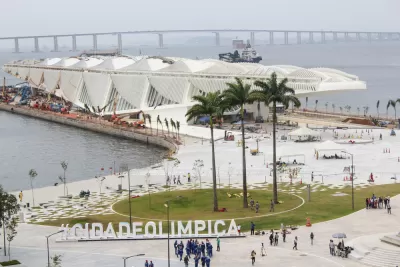
There is a vigorous competition between cities that hope to host the Olympic games, in part because the inevitable building boom and influx of visitors are expected to boost the economy.
But Business Insider has compiled a set of photos from cities that have hosted in the past, and they call into question whether or not the event is, in the long term, a sound investment.
For example, the expensive gondola that was supposed to bring critical infrastructure to the favelas of Rio de Janiero ceased operations last year, and many of the venues built in Athens have been either abandoned or destroyed.
There are, of course, non-economic reasons to hold the Olympics. Even though much of the infrastructure is, at best, underused, the 2008 games in Beijing served "as a barely disguised metaphor for this nation’s rise to worldwide importance."
And the current games in Pyeongchang are both welcomed by the city, and serving a larger political purpose.
But as Boston's self-withdrawal from consideration as host of the 2024 games implies, some cities are starting to question if the massive effort required to host the Olympics is worth the massive amount of capital required.
Read the full story: What abandoned Olympic venues from around the world look like today
For Host Cities, Olympic Legacies Are Mixed
The two-week competition is often touted as a galvanizing force for urban development. But that's only cities include the Games' legacy in their planning process from the start.
London's Big Stadium Gamble
The Olympics can be awesome for cities. Or they can be devastating. Rarely they're both, and most often they are an economic drain caused by over-investment in facilities with limited long-term usability. So when London's plans for a 2012 Summer Olympics stadium that would reduce from 80,000 seats during the games to a more realistically usable 25,000 seats after, Olympics experts, city officials and taxpayers rejoiced. But recent news has turned that rejoice to disgust.
Can Madrid's Bid for a Thrifty Olympics Succeed?
As the start of London's summer games grows near, the competition to host the 2020 Olympics is heating up. Paul Sonne looks at whether the "shoestring" bid of Madrid, formed amidst Spain's austerity drive, can beat out the other finalists.

Desperate measures: Advocates weigh draining Lake Powell to fill Colorado River
Draining the reservoir could reduce evaporation losses by a couple hundred thousand acre-feet.

Eastern Nebraska is running out of electricity
Data centers and electrification are straining eastern Nebraska’s grid, throttling economic development.

Move over, LA: St. Louis gears up for Olympics, invests millions in downtown redevelopment
The Missouri city will host the 2028 Olympic soccer group stage and knockout matches.

San Diego’s Midway Rising project gets greenlight from city council
The project looks to become the largest affordable housing development in California's history.

Bill to overhaul energy permitting clears Senate
The Bipartisan American Affordability and Jobs Act of 2026 still needs to pass the House of Representatives.

MTA sends Dem leaders a wish list to mend Trump’s damages
Requests include exempting new train and bus components from tariffs and increasing transit security funding.

FREE Course: Walkable City 1: Why Walkability?
After describing his path towards focusing on walkability as the essence of good planning, Jeff Speck marches through his five principal reasons for making more walkable places.
Reinventing Malls: Planning Alchemy—Turning Gray Fields Into Gold
The course focuses on the opportunities and imperatives that shape reinvention of mall sites.

City of Rosemead
Rutgers University, Edward J. Bloustein School of Planning and Public Policy
One Hundred Miles
University of Michigan School for Environment and Sustainability (SEAS)
Hunter College, City University of New York (CUNY)
The Architects Foundation
City of Cambridge
The Pocatello Development Authority
The Urban Renewal Agency of the City of Pocatello