The sky gondola system built prior to the Rio Olympics has ground to a halt, leaving residents of the city's favelas with little to show for such a grand investment in infrastructure.


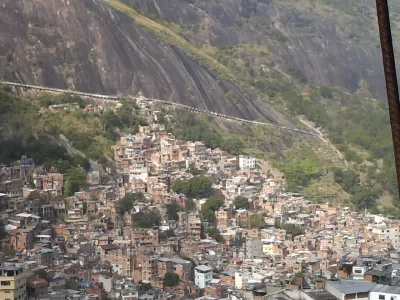
The multi-million dollar sky gondola system built as part of the massive investment in new infrastructure for the 2016 Rio de Janeiro Olympic games has stopped operating. The project was originally seen as a boon to the favelas which it travelled over, bringing tourists and investment into the city's poorest communities. Clare Richardson reports in DW.comthat the gondolas fell victim to Brazil's continuing financial troubles.
Many had hoped the Olympic Games would serve as an impetus for Rio to narrow the vast divide between Brazil's ultra-rich and poor by providing informal communities with badly-needed infrastructure. Yet instead of instating or upgrading such services in Complexo do Alemao, Rio removed more than 2,000 residents from their homes to make way for the cable car's construction. [Local activist Thaina de Medeiros] says its route bypasses many major residential areas, suggesting the project was never truly intended to serve the community.
The closure of the gondola system is another blow to the favelas, which have seen an uptick in crime that has helped drive away tourists.
Read the full story: Rio hits the brakes on controversial favela cable car


Amtrak, CN end decades-long dispute with eight-year agreement
The new operating agreement establishes an updated framework for the companies to work together, including processes to resolve disputes.

Northwest rail fans eager for Sept. 30 debut of Amtrak’s Airo fleet
Get ready for that new train smell and more seats. But they won’t go faster or run more frequently on the Cascades route in Washington and Oregon.

Judges permit Denver to divert 77,000 acre feet from the Colorado River for reservoir expansion
Overuse and climate change have caused the Colorado River’s water levels to plummet.

NYC to turn city-owned property into thousands of homes
The city has scheduled a public hearing regarding the development for October.

Buses travel at 5mph along this route in NYC. The Bronx's first-ever busway looks to change that
Prior to the busway, buses on the Bx36 route traveled as slowly as 5 miles per hour.

Pittsburg launches 'EZ permits,' aims for one-day turnaround for low-risk permits
The pilot ‘fast lane’ for permits is part of a bundle of modernization efforts for Pittsburg’s permitting process.

FREE Course: Walkable City 1: Why Walkability?
After describing his path towards focusing on walkability as the essence of good planning, Jeff Speck marches through his five principal reasons for making more walkable places.
Reinventing Malls: Planning Alchemy—Turning Gray Fields Into Gold
The course focuses on the opportunities and imperatives that shape reinvention of mall sites.

City of Thousand Oaks
City of Wisconsin Rapids
Harvard University Graduate School of Design
The Architects Foundation
University of Cincinnati Online
The Pocatello Development Authority
The Urban Renewal Agency of the City of Pocatello