This op-ed from Al Jazeera looks at some of the negative ways preparations for the World Cup and Olympics are affecting the poor in Brazil.


The two major sporting events will happen in Brazil in 2014 and 2016, and some argue that preparations have a disproportionately negative impact on the poor.
"In the 21st century, these sporting events require more than stadiums and hotels. The host country must provide a massive security apparatus, a willingness to crush civil liberties, and the will to create the kind of "infrastructure" these games demand. That means not just stadiums, but sparkling new stadiums. That means not just security, but the latest in anti-terrorist technology. That means not just new transportation to and from venues, but hiding unsightly poverty from those travelling to and from the games. That means a willingness to spend billions of dollars in the name of creating a playground for international tourism and multi-national sponsors.
Every day in the favelas, the slums that surround Brazil's major cities, these international athletic festivals are vividly recalling the ways of The Brick. Amnesty International, the United Nations, and even the International Olympic Committee - fearful of the damage to their "brand", are raising concerns. It's understandable why."
Read the full story: Brazil's disappearing favelas
An Olympic Ghost Town in Rio de Janeiro
Preparations for the World Cup and Olympics are displacing hundreds of families in Rio de Janeiro. One neighborhood next to a major stadium has been turned into a ghost town.
Stadium Renovation Prices out Brazil's Poor from its Most Revered Public Space
As Brazil prepares to host the 2014 World Cup and 2016 Olympics, renovations to the Maracana, an infamous soccer stadium in Rio de Janeiro, are pricing out the city's poor. Some say the work is killing one of the city's few egalitarian public places.
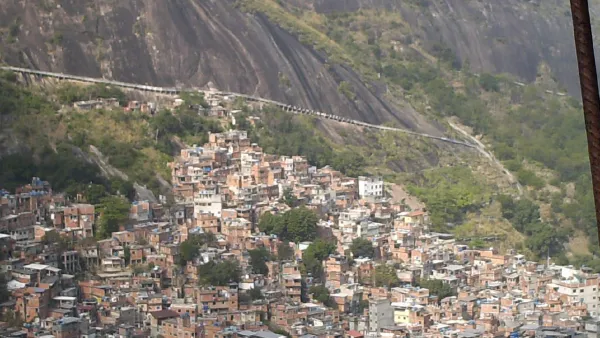
Rio's Pricey Sky Gondola Goes Full Stop
The sky gondola system built prior to the Rio Olympics has ground to a halt, leaving residents of the city's favelas with little to show for such a grand investment in infrastructure.

Planetizen Federal Action Tracker
A weekly monitor of how Trump’s orders and actions are impacting planners and planning in America.

California plans to bury El Niño’s downpour
If the state plays its cards right, it may be able to store a billion acre-feet of El Niño’s water in aquifers.

Desperate measures: Advocates weigh draining Lake Powell to fill Colorado River
Draining the reservoir could reduce evaporation losses by a couple hundred thousand acre-feet.

Chicago voters approve permanent festival grounds, penalty for vacant property owners
Currently, major summer and fall festivals take over public parks for weeks at a time, drawing criticism from nearby residents

NYC votes to cut outdoor dining red tape, speed up permitting
New York City also voted to allow the Department of Transportation to begin work on urgent projects before notifying elected officials.

California appears to reject Prop. 45
The proposition would have expanded the projects that qualify for a streamlined environmental review, effectively paring down the California Environmental Quality Act.

FREE Course: Walkable City 1: Why Walkability?
After describing his path towards focusing on walkability as the essence of good planning, Jeff Speck marches through his five principal reasons for making more walkable places.
Reinventing Malls: Planning Alchemy—Turning Gray Fields Into Gold
The course focuses on the opportunities and imperatives that shape reinvention of mall sites.

City of Rosemead
Rutgers University, Edward J. Bloustein School of Planning and Public Policy
One Hundred Miles
Hunter College, City University of New York (CUNY)
The Architects Foundation
University of Cincinnati Online
City of Cambridge
Montrose County
The Pocatello Development Authority