In Oakland, California and Torreon, New Mexico, Julian Brave NoiseCat reports that "[f]or Indigenous people, the crisis of the home is intergenerational."


At High Country News, Julian Brave NoiseCat profiles the struggle of many members of the same extended family to find and keep somewhere to live in two very different places; Native Americans, he writes, are "this continent's first victims of gentrification."
The piece begins in Oakland with Joseph Waukazoo, who has no place to live, and as an "urban Indian" belongs to "a demographic that has no place in the public imagination." It ends in Torreon, New Mexico, where his ex-wife, his son and their extended family survive in a very different landscape that nonetheless has some of the basic flaws.
"The housing crisis is one of the most-discussed global political, economic and social problems of our time. Yet people like the Waukazoos rarely feature in any of its narratives. The politicians, pundits and professors focused on the urban housing crisis overlook or omit urban Indians. Meanwhile, housing problems on reservations are equally out of the frame. In an era of inequality, the Waukazoos—struggling for visibility, dignity and basic housing security—represent some of the most forgotten of our nation’s forgotten people."
The "death spiral" of rising demand for housing in the Bay Area and the homelessness on rural reservations are both well-documented, but NoiseCat ties them together.
"For Indigenous people, the crisis of the home is intergenerational. This is what scholars, policymakers and even activists too often misunderstand about the housing crisis: Today’s problems do not represent momentary inequities. They are structural constants, deeply rooted in the system. They cut into Indigenous families over generations, not just economic and political cycles."
FULL STORY: A tale of two housing crises, rural and urban

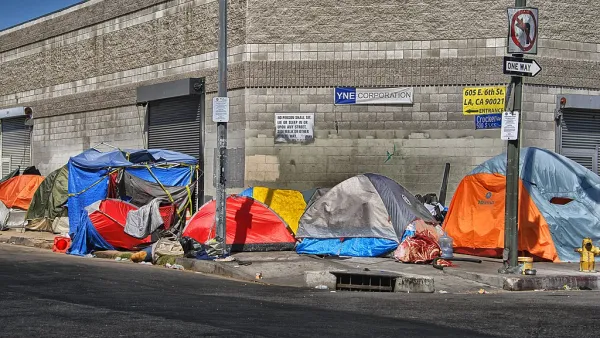
Homelessness Fuels a Backlash in California
The Golden State's ongoing homelessness crisis has residents on edge and is testing the limits of empathy in a state known for its liberal values.
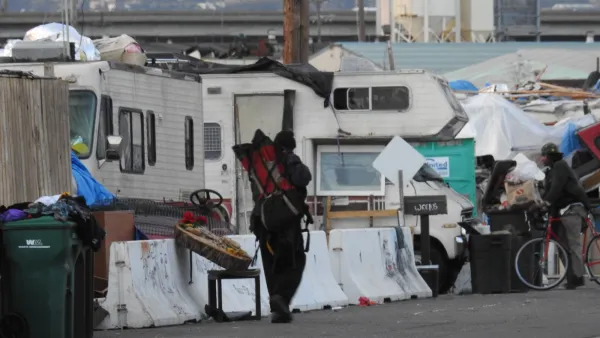
Oakland Mayor, City Council Offer ‘Radically Different’ Plans for Reducing Homelessness
Mayor Barbara Lee wants to reduce encampment sweeps and focus on improving sanitation while city council members want to increase enforcement, particularly against illegally parked RVs.
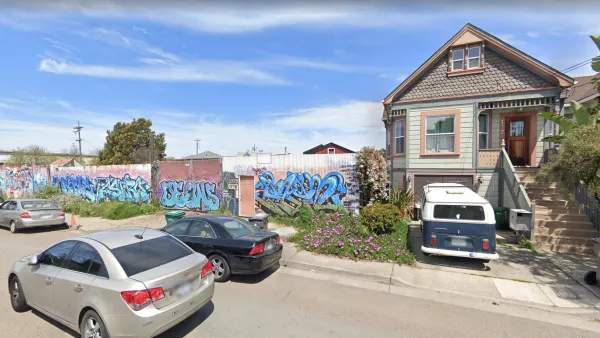
Unpermitted RV Park Faces Code Enforcement Pressure in Oakland
A controversy over the unpermitted use of RVs for shelter on an otherwise empty lot in West Oakland reveals a confluence of Bay Area housing crises.

Planetizen Federal Action Tracker
A weekly monitor of how Trump’s orders and actions are impacting planners and planning in America.

The state-sanctioned urbicide of Austin
People don’t kill cities. Freeways do.

US to reduce Colorado River water deliveries to Mexico
A new Colorado Treaty amendment reduces Mexico’s Colorado River water allocation by 250,000 acre feet.

Guerilla urbanists are building DIY bus stop benches in Chicago
A before-and-after of one of the bus stops with a new bench. The new benches are not officially sanctioned or permitted, but the residents who placed them hope they will be the start of a network of DIY benches across the city.

Mamdani overhauls NYC's Vision Zero plan with 100 new policy goals
The overhaul aims to reduce traffic deaths and make streets safer for pedestrians, cyclists and drivers through lower speed limits, new safety infrastructure and more.

Amtrak not solely to blame for New Jersey commuter rail's unreliability, report finds
A new study from the Garden State Initiative found that NJ Transit’s budget grew 20% across a 4 year period, but reliability declined significantly over the same period.

FREE Course: Walkable City 1: Why Walkability?
After describing his path towards focusing on walkability as the essence of good planning, Jeff Speck marches through his five principal reasons for making more walkable places.
Reinventing Malls: Planning Alchemy—Turning Gray Fields Into Gold
The course focuses on the opportunities and imperatives that shape reinvention of mall sites.

Eagle County Government
Harvard University Graduate School of Design
Nashville Planning Department
The Architects Foundation
University of Cincinnati Online
The Pocatello Development Authority
The Urban Renewal Agency of the City of Pocatello
Journal of the American Planning Association