Poverty and evictions among Native Americans are an underreported part of the national homelessness crisis. Often, homeless families stay as long as they can in the dwellings of family and friends.


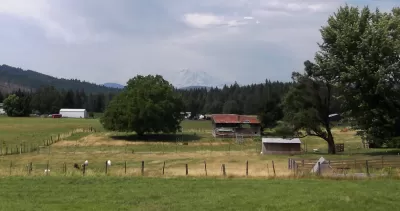
Homelessness on Native American reservations, like that of the Yakama Nation in Washington, doesn't receive much attention. Lauren Dake writes, "Perhaps this is because homelessness on reservations looks different than elsewhere, and often doesn't mean living outside, according to a study by [HUD]. It is more common for people to move in with others, often relatives, crammed into a single home."
According to Tony Walters of the National American Indian Housing Council, "Communalism was an important cultural value for many Native Americans, though this did not diminish the scale of the problem. 'It’s almost like people don't think of it, like it's a given in these communities."
With tribal housing already scarce, possible Trump administration budget cuts may push the situation even further. "Since the mid-1990s, a federal program has helped fund tribal housing for sovereign tribes, and many now rely heavily on it to build, manage and repair tribal housing projects."
Read the full story: The quiet crisis: mass eviction shows toll of homelessness on Native Americans
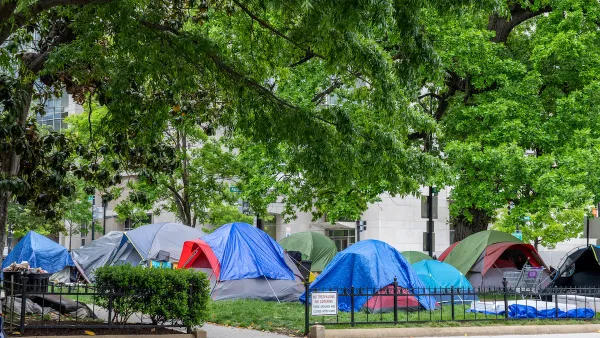
Strategies for Preventing and Ending Homelessness
A new report recommends a comprehensive, nationwide affordable housing plan as the ‘single most effective’ method of ending homelessness.
Report: DC Needs ‘Immense’ Funding Increase to Address Housing Crisis
Close to 60,000 District households can’t afford their housing costs, according to research from the Urban Institute.

Eviction Prevention Program Sees Success in San Jose
Fighting a continued rise in homelessness in the region, a county program is successfully helping families avoid eviction.

Planetizen Federal Action Tracker
A weekly monitor of how Trump’s orders and actions are impacting planners and planning in America.

California plans to bury El Niño’s downpour
If the state plays its cards right, it may be able to store a billion acre-feet of El Niño’s water in aquifers.

Desperate measures: Advocates weigh draining Lake Powell to fill Colorado River
Draining the reservoir could reduce evaporation losses by a couple hundred thousand acre-feet.

US buildings threatened, destroyed by fires set to triple by 2060
Researchers found a high fire risk for socioeconomically vulnerable neighborhoods in the American West.

LA residents may be allowed to paint their own crosswalks
Councilwoman Katy Yaroslavsky put out a motion instructing the Los Angeles Department of Public Transportation to study the feasibility of allowing volunteers to paint crosswalks.

Dallas moves to overhaul its zoning code
The city's zoning reform will allow more multi-family and mixed-use developments.

FREE Course: Walkable City 1: Why Walkability?
After describing his path towards focusing on walkability as the essence of good planning, Jeff Speck marches through his five principal reasons for making more walkable places.
Reinventing Malls: Planning Alchemy—Turning Gray Fields Into Gold
The course focuses on the opportunities and imperatives that shape reinvention of mall sites.

City of Rosemead
Rutgers University, Edward J. Bloustein School of Planning and Public Policy
One Hundred Miles
Hunter College, City University of New York (CUNY)
The Architects Foundation
University of Cincinnati Online
City of Cambridge
Montrose County
The Pocatello Development Authority