The last several decades have seen a mass migration of American Indians from reservations to North America's urban areas, but federal funds that are supposed to assist them have not followed. Answers are elusive for how to stem endemic poverty.


"Though they are widely associated with rural life, more than 7 of 10 Indians and Alaska Natives now live in a metropolitan area, according to Census Bureau data released this year, compared with 45 percent in 1970 and 8 percent in 1940," reports Timothy Williams.
"The trend mirrors the pattern of millions of African-Americans who left the rural South during the Great Migration of the 20th century and moved to cities in the North and West. But while many black migrants found jobs in meatpacking plants, stockyards and automobile factories, American Indians have not had similar success finding work."
"The migration goes to the heart of the question of whether the more than 300 reservations in the United States are an imperative or a hindrance to Native Americans, a debate that dates to the 19th century, when the reservation system was created by the federal government."
Read the full story: Quietly, Indians Reshape Cities and Reservations


Colorado creates wildlife crossings fund
Residents will have the option to add $5 to their car registration to fund infrastructure that prevents wildlife-vehicle collisions.
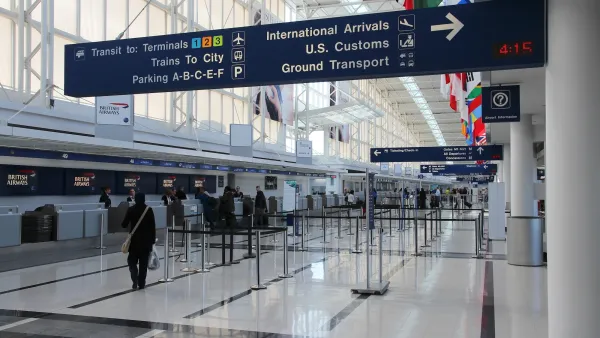
US Population Growth Slowest Since 2020 Due to Declining Immigration
Net international migration dropped from 2.7 million to 1.3 million in the year spanning July 2024 to July 2025.
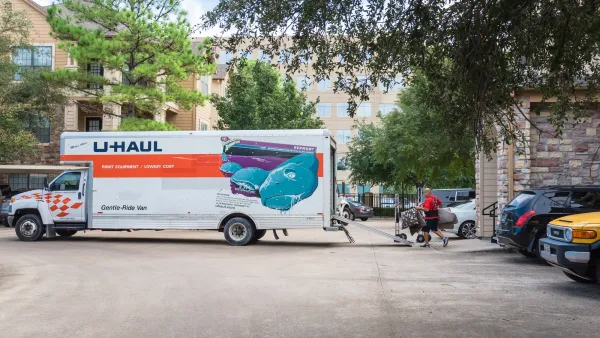
Texas Supplies Most New Residents to Other US States
Despite its strong population growth, Texas is also a major source of out-migration to other U.S. states.

Planetizen Federal Action Tracker
A weekly monitor of how Trump’s orders and actions are impacting planners and planning in America.

Amtrak, CN end decades-long dispute with eight-year agreement
The new operating agreement establishes an updated framework for the companies to work together, including processes to resolve disputes.
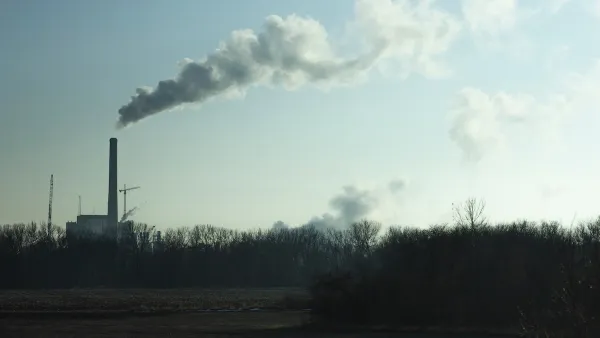
Nation's most wind-powered state turns to coal as data centers increase energy demand
For the first time in decades, Iowa has increased its generation of coal power.

Alabama scores up to $2.5 billion federal loan for largest infrastructure project in state’s history
The Mobile River Bridge and Bayway Project aims to ease congestion at Alabama’s worst bottleneck.

Trump is considering data centers on 6 states' public land — some state officials say they had no idea
If the administration approves the proposed projects, data center and data center-related developments will cover 17,600 acres of public land.

Despite court ruling, Trump is keeping nearly all wind projects in the US on hold
At least 110 wind energy projects have not heard from the government since a federal judge ruled that the Trump administration's freeze on wind turbine clearances was likely illegal.

FREE Course: Walkable City 1: Why Walkability?
After describing his path towards focusing on walkability as the essence of good planning, Jeff Speck marches through his five principal reasons for making more walkable places.
Reinventing Malls: Planning Alchemy—Turning Gray Fields Into Gold
The course focuses on the opportunities and imperatives that shape reinvention of mall sites.

KFH Group Inc.
Greater Baltimore Committee
Eagle County Government
The Architects Foundation
University of Cincinnati Online
The Pocatello Development Authority
The Urban Renewal Agency of the City of Pocatello