Thursday's massive oil spill in South Dakota is not a good omen for TransCanada for a favorable decision on Monday on an application before the Nebraska Public Service Commission on the routing of the controversial Keystone XL pipeline.


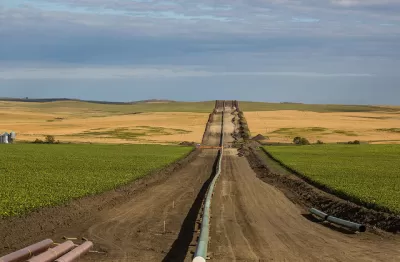

Courtesy: Wikipedia – Keystone Pipeline Route
|
on
similar spill in the 36-inch Keystone XL pipeline, which has an 830,000 barrels-per-day capacity, would result in a much greater spill. Opponents of the Keystone XL expressed their outrage on Thursday.
"A decision by the [Public Service Commission] in favor of the pipeline doesn’t mean the project would definitely move forward," reports Paul Hammel for the Omaha World-Herald Bureau.
Opponents, including Bold Nebraska and the Sierra Club, have vowed to file lawsuits challenging the use of eminent domain by a foreign corporation to obtain right of way for the pipeline.
However, market conditions could also cause TransCanada to refrain from construction, adds Hammel.
Record-low prices for crude oil have cast doubt on whether the more expensive Canadian crude is needed. Tar sands oil is expensive to produce, and some major players have pulled out of that region because of a glut of cheaper and more easily accessed sources of oil.
Unlike the original Keystone pipeline, XL would also carry Bakken shale oil from North Dakota, also an unconventional oil but not as expensive to produce as bitumen from oil sands in Alberta.
Hat tip to Christine Elwell.
Read the full story: Keystone pipeline spills 210,000 gallons of oil on eve of permitting decision for TransCanada
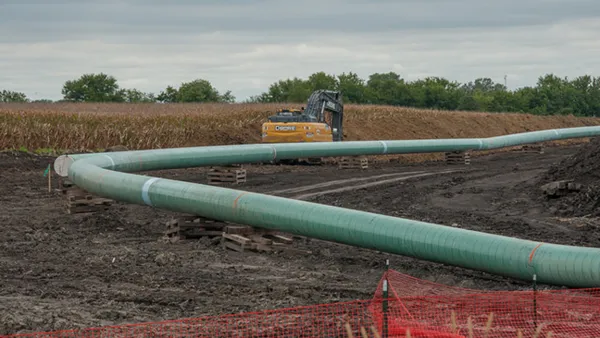
Nebraska Commission Authorizes Keystone XL Pipeline, But With a Major Twist
TransCanada got its second wish. Last March, President Trump reversed President Obama's rejection of the 1,136-mile pipeline to carry Alberta oil sands crude. On Monday, the Nebraska Public Service Commission OK'd a route, but not the one it wanted.

President Trump Approves Construction of Keystone XL Pipeline from Alberta to Nebraska
Following through on a January executive action, President Trump announced Friday that he was approving the oil pipeline that his predecessor had rejected over a year ago. Oil is already flowing from Steele City, Nebraska to Gulf Coast refineries.
Could Keystone XL Become the Next Casualty of Falling Oil Prices?
Recently we noted that Chevron had dropped their Arctic lease due to falling oil prices. With falling gasoline prices, Americans may no longer see the Keystone XL pipeline as urgent. In addition, President Obama appears likely to oppose the project.

Planetizen Federal Action Tracker
A weekly monitor of how Trump’s orders and actions are impacting planners and planning in America.

California plans to bury El Niño’s downpour
If the state plays its cards right, it may be able to store a billion acre-feet of El Niño’s water in aquifers.

Desperate measures: Advocates weigh draining Lake Powell to fill Colorado River
Draining the reservoir could reduce evaporation losses by a couple hundred thousand acre-feet.

In Texas, data centers are swallowing promised parkland
Residents who moved to Taylor, Texas for a rural community now have to contend with three data centers in their backyard.

How a Chicago-sized wind farm beat the odds and powered on
The project spanned five presidential administrations and a standoff with a U.S. military base.

MTA gives itself 30 days to transform pit into basketball court
The site has been under construction since 2022; the city originally estimated it would finish the court in 2024.

FREE Course: Walkable City 1: Why Walkability?
After describing his path towards focusing on walkability as the essence of good planning, Jeff Speck marches through his five principal reasons for making more walkable places.
Reinventing Malls: Planning Alchemy—Turning Gray Fields Into Gold
The course focuses on the opportunities and imperatives that shape reinvention of mall sites.

City of Rosemead
Rutgers University, Edward J. Bloustein School of Planning and Public Policy
One Hundred Miles
Hunter College, City University of New York (CUNY)
The Architects Foundation
University of Cincinnati Online
City of Cambridge
Montrose County
The Pocatello Development Authority