Walkability
L.A.'s Sprawling Valley Undertakes a Pedestrian-Friendly Retrofit
The San Fernando Valley is infamous for its seemingly endless expanse of flat, gridded single-family sprawl. But to accommodate growth and improve the quality of life, the Valley's distinct neighborhoods are looking to create a sense of place.
Americans Pay More for Walkability
Preliminary results from a new study suggest that Americans are willing to pay about $850 more per Walk Score point when purchasing a home.
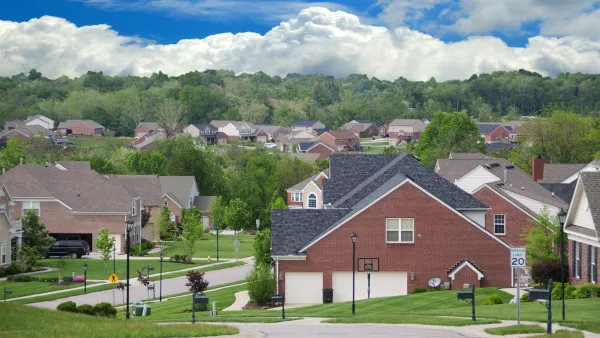
Why Suburban Sprawl is the Worst Idea America Has Ever Had
In a recent "TED Talk", Jeff Speck makes the case for creating a more walkable America based not on design arguments, but rather on the potential to create a more economically resilient, healthier, and environmentally sustainable country.
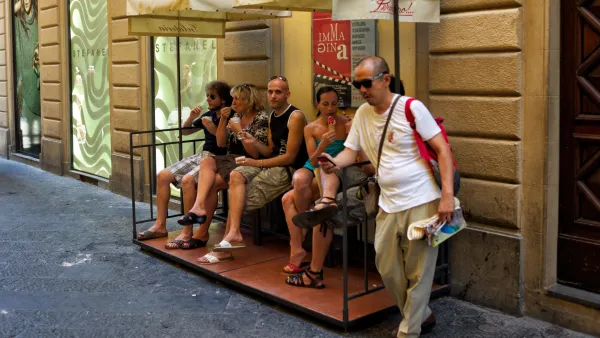
The Next Big Thing: "Sit-able Cities"
Supported by imagery of human urban conduct, Chuck Wolfe argues that walkable is good, but sit-able is better—and that "it’s time for the next big focal point and the next big idea, the 'Sit-able City'."
Why Walkability is a Civil Rights Issue
The NAACP is probably not the first advocacy group you think of when it comes to supporting walking and biking. But the civil rights organization encourages increasing physical activity in minority communities to help reduce childhood obesity.
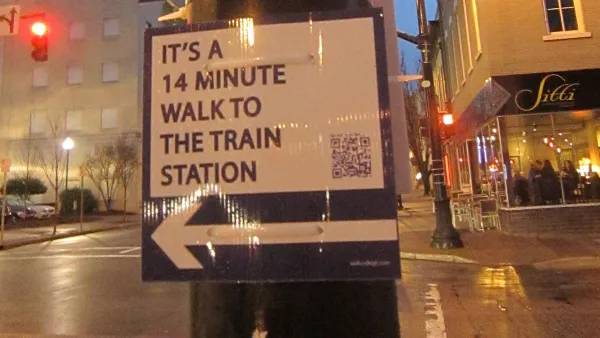
Get Your City Walking With DIY Wayfinding
The creator of a lauded guerrilla wayfinding project for Raleigh has launched a new website that allows users to duplicate his compelling signage for their communities.
Why Affordable Housing is an Environmental Issue
Improving our cities and suburbs is just as important to environmental sustainability as regulating pollution or conserving undeveloped land, argues Kaid Benfield.
Speed Cameras 2.0: Ticketing More Than Just Speeding
DC traffic scofflaws beware: You may be recorded! In one of the nation's most comprehensive use of traffic cameras, motorists who run stop signs or don't stop for peds in crosswalks could find a "ticket in the mail". Plus, 132 cameras will be added.
Walkable Streets Guide Gets Federal Endorsement
The Federal Highway Administration's recent support for the use of an ITE/CNU authored walkable urban thoroughfares guide as a companion to the widely used AASHTO "Green Book" gives local transportation engineers more tools to create livable streets.
When Speeding Pays
Speeding is paying-off in the amount of $15 million for Seattle area schools thanks to speed-enforced cameras, a proven but nonetheless controversial traffic safety tool. Revenue will be used to make walking safer under a proposal by Mayor McGinn.
Measuring Walkability to Improve It
After leading annual conferences and championing the International Charter for Walking, the non-profit Walk21 is expanding its efforts to improve walkability and livability across the globe by benchmarking the pedestrian-friendliness of world cities.
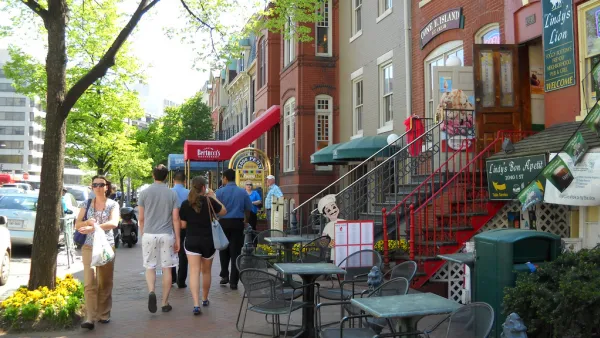
New Tool for Measuring Neighborhood Walkability
Watch out Walk Score, you've got some competition. Mapping company Maponics is measuring pedestrian-friendliness with a new tool called 'Walkability'. They measure several factors Walk Score doesn't, including crime, street type, and speed limit.
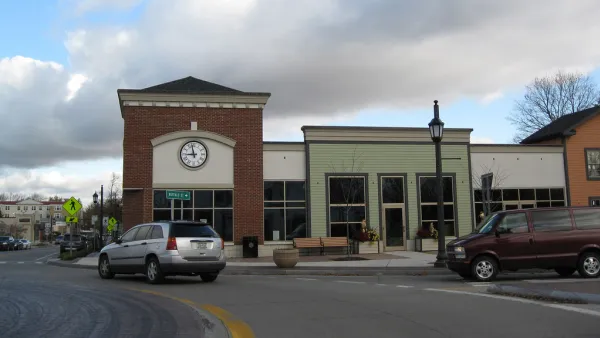
Road Diet Paves the Way for Town's Return to a 'Wonderful Life'
Community resistance stopped plans for widening Hamburg, New York's Main Street. By embracing calmer streets, the town is flourishing and once again enjoying comparisons to the idyllic Bedford Falls of 'It's a Wonderful Life.'
Walkability, But Hold the Red Tape
Urbanists must adopt less bureaucratic approaches so that the next generation can build and grow the economy, Andres Duany says. Hence the proliferation of “lean” codes that emphasize only the essentials of shaping community.
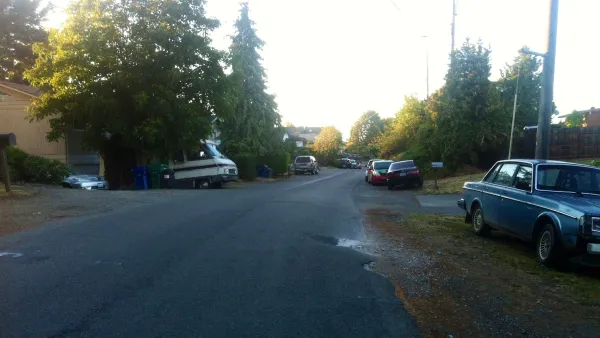
To Control Health Costs, Build Sidewalks
Each month new research emerges linking public health with the built environment. Yet just a small fraction of healthcare spending goes toward reducing our exposure to unhealthy environments. Under the Affordable Care Act, that could soon change.
Why Are Young Adults Returning to the City?
Much has been said about Millennials — the generation born from 1980 through the late 1990s, sometimes called Gen Y and Echo Boomers — choosing downtown living. Is it in rebellion to their suburban upbringing, or something more?
Upward Mobility Correlates to Walk Score
New data supports Paul Krugman's contention that sprawl inhibits the American Dream.
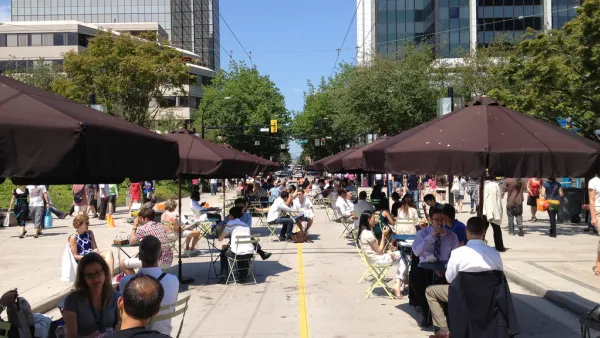
How Did Vancouver Decrease its Traffic While Growing its Population?
With its elegant skyline, walkable streets and stunning parks, Vancouver exemplifies great city-making. Add to the list of achievements the city's ability to reduce traffic by 20 to 30 percent since 2006 while growing its population by 4.5 percent.
Lack of Walkability in Suburban Areas Threatens Kids' Safety, Health
A recent fight over school-bus service in Loudoun County, Virginia highlights the ways in which suburban growth patterns hamper walkability and harm the health of children.
Familiarity Fostered on Foot Breeds Social Movements
A new study suggests that density, mixed-use neighborhoods, short city blocks, and, crucially, walkability foment political and social activism, reports Richard Florida.

FREE Course: Walkable City 1: Why Walkability?
After describing his path towards focusing on walkability as the essence of good planning, Jeff Speck marches through his five principal reasons for making more walkable places.
Reinventing Malls: Planning Alchemy—Turning Gray Fields Into Gold
The course focuses on the opportunities and imperatives that shape reinvention of mall sites.

KFH Group Inc.
Greater Baltimore Committee
Eagle County Government
The Architects Foundation
University of Cincinnati Online
The Pocatello Development Authority
The Urban Renewal Agency of the City of Pocatello