Each month new research emerges linking public health with the built environment. Yet just a small fraction of healthcare spending goes toward reducing our exposure to unhealthy environments. Under the Affordable Care Act, that could soon change.



"Public health practitioners look at streets like the one above and have gradually come to the conclusion–based on reams of studies–that exposure to streetscapes like it are one of the causes of Americans’ ever-increasing rise chronic disease," writes Brice Maryman. "In fact, the New England Health Care Institute estimates that our environments influence as much as 20% of our public health outcomes."
"All of this evidence begs the question: if the built environment is a significant determinant of our public health outcomes, why aren’t health entities–hospitals, HMO’s and clinics–helping to build a better infrastructure that supports sound health outcomes? While public health agencies like PHSKC and the CDC have been leading the way, the private sector has been generally hesitant to directly intervene in the built environment."
Read the full story: To Control Health Costs, Build Sidewalks

Effort to Make NYC Streets Safer Paying Dividends
Jane E. Brody reports on the safety features New York City has instituted as part of an ambitious effort to completely re-engineer city streets.

The number of kids walking to school dropped from over 50% to 11% since the 1960s
Unsafe pedestrian infrastructure makes walking to school dangerous or impossible for a growing number of American students.
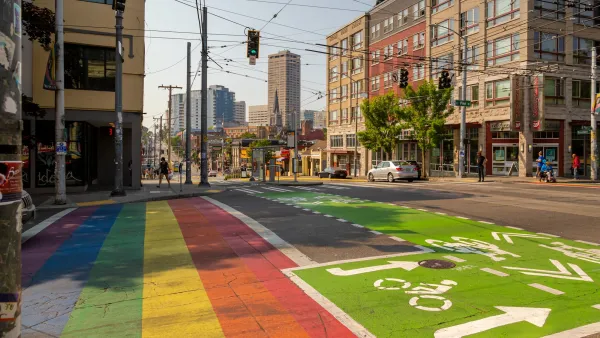
Seattle Creates 4 ‘Low-pollution Neighborhoods’
The pilot program is designed to reduce air pollution and increase access to transit and safe walking and biking infrastructure.

Planetizen Federal Action Tracker
A weekly monitor of how Trump’s orders and actions are impacting planners and planning in America.

Northwest rail fans eager for Sept. 30 debut of Amtrak’s Airo fleet
Get ready for that new train smell and more seats. But they won’t go faster or run more frequently on the Cascades route in Washington and Oregon.
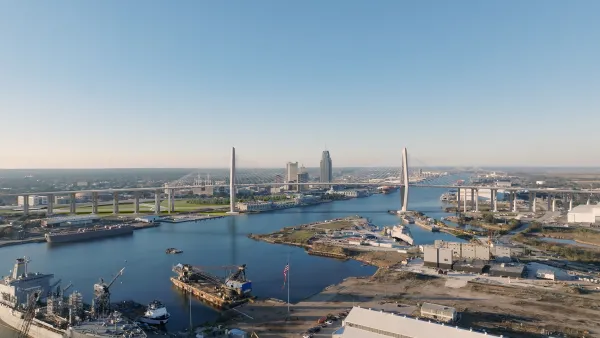
Alabama scores up to $2.5 billion federal loan for largest infrastructure project in state’s history
The Mobile River Bridge and Bayway Project aims to ease congestion at Alabama’s worst bottleneck.

Novel study finds extreme state-by-state disparity in housing construction timelines
The first comprehensive working paper on U.S. construction timelines also found that the permitting process for multi-family projects has slowed nationwide.

California may destroy its beaches trying to save homes from El Niño
Boulders and seawalls can protect homes from waves, but ultimately destroy sandy beaches.

California high-speed rail accomplishes only one legislative goal in 2026
The majority of the agency's failed pitches were never developed into written proposals.

FREE Course: Walkable City 1: Why Walkability?
After describing his path towards focusing on walkability as the essence of good planning, Jeff Speck marches through his five principal reasons for making more walkable places.
Reinventing Malls: Planning Alchemy—Turning Gray Fields Into Gold
The course focuses on the opportunities and imperatives that shape reinvention of mall sites.

City of Thousand Oaks
City of Wisconsin Rapids
Harvard University Graduate School of Design
The Architects Foundation
University of Cincinnati Online
Northern Illinois Transit Authority (NITA)
The Pocatello Development Authority
The Urban Renewal Agency of the City of Pocatello