After leading annual conferences and championing the International Charter for Walking, the non-profit Walk21 is expanding its efforts to improve walkability and livability across the globe by benchmarking the pedestrian-friendliness of world cities.


"As each country takes a slightly different approach to creating walking-friendly cities, one global organisation is working to connect and empower urban governments, citizens and communities to achieve a walkable future," reports Walkonomics. "Since its foundation in 2000 Walk21 has organised an annual international conference in over 10 different countries," and "has also championed the International Charter for Walking, which has been signed by over 4,000 people and organisations including several mayor’s and city governments."
The group's newest initiative, the ‘Making Walking Count‘ [PDF] project, measures the walkability of global cities across a common set of criteria. "Each city can see how they compare against other global cities and which areas they need to improve in," says Walkonomics. "So far the project has benchmarked London, Barcelona, Copenhagen and Canberra [PDF] and also audited New York and Stuttgart."
Read the full story: Benchmarking the Walkability of Global Cities
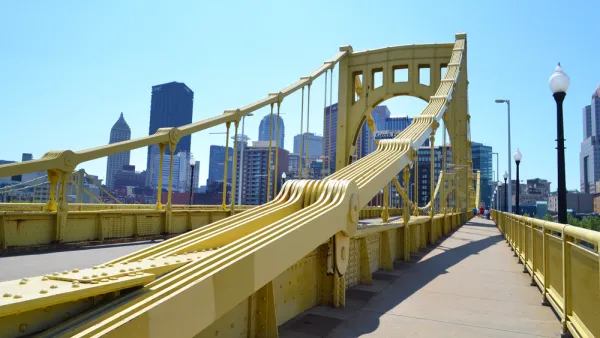
New App Plots the Most Beautiful, Walkable Route
Interested in finding the road less traveled by? Walkonomics has launched in seven cities around the globe.
Formulating a New Metric for Walkability
Going beyond the analytical parameters of the popular Walk Score website, a new site aims to broaden the scope of analysis to include more qualitative information, such as safety and streetscape, in determining which areas are pedestrian friendly.
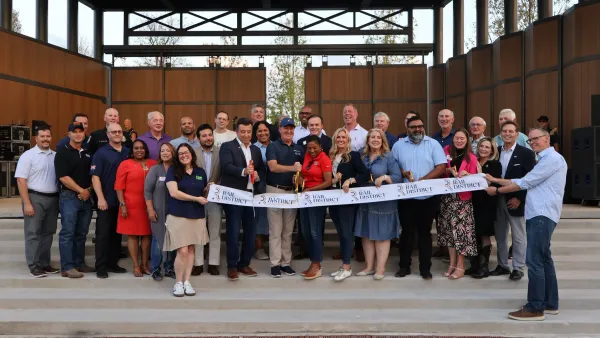
Dallas suburbs are turning their downtowns into small towns
Four Texas towns are embracing walkability and density in their downtowns.

Desperate measures: Advocates weigh draining Lake Powell to fill Colorado River
Draining the reservoir could reduce evaporation losses by a couple hundred thousand acre-feet.

Eastern Nebraska is running out of electricity
Data centers and electrification are straining eastern Nebraska’s grid, throttling economic development.

Malls are becoming the midtowns of the future
Mall and office park redevelopments are a generational opportunity to create new nodes of urbanity.

NYC breaks ground on anti-flooding infrastructure project
New York City's new system will reduce stormwater flows to local sewers by 90%.

One Kentucky town’s secret to affordable housing
The Smoketown Community Land Trust has already built seven affordable homes for community members.

Houston gains petal-shaped cooling infrastructure to make streets more ‘delightful’
The city has installed the pavilions along 15 blocks in Houston.

FREE Course: Walkable City 1: Why Walkability?
After describing his path towards focusing on walkability as the essence of good planning, Jeff Speck marches through his five principal reasons for making more walkable places.
Reinventing Malls: Planning Alchemy—Turning Gray Fields Into Gold
The course focuses on the opportunities and imperatives that shape reinvention of mall sites.

City of Rosemead
Rutgers University, Edward J. Bloustein School of Planning and Public Policy
One Hundred Miles
University of Michigan School for Environment and Sustainability (SEAS)
Hunter College, City University of New York (CUNY)
The Architects Foundation
City of Cambridge
Montrose County
The Pocatello Development Authority