City leaders in Rancho Cucamonga, the future western terminus of the Brightline West rail line to Las Vegas, want to reimagine the city as a transit-oriented, pedestrian-friendly community.


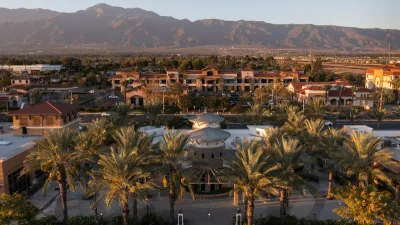
A sprawling suburb 40 miles east of Los Angeles is about to become a major passenger rail hub once Brightline West, a high-speed rail line connecting Las Vegas and Southern California, is complete.
As Sarah Stodola explains in Bloomberg CityLab, Rancho Cucamonga will be the western terminus of Brightline West, where travelers will be able to connect to other Southern California rail lines.
With the state’s more notorious north-south high-speed rail project languishing, Brightline West will likely become the state’s first operational high-speed rail line. “The city believes it can leverage its new high-speed rail station — and the millions of riders that will potentially pass through it — to build the kind of transit-oriented urban core that towns in postwar Southern California have historically struggled to cultivate.”
City leaders are preparing for a shift to more multimodal, pedestrian-friendly development by revamping its zoning codes to support active building frontages and walkable, mixed-use blocks. It now prohibits parking in the front of buildings and has eliminated parking requirements near transit stations. A new development already in progress near the existing Metrolink station will redevelop a defunct golf course into a mixed-use development with over 3,000 housing units, increasing density near the train hubs.
FULL STORY: Next Stop: Rancho Cucamonga!

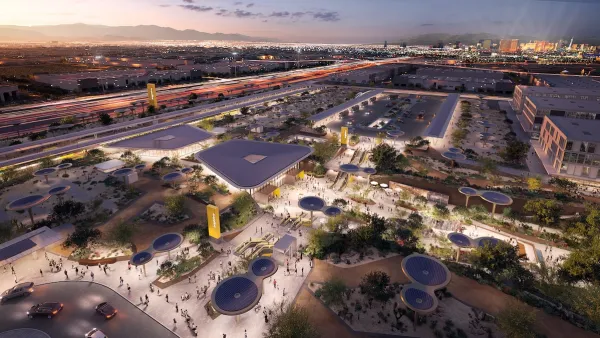
Brightline West Moves Forward With Finalized Federal Funding
The high-speed rail line will connect Southern California and Las Vegas via a two-hour trip along Interstate 15.
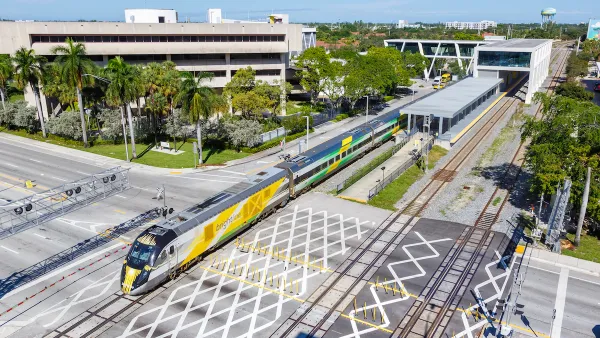
Brightline Founder Predicts a Passenger Rail Resurgence
The HSR operator wants to expand to more US regions.
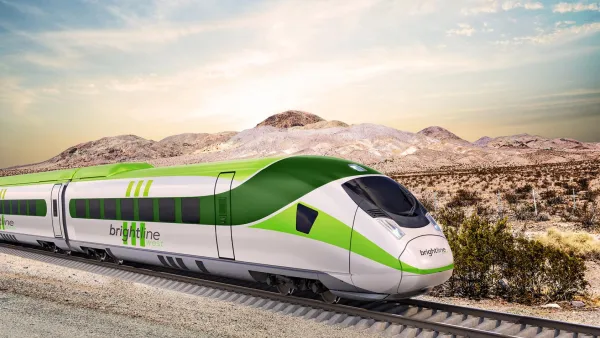
Brightline West Breaks Ground
The high-speed rail line will link Las Vegas and the Los Angeles area.

Planetizen Federal Action Tracker
A weekly monitor of how Trump’s orders and actions are impacting planners and planning in America.

The state-sanctioned urbicide of Austin
People don’t kill cities. Freeways do.

US to reduce Colorado River water deliveries to Mexico
A new Colorado Treaty amendment reduces Mexico’s Colorado River water allocation by 250,000 acre feet.

Airbnb launches $250 million 'last-dollar financing' housing accelerator, makes first investment in Austin
The company will put $6.4 million towards affordable housing development in Texas’ capital.

Guerilla urbanists are building DIY bus stop benches in Chicago
A before-and-after of one of the bus stops with a new bench. The new benches are not officially sanctioned or permitted, but the residents who placed them hope they will be the start of a network of DIY benches across the city.

Mamdani overhauls NYC's Vision Zero plan with 100 new policy goals
The overhaul aims to reduce traffic deaths and make streets safer for pedestrians, cyclists and drivers through lower speed limits, new safety infrastructure and more.

FREE Course: Walkable City 1: Why Walkability?
After describing his path towards focusing on walkability as the essence of good planning, Jeff Speck marches through his five principal reasons for making more walkable places.
Reinventing Malls: Planning Alchemy—Turning Gray Fields Into Gold
The course focuses on the opportunities and imperatives that shape reinvention of mall sites.

Eagle County Government
Harvard University Graduate School of Design
Nashville Planning Department
The Architects Foundation
University of Cincinnati Online
The Pocatello Development Authority
The Urban Renewal Agency of the City of Pocatello
Journal of the American Planning Association