Gentrification
Report Finds Doubled Concentrations of Poverty Since 1970
A new report from City Observatory analyzes urban poverty and gentrification using census data from 1970 to 2010.
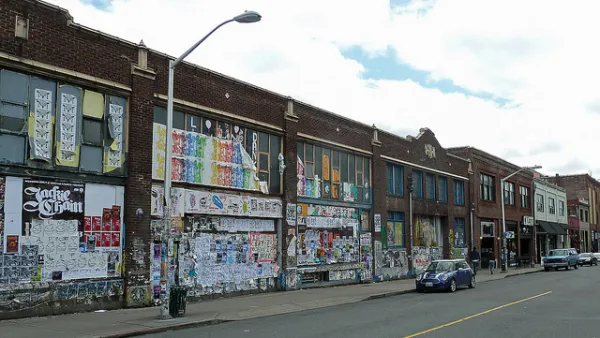
3 Strategies for Controlling Gentrification
Sandy Smith summarizes a recent "Gentrification, Integration, and Equity" event hosted by Next City in Philadelphia.
Los Angeles Arts District Residents Resisting Plans for More Density
The Arts District in Downtown Los Angeles has seen plenty of chic newcomers in recent years—high-end cafes, restaurants, and expensive lofts. But a recently revealed plan that would allow new, dense construction has sparked controversy.
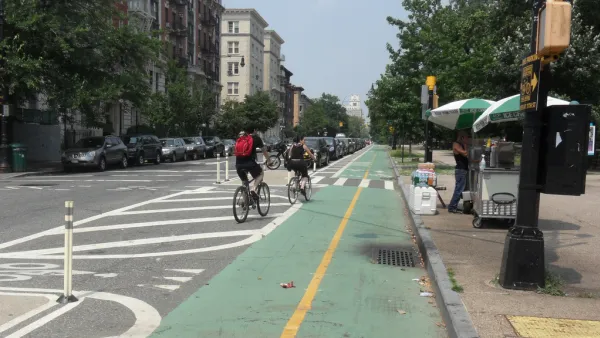
The Chicken and the Egg: Gentrification and Bicycling
Shaun Courtney examines the current politics surrounding gentrification and bicycling throughout the country and what planners can do to address the issue.
Converting Single Room Occupancy Hotels to Market Rate Apartments
Emily Badger discusses a phenomenon of gentrification in Chicago: former single room occupancy hotels, historically reserved for low-income housing, are being converted into market-rate rentals.
The Rise of Memphis as a Cycling City
In 2009, Memphis was one of the worst cities for cycling, but it quickly reversed its course, becoming the most improved city for cycling according to Bicycling magazine in 2012.
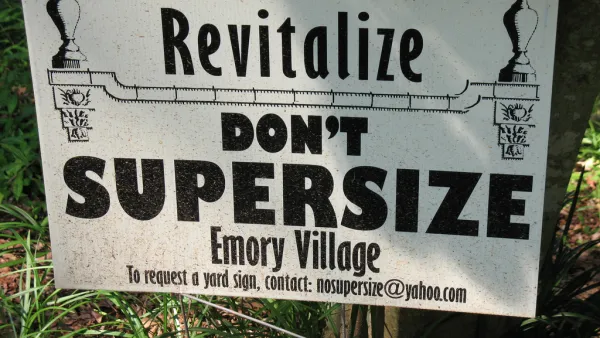
Are Single Family Teardowns a Sign of Suburban Gentrification?
Luxury condos are often identified as the culprit in urban gentrification, but could it be that teardowns of single family homes that give way to much larger single family homes is a driver of suburban gentrification?

The False Choice in the Gentrification Debate
The income of original residents is more important to the gentrification debate than any opposition to luxury development or price controls. We need to begin to embed income inequality within the gentrification debate.
Massive Detroit Foreclosures Push Out Black Homeowners
A Detroit reborn sounds great, but what if the residents of “blighted” areas don’t want to leave? Many feel they have no choice in a process that has been compared to racial relocation. Meanwhile, activists scramble to give residents options.
How 'Just Green Enough' Adds the Equity to 'Green'
A Fast Co. Design article explains the "just green enough" concept as advanced by Jennifer Wolch, dean of the College of Environmental Design at the University of California, Berkeley.
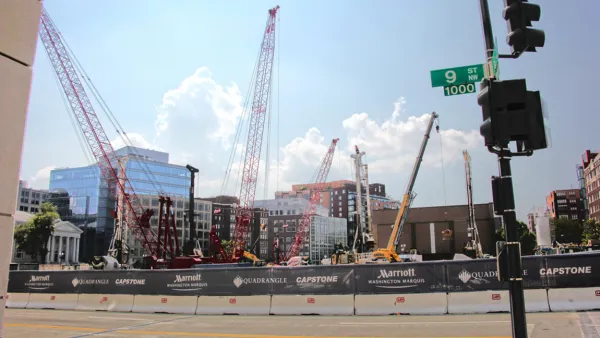
Is Urban Revitalization Possible Without Displacement and Gentrification?
Jared Green asks the billion dollar question for economic developers and planning agencies throughout the United States: is urban revitalization of neighborhoods possible without the subsequent gentrification and displacement of current residents?
The Washington D.C. Housing Market Completely Flipped in One Decade
Trends in Washington D.C. housing affordability is similar to other cities around the country, but is also unique in how swiftly the housing market has shifted.
More Evidence for the 'New Donut' Model of Metropolitan Areas
Spatial analysis of income and education over time in U.S cities provides further evidence for the “New Donut” theory of the city. Wealthier and more educated residents are more likely to move to the urban core or exurbs than to inner-ring suburbs.
Can Detroit's Comeback Benefit Everyone?
Suzette Hackney, a former Detroit Free Press journalist, expresses her concern about who is getting left out of Detroit's comeback story.
Portland's Unclear Future as a Young Retirement Community
Portland's over-educated, under-employed population is largely a semi-retired community of young adults, according to some. But with rising housing prices and overall cost of living, it is unclear how Portland will retain these characteristics.
The Cost of 'Cool'
Thomas Rogers writes of the "Life and Death of a 'Cool' City," using the example of Berlin and the many "new Berlins" that have endeavored to follow its lead as the next big thing in Europe.
Cincinnati's Unique, Recession-Era Gentrification
A new study examines gentrification (measured by relative income) at the neighborhoods, revealing the unique case of Cincinnati, which increased wealth faster during the recession than it did during the preceding boom.
Qualitative Study of Gentrification in Fort Collins, Colorado Neighborhood
Stanford researcher Clayton Hurd is studying the Tres Colonias, an overarching name for three neighborhoods in Fort Collins, Colorado, with dwindling numbers of Hispanic homeowners facing mounting gentrification pressures.

The Future of the Gayborhood
With the advancement of LGBT rights and equality, the traditionally LGBT neighborhood is changing to reflect the tastes and preferences of the new LGBT community within.
What's in a Name? Gentrification Sparks Denver's Northside vs. Highlands Debate
David Conde discusses the new reality taking hold in traditionally Latino neighborhoods on the Northside of Denver, especially the reactions to the name for the area adopted by newcomers: the Highlands.

FREE Course: Walkable City 1: Why Walkability?
After describing his path towards focusing on walkability as the essence of good planning, Jeff Speck marches through his five principal reasons for making more walkable places.
Reinventing Malls: Planning Alchemy—Turning Gray Fields Into Gold
The course focuses on the opportunities and imperatives that shape reinvention of mall sites.

One Hundred Miles
County of Mendocino
planning NEXT
The Architects Foundation
University of Cincinnati Online
Montrose County
Northern Illinois Transit Authority (NITA)
The Pocatello Development Authority









