Thomas Rogers writes of the "Life and Death of a 'Cool' City," using the example of Berlin and the many "new Berlins" that have endeavored to follow its lead as the next big thing in Europe.


"Lately, 'new Berlin' has become shorthand for an under-visited European city that is cheap, fun, and up-and-coming," writes Rogers. "Ever since creeping gentrification and a massive rise in tourism have thrown into question the German capital’s status of the world’s 'coolest' city, people have been racing to determine its successor."
According to Rogers, cities like Leipzig, Germany; Krakow, Poland; Vilnius, Lithuania; Belgrade, Serbia; Tallinn, Estonia; and Warsaw, Poland "share, to varying degrees, many of the elements that made Berlin famous in the 1990s: affordability, empty buildings that can be repurposed and a sizeable arts scene."
The problem is that cities, seeking membership among the ranks of cool cities, "are now engaged in an aggressive war for buzz and attention."
In comparing similar examples in the United States, and lamenting the effects of foreign investors in the real estate markets of such "cool" cities, Rogers eventually turns the article into a polemic against what he terms "neo-liberal reforms" and "liberalized purchasing rules."
Read the full story: The Life and Death of a 'Cool' City

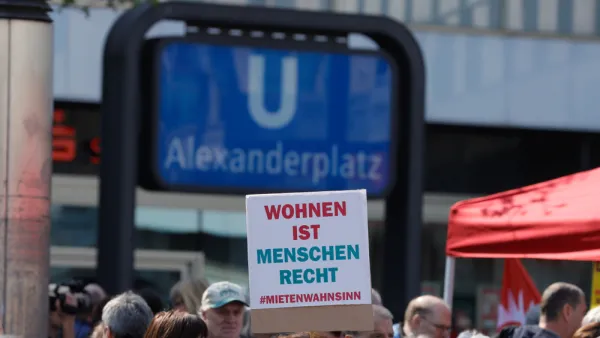
Berlin Caps Rents as Anti-Gentrification Measure
The capital city, known for its artists and party scene, is aiming to reduce gentrification by capping rent prices for a period of five years.

Berlin Moves To Protect, Expand Affordable Housing
Berlin's Senate has approved a sweeping reform of the city's housing policy, limiting rents on close to 400,000 public housing units to no more than 30 percent of a household income.
Berlin's Answer to Gentrification, Circa 1980
Christine McLaren considers the history of urban housing in Berlin, and reveals a long-defunct program designed to address a problem faced by countless communities today.

Planetizen Federal Action Tracker
A weekly monitor of how Trump’s orders and actions are impacting planners and planning in America.

‘Going backwards:’ Baltimore mayor, students rally against state's transit funding plan
Maryland's proposed six-year plan provides no funding for Baltimore’s BMORE bus program and reduces its road maintenance funding.

Detroit to transform waterfront with $2.2 billion investment
Developers will convert about 18 acres of unused parking lot space into civic spaces.

Senate bill would ‘overhaul’ environmental permitting laws
Under the proposed act, government agencies would also not be able to suspend or rescind permits after granting them.

Exemption applications for NYC’s pied-à-terre tax see 55% success rate
The city sent nearly 40% of its initial pied-à-terre tax warnings erroneously.

MTA invests $1.1 billion in ‘nearly-impossible’-to-evade fare gates
The new technology marks the Metropolitan Transit Authority's first turnstile redesign in decades.

FREE Course: Walkable City 1: Why Walkability?
After describing his path towards focusing on walkability as the essence of good planning, Jeff Speck marches through his five principal reasons for making more walkable places.
Reinventing Malls: Planning Alchemy—Turning Gray Fields Into Gold
The course focuses on the opportunities and imperatives that shape reinvention of mall sites.

One Hundred Miles
County of Mendocino
planning NEXT
The Architects Foundation
University of Cincinnati Online
Montrose County
Northern Illinois Transit Authority (NITA)
The Pocatello Development Authority