David Conde discusses the new reality taking hold in traditionally Latino neighborhoods on the Northside of Denver, especially the reactions to the name for the area adopted by newcomers: the Highlands.


Conde discusses the impact of Denver's urbanization on the Northside neighborhoods like Globeville and Columbus Park where he grew up.
White flight built important suburban communities at the expense of Denver and its decaying infrastructure. The renaissance of the city began with Mayor Federico Pena who imagined a great city and built the institutions that led to the Denver comeback.
His vision lingers and has captured the imagination of those who have renewed the faith in the world class facilities and living opportunities that make the downtown and its immediate surrounding neighborhoods desirable. So what can be called an invasion of the Northside is on and is not going to let up any time soon.
The key issue is an ongoing controversy over what to call the collection of neighborhoods in the area. In Conde's view, the name Northside is an important part of the fabric of Latino identity. On the other side of the argument are voices like the Highland Denver blog, which points to the history of the name Highlands, which dates back to 1885.
Read the full story: The Northside in transition

Denver Pauses Multifamily Development in Westside Neighborhoods Amidst Gentrification Concerns
City officials say the pause on permits for redevelopment projects aims to stop the displacement of long-term residents.
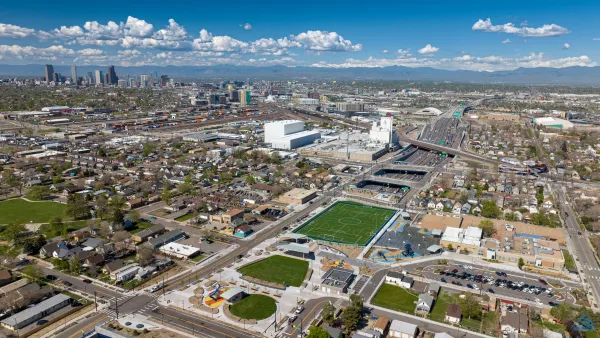
Opening of Denver’s New Freeway Cap Park Triggers Gentrification Fears
Local residents fear rising housing costs and displacement with the opening of a new four-acre park built on a deck bridge over the newly reconstructed and widened I-70 interstate.
Opinion: Denver Needs New Direction on Housing
A Denver writer calls attention to the city's worsening housing affordability, gentrification, and displacement challenges, and prescribes a YIMBY response.

Planetizen Federal Action Tracker
A weekly monitor of how Trump’s orders and actions are impacting planners and planning in America.

Washington state to charge fee to drivers with fuel-efficient cars
Revenue from the fee will go towards supporting the state’s highways.

Illinois considers spending $1 billion in taxpayer money on data center
A quantum computing campus and data center are currently under construction in Chicago.

Senate passes bill overhauling permitting
The bill still needs to pass the House.

Did data centers change how voters cast their ballots?
Texas, Ohio, and Georgia all flipped party control. But in rural counties, the effect of local data centers was mixed.

Amtrak invests in eight new Airo trainsets
The new trainsets will begin serving passengers in 2031.

FREE Course: Walkable City 1: Why Walkability?
After describing his path towards focusing on walkability as the essence of good planning, Jeff Speck marches through his five principal reasons for making more walkable places.
Reinventing Malls: Planning Alchemy—Turning Gray Fields Into Gold
The course focuses on the opportunities and imperatives that shape reinvention of mall sites.

City of Charlotte
City of Rosemead
Rutgers University, Edward J. Bloustein School of Planning and Public Policy
University of Michigan School for Environment and Sustainability (SEAS)
Hunter College, City University of New York (CUNY)
The Architects Foundation
University District Partnership