California added 309,000 residents last year, an 8 percent drop compared to annual increases since 2010. The state added a net 85,000 housing units, accounting for losses to wildfires.



In addition to population changes for all 58 counties, a report [pdf] by the Demographic Research Unit of the California Department of Finance also noted housing production and destruction, which took into account major housing losses from Northern California wildfires in October.
There was a net gain of 85,000 units in 2016, which takes into account 13,200 homes demolished, compared to an average year's loss of 5,500 homes. The Wine Country wildfires explain the huge loses in these counties that suffered the most numeric housing loss in the state:
-
"Sonoma (2.6 percent), Napa (1.1 percent), and Mendocino (1.0 percent).
- "While the Thomas fire in Ventura County [contained on Jan. 12] was the largest by area, fewer housing units were affected. The current estimates do not include complete impacts from that fire, and will be revised next year."
Elsewhere in the Bay Area, "San Francisco added 4,464 housing units while 10,000 more people moved in, bringing the city’s population to 884,000," reports Peter Fimrite for the San Francisco Chronicle on May 1.
The city by the bay had the state’s third highest total population gain, behind only Los Angeles [33,000 persons (0.8 percent)] and San Diego [almost 20,000 persons ]. San Jose, which added 8,500 people, was fifth [after Irvine with a population of 276,000, added almost 9,000 persons in 2017].
The fastest growing large city was Sacramento at 1.43 percent, adding 7,000 people, edging out San Diego (1.42 percent).
More on net housing production in California's large cities from the report:
Multi-family housing growth outpaced single family housing by over 12,000 net units (“net” refers to new construction minus demolition), continuing a six-year trend. Los Angeles led the state with 12,488 multi-family units, comprising 90.2 percent of their total housing growth, followed by San Diego (5,241 for 87.9 percent), San Francisco (4,469 for 100 percent), and San Jose (2,421 for 93.5 percent).
The May 1 report did not break-down the demographic changes in terms of natural increase, domestic migration, and immigration. However, the department's Dec. 21, 2017 report [pdf], posted here, which analyzed growth between July 1, 2016 and July 1, 2017, included that data.
Also of interest is a March report (posted here) from the California Legislative Analyst's Office that looks at present and historic domestic migration data. Spoiler alert: It's been negative since 1990, but the gap between in and out-migration has narrowed considerably.
FULL STORY: California’s population grows to 39.8 million — and housing stock increases too


An Unexpected Turn for California's New State Population Report
Population data released May 1 by the Department of Finance reveals the Golden State's lowest population growth rate on record, at 0.47 percent.
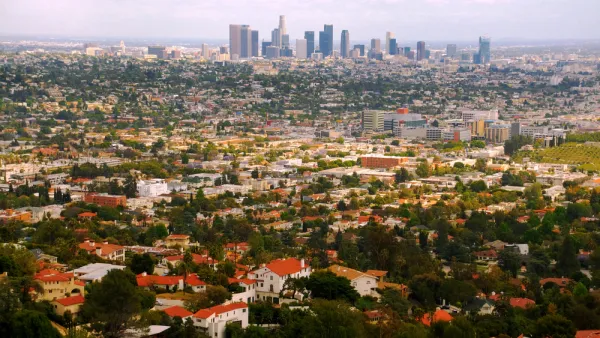
City of Los Angeles Tops 4 Million in Latest State Population Report
As usual, California's fastest growing counties were inland, far from coastal job centers. The big surprise was that the fastest growing city was an affluent Silicon Valley suburb that had been sued in 2012 by affordable housing advocates.
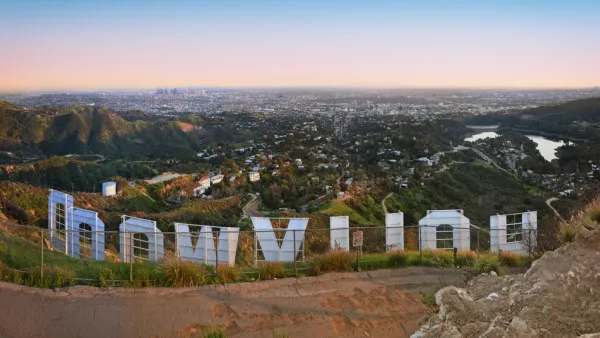
California's Population Might Be Peaking
Heretofore, the question was never if, but when, the nation's most populous state would reach 40 million.

The state-sanctioned urbicide of Austin
People don’t kill cities. Freeways do.

US to reduce Colorado River water deliveries to Mexico
A new Colorado Treaty amendment reduces Mexico’s Colorado River water allocation by 250,000 acre feet.

New Jersey’s second-largest city bans standalone data centers
Jersey City will continue to allow co-location facilities, such as those meant for research institutions that store their own data.

Amtrak not solely to blame for New Jersey commuter rail's unreliability, report finds
A new study from the Garden State Initiative found that NJ Transit’s budget grew 20% across a 4 year period, but reliability declined significantly over the same period.

EPA erases limits on planet-warming pollution from power plants
Under Monday’s plan, power plants would still have some limits on how much mercury, arsenic and other contaminants they can emit.

Phoenix announces new on-demand transit service, more frequent RAPID buses
Both new services will launch in October, and are part of Phoenix's Project Effective Access Solutions for Easing Congestion.

FREE Course: Walkable City 1: Why Walkability?
After describing his path towards focusing on walkability as the essence of good planning, Jeff Speck marches through his five principal reasons for making more walkable places.
Reinventing Malls: Planning Alchemy—Turning Gray Fields Into Gold
The course focuses on the opportunities and imperatives that shape reinvention of mall sites.

Eagle County Government
Harvard University Graduate School of Design
Nashville Planning Department
The Architects Foundation
University of Cincinnati Online
The Pocatello Development Authority
The Urban Renewal Agency of the City of Pocatello
Journal of the American Planning Association