Policymakers, auto manufacturers, and especially advocates are very engaged in transitioning from fossil fuel-powered vehicles to electric vehicles. The problem is that interest isn't shared by the general public, according to research by UC Davis.


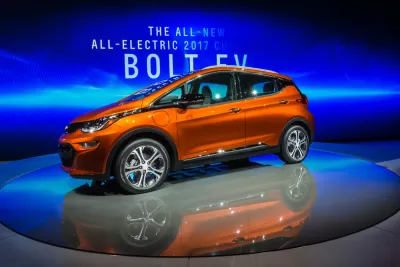
Sales of electric vehicles (EVs) are on the rise. According to a report released by Next 10 on Jan. 30, sales of zero-emission vehicles (ZEVs), which includes fuel cell electric vehicles but not plug-in hybrid electric vehicles, grew by 29 percent last year compared to 2016 for both California and the U.S.
In addition, the number of EV models for sale has almost doubled in California from 2014 to 2017, and the number of public EV chargers has more than doubled in the Golden State during that time period. What has barely changed, though, is what UC Davis Institute of Transportation Studies researchers call the "engagement" factor among Californians in the transition from internal combustion vehicles to EVs. And that spells bad news for sustainability in the transportation sector, the source of 39 percent of the state's greenhouse gas emissions.
"There are no paths to meet the [plug-in electric vehicle] PEV commitments and promises being made by automakers and politicians unless consumers are engaged in the transition to electric drive," write Ken Kurani and Scott Hardman, researchers at the Plug-in Hybrid & Electric Vehicle Research Center in the UC Davis-ITS GreenLight Blog on Jan. 18. "Evidence from California says consumers are not."
The excitement among policymakers, automakers, and advocates as more PEV models enter the market place, more charging is installed, and more PEVs are sold each successive year is utterly lost on the vast majority of the car-buying public—even in California, touted as being among the global PEV market leaders.
The problem is the number of car owning households that are paying attention to PEVs is not growing.
Correspondent's note: The term, plug-in electric vehicles, or PEVs, includes any electric vehicle with a plug, such as the Chevy Volt that also burns gasoline, generally referred to as a plug-in hybrid electric vehicle, or PHEV, as well as a pure battery-electric vehicle, or BEV, e.g., a Tesla.
The basis of the research is five surveys conducted from June 2014 to June 2017 that "assessed Californian car-owning households’ awareness of and engagement with PEVs."
If one believes a transition to electric drive is well underway, then the percentages of households [either owning an PEV or had considered purchasing one] should be larger in 2017... They are not higher to any significant degree.
See their side-by-side charts showing responses to survey questions assessing basic interest in electric vehicles in 2014 and 2017. Note the lack of noticeable differences between the two years despite the significant increase in the rate of sales, charging infrastructure, and models available.
Similarly, responses to the awareness of non-residential EV chargers in California showed little change between the two years despite installations more than doubling from 5,700 in August 2014 to over 11,500 by August 2017, according to the California Energy Commission, note Kurani and Hardman.
The blog ends with the listing of seven tips for advocates and policymakers to increase consumers' awareness of electric vehicles that would hopefully lead them to consider purchasing one. Not listed was this correspondent's preferred market-based incentive to stimulate sales of EVs while concurrently potentially decreasing sales of fuel-hogs like large SUVs.
Research by none other than UC Davis along with UC Berkeley and UC Irvine on the effectiveness of emissions feebates was commissioned by the Calfornia Air Resources Board in 2008. Legislation to implement a feebate program died that year.
Hat tip to Eugene Wilson.
FULL STORY: Automakers and Policymakers May Be on a Path to Electric Vehicles; Consumers Aren’t

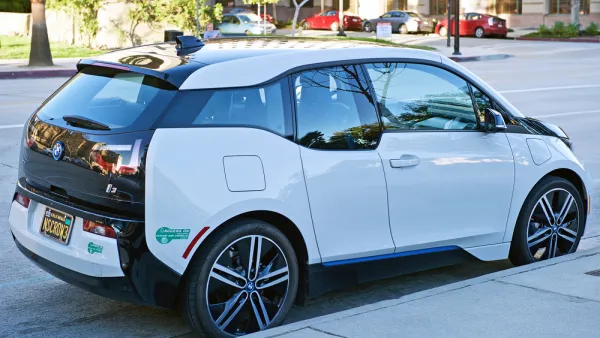
Gov. Jerry Brown Signs 16 Bills to Spur Sales of New and Used Electric Vehicles
On the second day of the Global Climate Action Summit, co-host Gov. Jerry Brown signed 16 bills onboard a new plug-in hybrid electric ferry in San Francisco Bay to spur sales of zero-emission vehicles and reduce greenhouse gas emissions.
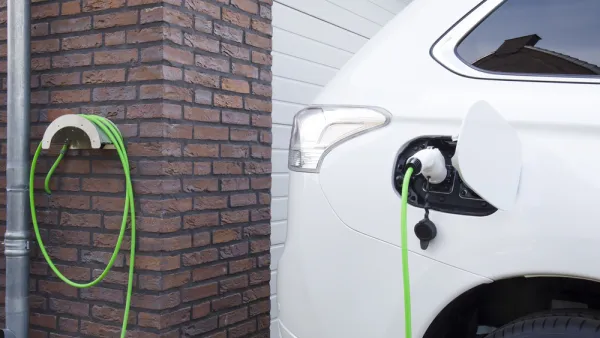
The High, Regressive Costs Imposed by Electric Vehicles
Two UC Berkeley economists evaluated whether to charge electric vehicles a mileage fee since they pay no fuel taxes. A study from the Mineta Institute evaluated the impact of new EV registration fees and increased fuel taxes in California.
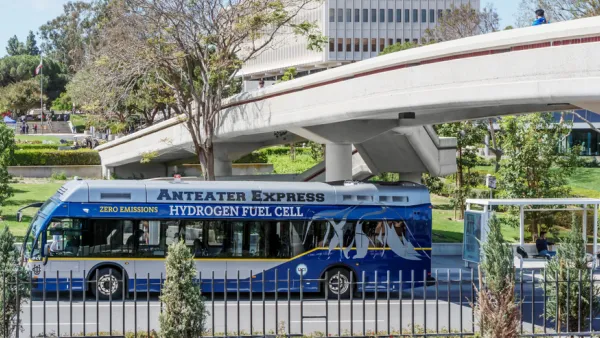
Can Hydrogen Make a Comeback?
While hydrogen fuel cell electric vehicles are much less popular than their battery-powered siblings, California remains committed to the zero-emission technology, with three state agencies investing in and monitoring its progress.

The state-sanctioned urbicide of Austin
People don’t kill cities. Freeways do.

US to reduce Colorado River water deliveries to Mexico
A new Colorado Treaty amendment reduces Mexico’s Colorado River water allocation by 250,000 acre feet.

New Jersey’s second-largest city bans standalone data centers
Jersey City will continue to allow co-location facilities, such as those meant for research institutions that store their own data.

Amtrak not solely to blame for New Jersey commuter rail's unreliability, report finds
A new study from the Garden State Initiative found that NJ Transit’s budget grew 20% across a 4 year period, but reliability declined significantly over the same period.

EPA erases limits on planet-warming pollution from power plants
Under Monday’s plan, power plants would still have some limits on how much mercury, arsenic and other contaminants they can emit.

Phoenix announces new on-demand transit service, more frequent RAPID buses
Both new services will launch in October, and are part of Phoenix's Project Effective Access Solutions for Easing Congestion.

FREE Course: Walkable City 1: Why Walkability?
After describing his path towards focusing on walkability as the essence of good planning, Jeff Speck marches through his five principal reasons for making more walkable places.
Reinventing Malls: Planning Alchemy—Turning Gray Fields Into Gold
The course focuses on the opportunities and imperatives that shape reinvention of mall sites.

Eagle County Government
Harvard University Graduate School of Design
Nashville Planning Department
The Architects Foundation
University of Cincinnati Online
The Pocatello Development Authority
The Urban Renewal Agency of the City of Pocatello
Journal of the American Planning Association