In a region where the utility is on the "brink of financial collapse," residents face outages, boil-water advisories and bills that come with health warnings.


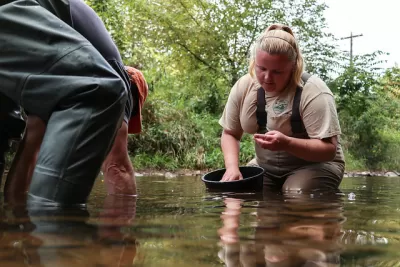
Published the same week as the Trump Administration's infrastructure plan, a bleak portrayal of water supply in rural Kentucky is a reminder of how decades of neglect have impacted parts of the nation with the fewest resources.
"Sometimes they get no water," Jenny Jarvie reports from Martin County, which lies along the border with West Virginia. "Other times just a trickle. Often, they say, their water is so discolored it resembles milk or Kool-Aid or beer."
Since 2012, the Martin County Water District has been cited no fewer than 36 times for violations of the Environmental Protection Agency's safe drinking water standards.
"Water outages and boil-water advisories have long plagued this rugged former coal mining region on the eastern tip of Kentucky, where more than half a century ago President Lyndon Johnson launched his war on poverty. Frequently, water bills here come with warnings — notifying residents the water contains high levels of disinfectant byproducts that could, over time, increase their risk of liver and kidney problems and cancer."
It's not so much a problem of polluted supply as it is of what happens between the treatment plant and the tap—more than 50 percent of the water is lost to "aging, leaky pipes" that also allow contaminated groundwater to get in.
Like an alarmingly large percentage of water utilities across the country, the MCWD doesn't have money for major repairs. After service was completely shut off to more than a thousand residents this winter due to frozen pipes, the county declared a state of emergency and asked the state if it could raise rates by 49 percent; the state has not yet decided.
And even then, Jarvie reports, the chair of the water board describes the rate raise as "putting a patch on a bomb."
"Officials representing the water district, which is more than $800,000 in debt and has been estimated to be in need of around $13 million for repairs, told the commission they were on the brink of financial collapse."During the winter outages, employees had to resort to digging up old lines and making repairs with used parts."

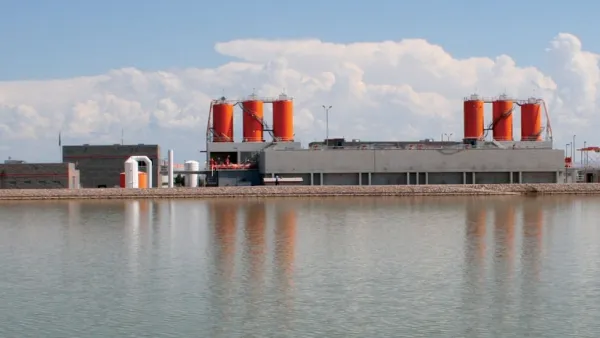
El Paso Wastewater Purification Facility Breaks Ground
As water supplies become strained and technology advances, cities look to wastewater as a viable source of drinking water.
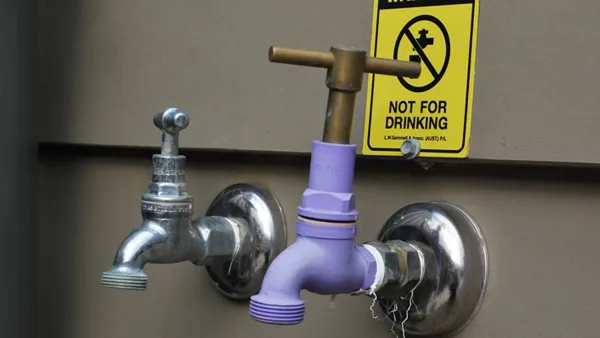
The Real Cost of Clean Water in One Kansas Town
Pretty Prairie has water with very high levels of nitrates, and lots of farmers that need to use nitrates if they want to keep the local economy going.
First Step to Restoring Drinking Water for Flint—Coat the Existing Pipes
Gov. Rick Snyder (R-Mich.) announced on Wednesday that the state is working to ensuring safe tap water for Flint residents. While there is no schedule to replace the corroded lead pipes, they are being treated to prevent further lead leaching.

The state-sanctioned urbicide of Austin
People don’t kill cities. Freeways do.

US to reduce Colorado River water deliveries to Mexico
A new Colorado Treaty amendment reduces Mexico’s Colorado River water allocation by 250,000 acre feet.

New Jersey’s second-largest city bans standalone data centers
Jersey City will continue to allow co-location facilities, such as those meant for research institutions that store their own data.

Amtrak not solely to blame for New Jersey commuter rail's unreliability, report finds
A new study from the Garden State Initiative found that NJ Transit’s budget grew 20% across a 4 year period, but reliability declined significantly over the same period.

EPA erases limits on planet-warming pollution from power plants
Under Monday’s plan, power plants would still have some limits on how much mercury, arsenic and other contaminants they can emit.

Phoenix announces new on-demand transit service, more frequent RAPID buses
Both new services will launch in October, and are part of Phoenix's Project Effective Access Solutions for Easing Congestion.

FREE Course: Walkable City 1: Why Walkability?
After describing his path towards focusing on walkability as the essence of good planning, Jeff Speck marches through his five principal reasons for making more walkable places.
Reinventing Malls: Planning Alchemy—Turning Gray Fields Into Gold
The course focuses on the opportunities and imperatives that shape reinvention of mall sites.

Eagle County Government
Harvard University Graduate School of Design
Nashville Planning Department
The Architects Foundation
University of Cincinnati Online
The Pocatello Development Authority
The Urban Renewal Agency of the City of Pocatello
Journal of the American Planning Association