Smart growth advocates have been making this point for years, but a new report from the Washington, D.C. regional planning organization provides more evidence for the strategic location of population and job growth.


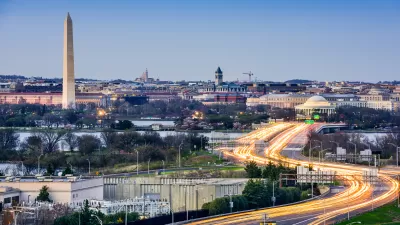
The Transportation Planning Board—the metropolitan planning organization (MPO) for metropolitan Washington D.C.—recently released a study linking transportation and land use planning, according to an article by David Alpert.
Actually, the "Long-Range Plan Task Force: Draft Analysis Results" report analyzed ten possible transportation improvements for their potential for enabling more jobs and housing in the eastern reaches of the Washington, D.C. region, but only one of those options had to do with land use. Nonetheless, the report found that a balanced approach to regional land use would be the second-most effective approach to reducing congestion, increasing housing options, and improving access to jobs.
"Steering more of the jobs and housing growth (especially jobs) to the east side of the region (like east of the Anacostia River, eastern Montgomery, Prince George's, Alexandria, and Route 1 in Fairfax) and putting more of that growth near transit," would cut traffic delays by 18 percent, according to Alpert's explanation of the report's findings. Other effective transportation planning improvements include travel demand management and an express travel network.
Read the full story: The best way to improve transportation in our region is…

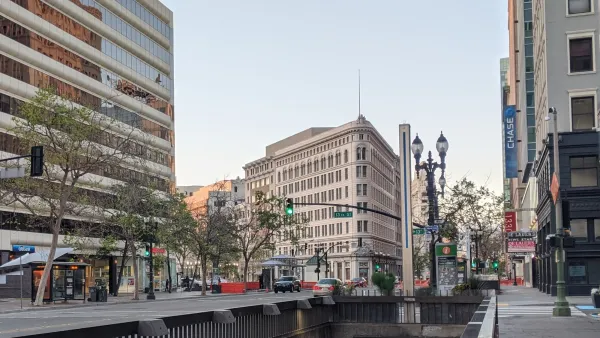
Oakland Drafts First Revision of General Plan Since 1998
The public has until April 23 to comment on the sweeping plan that addresses land use, transportation, and infrastructure.

Micromobility Plus Transit Equals Jobs
Linking micromobility options to public transit can improve job acessibility, new research finds.

Major U.S. Metro Areas in a Transition Period, According to Census Analysis
The nation's growth slowed from 2010 and 2020, according to 2020 Census data, and demographers are still trying to figure out what population trends mean for the future of country's major metropolitan areas.

Planetizen Federal Action Tracker
A weekly monitor of how Trump’s orders and actions are impacting planners and planning in America.

California plans to bury El Niño’s downpour
If the state plays its cards right, it may be able to store a billion acre-feet of El Niño’s water in aquifers.

Chicago breaks ground on $3 billion megadevelopment
The new neighborhood, titled Foundry Park, will one day host 3,700 residences.

Move over, LA: St. Louis gears up for Olympics, invests millions in downtown redevelopment
The Missouri city will host the 2028 Olympic soccer group stage and knockout matches.

Satanic place names
From streams and lakes to valleys and canyons, I mapped more than 1,000 places named after the Devil.

California High-Speed Rail Authority CEO resigns after $600,000 scandal
Under Ian Choudri, the authority used taxpayer dollars to fund first class flights and trips to nightclubs.

FREE Course: Walkable City 1: Why Walkability?
After describing his path towards focusing on walkability as the essence of good planning, Jeff Speck marches through his five principal reasons for making more walkable places.
Reinventing Malls: Planning Alchemy—Turning Gray Fields Into Gold
The course focuses on the opportunities and imperatives that shape reinvention of mall sites.

City of Rosemead
Rutgers University, Edward J. Bloustein School of Planning and Public Policy
One Hundred Miles
Hunter College, City University of New York (CUNY)
The Architects Foundation
University of Cincinnati Online
City of Cambridge
Montrose County
The Pocatello Development Authority