The new group will challenge the unequal distribution of mobility resources to low-income communities of color.


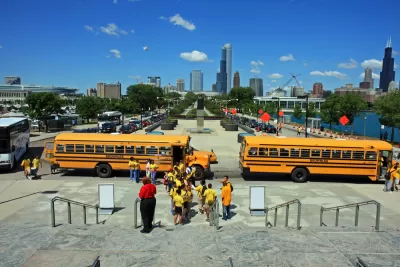
A new grassroots group wants to make Chicago "a worldwide model on how to normalize, prioritize, and operationalize equity"—beginning in the sphere of mobility. For Streetsblog Chicago, John Greenfield explains the core tenant of the organization, called Equiticity:
"The consequences of historic segregation and disinvestment 'along with the stark lack of equity in the distribution of resources' have contributed to unsafe and inefficient conditions for walking, transit use, and biking in Black and Brown communities, [and] this represents a missed opportunity to improve health and economic outcomes and reduce violence."
Equiticity was founded by Oboi Reed, who previously co-founded Slow Roll Chicago to promote bicycling in low-income communities of color. Greenfield writes that the new organization represents "a declaration of independence" from the planners and advocates Slow Roll has worked with in the past, who Reed says "are still trying to figure out, ‘What is equity?'"
As its first project, Equiticity will partner with bike-share companies to establish bike "libraries" in two low-to-moderate-income African-American communities. The group also plans to advocate for mobility justice in communities across the United States.
FULL STORY: Oboi Reed Launches Equiticity, a New Group to Push for Mobility Justice Nationwide

Atlanta Unveils Strategy for Equitable Resilience
The new plan tackles housing affordability and food justice alongside water supply and greenhouse gas emissions.

Congress Moves to End Reconnecting Communities and Related Grants
The House Transportation and Infrastructure Committee moved to rescind funding for the Neighborhood Equity and Access program, which funds highway removals, freeway caps, transit projects, pedestrian infrastructure, and more.
From Throughway to Public Space: Taking Back the American Street
How the Covid-19 pandemic taught us new ways to reclaim city streets from cars.

Planetizen Federal Action Tracker
A weekly monitor of how Trump’s orders and actions are impacting planners and planning in America.

The state-sanctioned urbicide of Austin
People don’t kill cities. Freeways do.

US to reduce Colorado River water deliveries to Mexico
A new Colorado Treaty amendment reduces Mexico’s Colorado River water allocation by 250,000 acre feet.

Mamdani overhauls NYC's Vision Zero plan with 100 new policy goals
The overhaul aims to reduce traffic deaths and make streets safer for pedestrians, cyclists and drivers through lower speed limits, new safety infrastructure and more.

Amtrak not solely to blame for New Jersey commuter rail's unreliability, report finds
A new study from the Garden State Initiative found that NJ Transit’s budget grew 20% across a 4 year period, but reliability declined significantly over the same period.

EPA erases limits on planet-warming pollution from power plants
Under Monday’s plan, power plants would still have some limits on how much mercury, arsenic and other contaminants they can emit.

FREE Course: Walkable City 1: Why Walkability?
After describing his path towards focusing on walkability as the essence of good planning, Jeff Speck marches through his five principal reasons for making more walkable places.
Reinventing Malls: Planning Alchemy—Turning Gray Fields Into Gold
The course focuses on the opportunities and imperatives that shape reinvention of mall sites.

Eagle County Government
Harvard University Graduate School of Design
Nashville Planning Department
The Architects Foundation
University of Cincinnati Online
The Pocatello Development Authority
The Urban Renewal Agency of the City of Pocatello
Journal of the American Planning Association