The city of Chicago is already taxing rides with transportation network companies like Uber and Lyft. Now mayor Rahm Emanual wants to raise those fees and spend the extra money on transit projects.


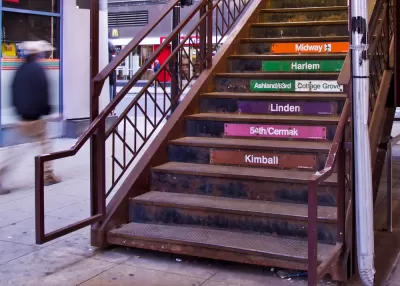
Heather Cherone breaks the news about a potentially game changing proposal in Chicago, where "[t]he city is set to raise taxes on Uber or Lyft rides by 29 percent next year to fund improvements to CTA bus and train lines."
Mayor Rahm Emanual announced the proposed tax earlier this week, but the City Council still needs to approve the tax next month. If approved, "the city will add 67 cents to the cost of every ride hailed with a service such as Uber or Lyft next year, up from the current charge of 52 cents per ride," according to Cherone. " In 2019, that surcharge will rise another 5 cents to 72 cents — a 38 percent increase from 2017 rates, according to the mayor's proposal."
The city's existing rideshare taxes and fees are already generating a significant chunk of revenue—$56.9 million in 2016, with 81 percent of the money coming from Uber and Lyft. "In 2017, the city expects to collect $85.2 million, with 88 percent coming from Uber and Lyft," adds Cherone.
Read the full story: New Tax On Uber, Lyft Would Pay For CTA Improvements, Rahm Says

Chicago's Innovative Ride-Hailing Tax Approved
The Chicago City Council has approved a new budget that includes a new transit funding mechanism that could level the playing field for transit.

Op-Ed: Ride Sharing Tax Will Help Poor
Chicago's Mayor Emanuel's proposed tax would be used for the benefit of transit.
New Research Connects Land Use to Ride-Hailing Trips
Many of the places in Chicago generating the most ride-hailing trips with services like Uber and Lyft are accessible by transit, according to new research.

Planetizen Federal Action Tracker
A weekly monitor of how Trump’s orders and actions are impacting planners and planning in America.

California plans to bury El Niño’s downpour
If the state plays its cards right, it may be able to store a billion acre-feet of El Niño’s water in aquifers.

Chicago breaks ground on $3 billion megadevelopment
The new neighborhood, titled Foundry Park, will one day host 3,700 residences.

California High-Speed Rail Authority CEO resigns after $600,000 scandal
Under Ian Choudri, the authority used taxpayer dollars to fund first class flights and trips to nightclubs.

Want to study the Missouri River? Soon, you may need unanimous approval from 10 states
Legislation would require 10 governors’ permission to study or build projects moving water outside the basin.

Desperate measures: Advocates weigh draining Lake Powell to fill Colorado River
Draining the reservoir could reduce evaporation losses by a couple hundred thousand acre-feet.

FREE Course: Walkable City 1: Why Walkability?
After describing his path towards focusing on walkability as the essence of good planning, Jeff Speck marches through his five principal reasons for making more walkable places.
Reinventing Malls: Planning Alchemy—Turning Gray Fields Into Gold
The course focuses on the opportunities and imperatives that shape reinvention of mall sites.

City of Rosemead
Rutgers University, Edward J. Bloustein School of Planning and Public Policy
One Hundred Miles
Hunter College, City University of New York (CUNY)
The Architects Foundation
University of Cincinnati Online
City of Cambridge
Montrose County
The Pocatello Development Authority