A Toronto Star columnist frames a recent spate of pedestrian fatalities in stark terms.



Edward Keenan has seen the drivers in Toronto who believe there is a war on cars evident in decisions to slow traffic, remove lanes, or devote space and money to alternative forms of transportation. "But if there’s a war going on, the cars are pretty much the only ones inflicting any casualties," Keenan writes.
Keenan's column follows a tragic week in Toronto: "two more pedestrians killed after being hit by cars Wednesday night and Thursday morning. That makes seven in the past eight days, including four in one day leading into Sept. 29."
Kennan's concern over this string of tragic events produces a line of argument that counters the usually pro-car stances of most mainstream media columnists:
This is not a war. If anything it’s more akin to a slaughter. Measures to make streets safer by changing speed limits, changing road design, introducing bike lanes and so on are not ways of waging war. They are proposals that seek to provide peace. To end the deaths and injuries. To preserve life.
Kennan's argument comes in the context not only of the recent deaths, some of which occurred at locations where safety measures were proposed but rejected, but also as the city of Toronto reconsiders the Bloor Bike Lane pilot project.
FULL STORY: If Toronto is waging war on the car, why are drivers the only ones racking up the body count?: Keenan

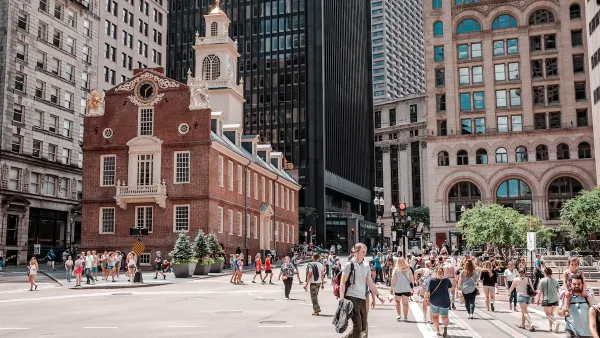
Report: Top US Cities for Pedestrian Safety
The East Coast takes the top three spots, while the South and Southwest dominate the bottom of the list.
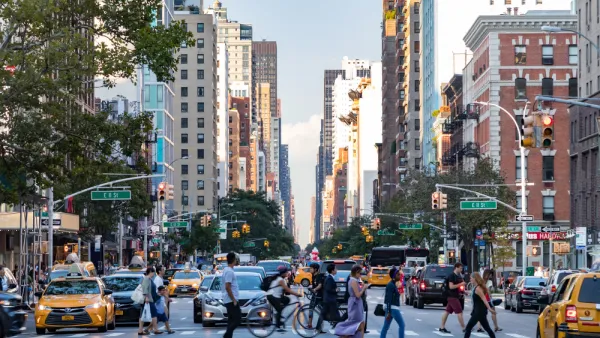
Study: Streets With High Foot Traffic Also See High Driving Speeds
A detailed study of where people walk reveals that driving speeds on many of the streets most used by pedestrians in U.S. cities are higher than recommended speeds, putting pedestrians at higher risk for serious injuries and death.

Cincinnati Gets Serious About Pedestrian Safety
A new in-house team dedicated to pedestrian safety at Cincinnati City Hall and a new complete streets ordinance are some of the changes underway in Cincinnati.

Planetizen Federal Action Tracker
A weekly monitor of how Trump’s orders and actions are impacting planners and planning in America.

The state-sanctioned urbicide of Austin
People don’t kill cities. Freeways do.

US to reduce Colorado River water deliveries to Mexico
A new Colorado Treaty amendment reduces Mexico’s Colorado River water allocation by 250,000 acre feet.

5 New England states march closer to 800 megawatt wind energy project
Securing federal approval for the project may be complicated under the Trump administration, which has historically been hostile towards domestic wind power.

Baltimore to break ground on $50 million Transit Priority Project
The project will bring faster bus trips, safer streets and better bike connections to Baltimore.

Airbnb launches $250 million 'last-dollar financing' housing accelerator, makes first investment in Austin
The company will put $6.4 million towards affordable housing development in Texas’ capital.

FREE Course: Walkable City 1: Why Walkability?
After describing his path towards focusing on walkability as the essence of good planning, Jeff Speck marches through his five principal reasons for making more walkable places.
Reinventing Malls: Planning Alchemy—Turning Gray Fields Into Gold
The course focuses on the opportunities and imperatives that shape reinvention of mall sites.

Eagle County Government
Harvard University Graduate School of Design
Nashville Planning Department
The Architects Foundation
University of Cincinnati Online
The Pocatello Development Authority
The Urban Renewal Agency of the City of Pocatello
Journal of the American Planning Association