Eight years ago, a proposal to charge on drivers entering the most congested parts of Manhattan was soundly defeated when it moved from the city to the state. Now the idea is being revisited again, with support from the governor.


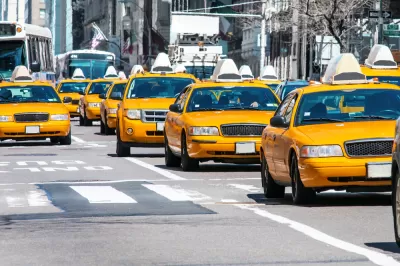
Marc Santora reports that New York Governor Andrew Cuomo is revisiting the idea of congestion pricing in New York City. The idea is a familiar one—former Mayor Michael Bloomberg proposed a congestion pricing plan eight years ago, but was defeated by state lawmakers in Albany.
"Now, with the city’s subways in crisis — with daily delays increasingly common and its equipment in dire condition — Gov. Andrew M. Cuomo, who once doubted that congestion pricing would gain any traction in the state, is planning to resurrect the idea and will expend political capital to see it succeed," reports Santora.
Governor Cuomo is quoted in the article claiming that the new plan, though still not public, is an improvement on Bloomberg's proposal. A key priority of the new plan, according to Santora, "is making it as palatable as possible to commuters from the suburbs and boroughs outside Manhattan without undercutting the primary goals: providing a dedicated funding stream for the transit system, while reducing traffic squeezing onto some of the country’s most gridlocked streets."
Gov Cuomo's plan to use congestion pricing as a revenue generating tool for transit can be contrasted with a Mayor Bill de Blasio's idea to tax wealthy New Yorkers for the same purpose, revealed earlier in August.
FULL STORY: Cuomo Calls Manhattan Traffic Plan an Idea ‘Whose Time Has Come’

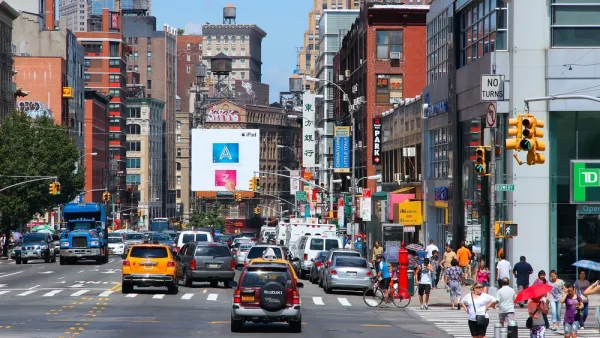
Manhattan Congestion Pricing Effort Ends With For-Hire Vehicle Fee
A new fee on trips made in ride-hailing and other for-hire vehicles and taxis in much of Manhattan was approved by the New York State legislature as part of the budget legislation. Plans for future tolls on cars and trucks weren't included.
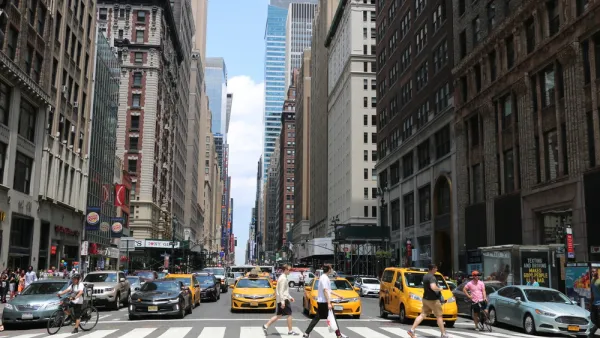
Praise for Gov. Andrew Cuomo from New York Times on Cordon Pricing
Thanks to the governor's support, there is reason for optimism that a plan to charge motorists entering Manhattan below 60th St. and toll the East River bridges will have a better outcome than Mayor Michael Bloomberg's plan did in April 2008.
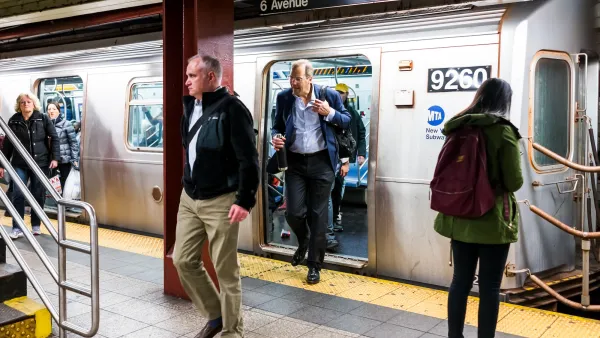
NYC to Upgrade 1/3 of its Subway Car Fleet
The MTA is seeking proposals for up to 2,390 new subway cars to upgrade its aging fleet.

The state-sanctioned urbicide of Austin
People don’t kill cities. Freeways do.

US to reduce Colorado River water deliveries to Mexico
A new Colorado Treaty amendment reduces Mexico’s Colorado River water allocation by 250,000 acre feet.

New Jersey’s second-largest city bans standalone data centers
Jersey City will continue to allow co-location facilities, such as those meant for research institutions that store their own data.

Amtrak not solely to blame for New Jersey commuter rail's unreliability, report finds
A new study from the Garden State Initiative found that NJ Transit’s budget grew 20% across a 4 year period, but reliability declined significantly over the same period.

EPA erases limits on planet-warming pollution from power plants
Under Monday’s plan, power plants would still have some limits on how much mercury, arsenic and other contaminants they can emit.

Phoenix announces new on-demand transit service, more frequent RAPID buses
Both new services will launch in October, and are part of Phoenix's Project Effective Access Solutions for Easing Congestion.

FREE Course: Walkable City 1: Why Walkability?
After describing his path towards focusing on walkability as the essence of good planning, Jeff Speck marches through his five principal reasons for making more walkable places.
Reinventing Malls: Planning Alchemy—Turning Gray Fields Into Gold
The course focuses on the opportunities and imperatives that shape reinvention of mall sites.

Eagle County Government
Harvard University Graduate School of Design
Nashville Planning Department
The Architects Foundation
University of Cincinnati Online
The Pocatello Development Authority
The Urban Renewal Agency of the City of Pocatello
Journal of the American Planning Association