It's been a century since a hurricane larger than category three has scored a direct hit on the Tampa Bay region. If a storm arrives to change that streak of luck, it will find a region severly underprepared to deal with the effects of sea-level rise


Darryl Fears writes a feature-length article detailing the environmental threat to Tampa Bay: "The area is due for a major hurricane, and it is not prepared. If a big one scores a direct hit, the damage would likely surpass Katrina."
Two reports have sounded the alarm for Tampa Bay. The first, by CoreLogic, "reported that the region would lose $175 billion in a storm the size of Hurricane Katrina." The second, by the World Bank, "called Tampa Bay one of the 10 most at-risk areas on the globe."
The imminent threat is exacerbated by sea-level rise along the region's 700 miles of shoreline. "Yet the bay area — greater Tampa, St. Petersburg and Clearwater — has barely begun to assess the rate of sea-level rise and address its effects," according to Fears.
The Washington Post devoted a host of resources for this feature, supplementing the story with animations and videos to bring home the reality of the threats facing this region.
Read the full story: Tampa Bay’s coming storm

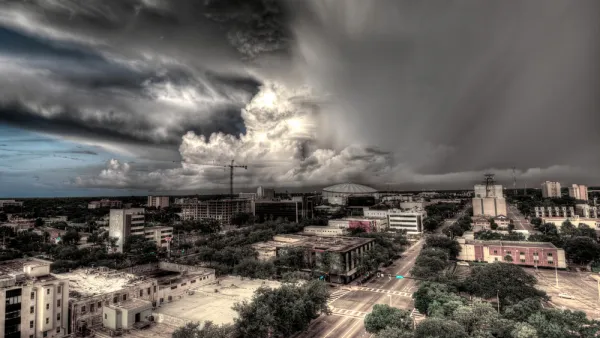
Tampa Bay Isn't Prepared for the Hurricanes of the Future
The area is especially vulnerable to storm surge, and increased development means more people are at risk when major hurricanes push through.
Resilience and Affordable Housing Key Topics at Florida Conference
The conference brought together local planners and policymakers to develop strategies for boosting resilience in coastal areas while maintaining affordable housing stock.
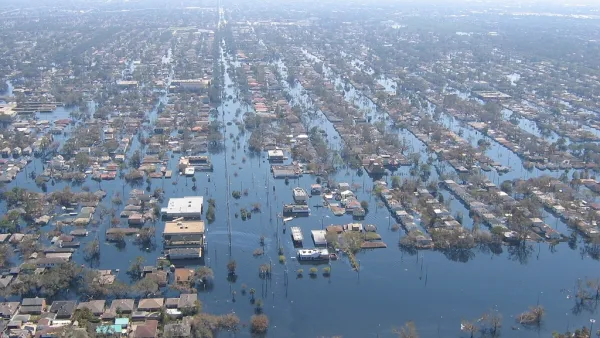
Homeland Security Advisor Recognizes Effects of Climate Change, Ignores Causes
In response to a question linking Hurricanes Irma and Harvey to climate change, White House Homeland Security Advisor Tom Bossert appeared to recognize the need to adapt. He qualified his statement regarding the "cause" of said climate change.

Planetizen Federal Action Tracker
A weekly monitor of how Trump’s orders and actions are impacting planners and planning in America.

Amtrak, CN end decades-long dispute with eight-year agreement
The new operating agreement establishes an updated framework for the companies to work together, including processes to resolve disputes.

Judges permit Denver to divert 77,000 acre feet from the Colorado River for reservoir expansion
Overuse and climate change have caused the Colorado River’s water levels to plummet.

NYC DOT wants faster, more permanent street upgrades
The city is examining ways to build more concrete infrastructure without getting entangled in 'decades-long' projects.

'Something we’ve never seen before:' rising utility rates could strain city finances nationwide
Data centers, climate change and other factors have caused utility rates in the United States to increase by 38% since 2020.

Trump to overrule local leaders, lease millions of acres of America’s Pacific Island territories’ seafloors to mining companies
International law says that the Indigenous people of America’s territories have a right to prior and informed consent regarding projects that impact their countries.

FREE Course: Walkable City 1: Why Walkability?
After describing his path towards focusing on walkability as the essence of good planning, Jeff Speck marches through his five principal reasons for making more walkable places.
Reinventing Malls: Planning Alchemy—Turning Gray Fields Into Gold
The course focuses on the opportunities and imperatives that shape reinvention of mall sites.

Harvard University Graduate School of Design
KFH Group Inc.
Greater Baltimore Committee
The Architects Foundation
University of Cincinnati Online
The Pocatello Development Authority
The Urban Renewal Agency of the City of Pocatello