The infrastructure improvements funded by the ReBuild Houston initiative are moving forward. The latest example, the Lower Westheimer Corridor Study, recently released a concept video to make the case for a suite of roadway improvements.


"This week the city of Houston released a video of a virtual drive down what the Lower Westheimer area would look like after planned changes are made," according to an article by Craig Hlavaty.
The Lower Westheimer Corridor Study is funded by ReBuild Houston, the city's controversial drainage fee designed to fund infrastructure repair projects. According to the city's Corridor Study website, a nine-month study will help the city produce recommendations for an improved roadway design "that considers the needs of all of the stakeholders" while preserving and enhancing the character of the corridor and improving mobility and safety.
In the meantime, stakeholders and residents (and the rest of us around the country) can check out the concept visualization.
Read the full story: City of Houston video lets locals virtually drive down Lower Westheimer after proposed changes
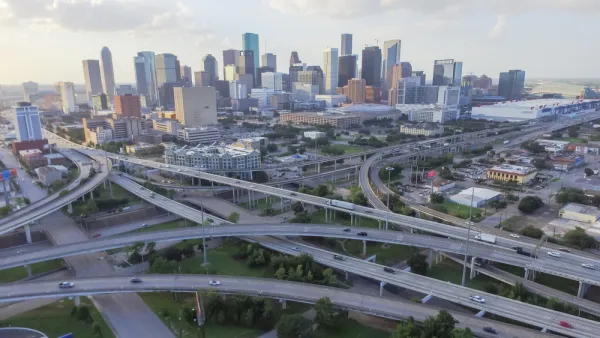
TxDOT Approves I-45 Widening Despite Local Opposition
Despite every manner of local opposition, the Texas Department of Transportation is pushing forward with a plan to widen Interstate 45 north of the city of Houston, demolishing and displacing thousands of homes, businesses, and community facilities.
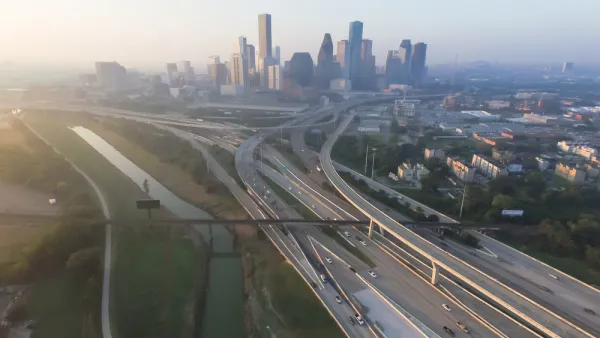
Environmental Study Released for $7 Billion Houston Highway Project
The final environmental impact statement for the controversial North Houston Highway Improvement Project is available for public comment, courtesy of the Texas Department of Transportation.

Tolls Not Included: Toll Proposals Keep Ending Up in the Dustbin in Texas
Another example of the growing political and planning opposition to the idea of tolling new roads in Texas.

Planetizen Federal Action Tracker
A weekly monitor of how Trump’s orders and actions are impacting planners and planning in America.

Eastern Nebraska is running out of electricity
Data centers and electrification are straining eastern Nebraska’s grid, throttling economic development.

Washington state to charge fee to drivers with fuel-efficient cars
Revenue from the fee will go towards supporting the state’s highways.

Instead of building new housing, LA developers are turning mansions into mega-mansions
In the richest areas, the number of houses valued at $30 million with demolition permits has skyrocketed since 2018.

Illinois considers spending $1 billion in taxpayer money on data center
A quantum computing campus and data center are currently under construction in Chicago.

As development costs rise, Boston moves to lessen affordable housing requirements
The Boston Zoning Commission and the City Council still need to approve Boston Mayor Michelle Wu’s proposed changes

FREE Course: Walkable City 1: Why Walkability?
After describing his path towards focusing on walkability as the essence of good planning, Jeff Speck marches through his five principal reasons for making more walkable places.
Reinventing Malls: Planning Alchemy—Turning Gray Fields Into Gold
The course focuses on the opportunities and imperatives that shape reinvention of mall sites.

City of Charlotte
City of Rosemead
Rutgers University, Edward J. Bloustein School of Planning and Public Policy
University of Michigan School for Environment and Sustainability (SEAS)
Hunter College, City University of New York (CUNY)
The Architects Foundation
City of Cambridge
The Pocatello Development Authority
The Urban Renewal Agency of the City of Pocatello