An appeals court on Friday granted the Trump Administration's request to suspend lawsuits on the Clean Power Plan, dealing a major blow against President Obama's signature climate initiative to reduce carbon emissions from existing plants.


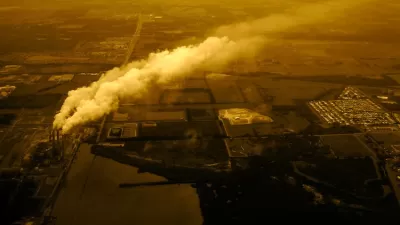
With the signing on March 28 of the president's executive order, "Promoting Energy Independence and Economic Growth," the rollback of the Clean Power Plan was set in motion. The first step was to "get permission from the U.S. Court of Appeals for the D.C. Circuit, where the rule is tied up in litigation, to revisit the matter," notes the post on the signing of the order.
That critical step was taken by the court on April 28, when it stayed "litigation against the Environmental Protection Agency rule for 60 days," report for The Washington Post.
Opponents of the Obama-era rule, which sought to impose the first-ever federal limits on existing power plants, hailed the decision.
“The D.C. Circuit has done the right thing,” David Rivkin, a constitutional lawyer who represented the 28 states that sued over the regulation, said in an interview. “It is indeed the death knell of the Clean Power Plan.
According to statements in the article by the Sierra Club and Environmental Defense Fund, both parties in the court case supporting the rule, all is not lost.
Eilperin and Dennis note some good news for the environmental community on a different regulation affecting power plant emissions. They note that the March 28 executive order also instructed EPA to rewrite the 2015 rule known as the “Carbon Pollution Standard for New Power Plants" and for Attorney General Jeff Sessions to ask the D.C. Circuit to suspend litigation against that rule.
However, since the Supreme Court's emergency order in February 2016 did not suspend that rule, it remains in effect.
Correspondent's note: As Planetizen's editor posted in February, "Changes in Environmental Policy Already Apparent on the EPA Website," you, the reader, may soon become aware of them if you haven't already.
For example, EPA's link for the aforementioned "Carbon Pollution Standard for New Power Plants," introduced in 2013 and also described here, now directs readers to the March 28 Executive Order, which calls for a review of the Clean Power Plan, even though the rule remains in effect, as The Post's reporters explained.
Sadly, Planetizen may need to rely on outside sources, like Wikipedia or the Center for Climate and Energy Solutions (C2ES) – "an independent, nonpartisan, nonprofit organization working to forge practical solutions to climate change," for explanations of EPA rules, such as the Carbon Pollution Standard for New Power Plants. But be forewarned, because links within C2ES' description direct readers to EPA sites that have been altered.
Read the full story: Court freezes Clean Power Plan lawsuit, signaling likely end to Obama’s signature climate policy
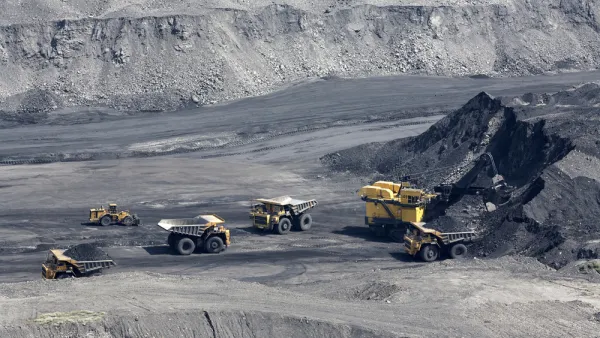
Coal Miners Are Going Back to Work, Proclaims Trump Upon Signing Executive Order
Flanked by coal miners, President Trump signed an executive order on Tuesday that begins the roll back of his predecessor's signature environmental rule, the Clean Power Plan, and other environmental regulations to facilitate energy production.
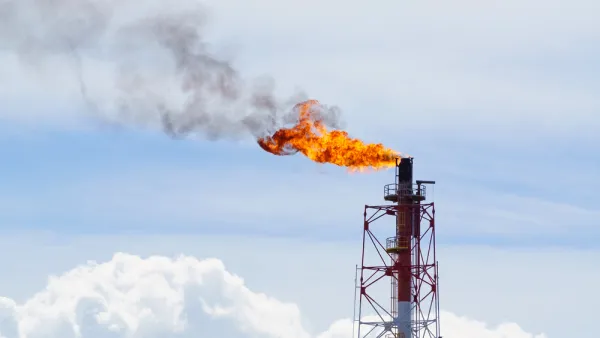
Big Oil Not Happy With Methane Regulation Rollback
The Trump administration's rollback on August 29 of an Obama-era regulation to reduce methane emissions in the production and distribution of oil and natural gas did not sit well with large oil and gas companies who see value in reducing emissions.
Appeals Court Rebuffs Trump's EPA on Methane Emissions Suspension
In a win for the environment, a D.C. Circuit panel ruled that EPA Administrator Scott Pruitt could not arbitrarily suspend the starting date of a landmark Obama rule that would reduce methane emissions from new and modified oil and gas wells.

Planetizen Federal Action Tracker
A weekly monitor of how Trump’s orders and actions are impacting planners and planning in America.

California plans to bury El Niño’s downpour
If the state plays its cards right, it may be able to store a billion acre-feet of El Niño’s water in aquifers.

Desperate measures: Advocates weigh draining Lake Powell to fill Colorado River
Draining the reservoir could reduce evaporation losses by a couple hundred thousand acre-feet.

Chicago voters approve permanent festival grounds, penalty for vacant property owners
Currently, major summer and fall festivals take over public parks for weeks at a time, drawing criticism from nearby residents

NYC votes to cut outdoor dining red tape, speed up permitting
New York City also voted to allow the Department of Transportation to begin work on urgent projects before notifying elected officials.

California appears to reject Prop. 45
The proposition would have expanded the projects that qualify for a streamlined environmental review, effectively paring down the California Environmental Quality Act.

FREE Course: Walkable City 1: Why Walkability?
After describing his path towards focusing on walkability as the essence of good planning, Jeff Speck marches through his five principal reasons for making more walkable places.
Reinventing Malls: Planning Alchemy—Turning Gray Fields Into Gold
The course focuses on the opportunities and imperatives that shape reinvention of mall sites.

City of Rosemead
Rutgers University, Edward J. Bloustein School of Planning and Public Policy
One Hundred Miles
Hunter College, City University of New York (CUNY)
The Architects Foundation
University of Cincinnati Online
City of Cambridge
Montrose County
The Pocatello Development Authority