Some may find it silly to get worked up over an annual fee of about $100 to pay for road maintenance when electric vehicle purchasers receive a $7,500 federal tax credit, on top of generous state perks, but electric vehicle supporters object to them.


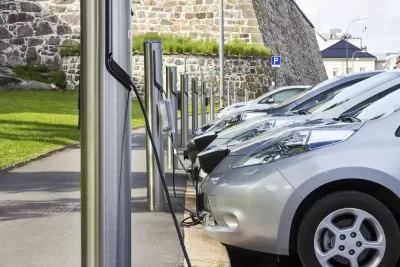
Ideally, all motor vehicles would pay a fee for each mile driven, so that electric vehicles, which pay no gas taxes for road upkeep, would be treated no differently than gas-consuming vehicles, like some motorists are now doing in Oregon.
However, the road usage charge, as most of these fees are called, are many, many years away, and the need to maintain roads is pressing. Consequently, ten states, according to Car and Driver, apply an annual electric vehicle (EV) fee between $50 and $200. [Also see U.S. Department of Energy, "November 30, 2015: States Assessing Fees On Electric Vehicles To Make Up For Lost Fuel Tax Revenue.]
In addition, "[s]ince the start of 2017, six states (Indiana, South Carolina, Kansas, Tennessee, New Hampshire, and Montana) have introduced legislation that would require EV owners to pay a fee of up to $180 a year," report Gina Coplon-Newfield and Maggie Newsham for the Sierra Club.
On the other hand, "[a]t least 37 states and the District of Columbia have current incentives—as of June 2015," for electric vehicles, according to the National Conference of State Legislatures. Also see the latest perks, December through February, that were issued to EVs in California, Delaware, Hawaii, Massachusetts and New York, posted by the U.S. Energy Department.
Rather than seeing these annual fees as a means for state governments to have EV owners help maintain the roads they operate on, David Roberts, energy and climate change reporter for Vox, sees them as "directly chipping away at support for EVs," which are already under siege:
The oil industry — which now faces a serious threat if more optimistic EV forecasts play out — does not like these policies one bit. To complement their ongoing war on solar power, the Koch brothers are organizing a $10 million a year campaign against pro-EV public policies under the banner of “Fueling US Forward.”
It is, in creepy Koch fashion, courting minorities by seeking to convince them that EV policies hurt their communities. ALEC, the state-level right-wing group that writes “model policies” for state Republicans, recently passed a "Resolution Regarding Subsidies for Electric Vehicles.” (Spoiler: They’re against.)
Roberts recognizes that state governments are pressed for infrastructure funds, pointing to the federal gas tax still stuck at 1993 levels. State governments are doing better, though at least 17 states haven't increased their gas taxes in over 20 years, according to the Institute on Taxation and Economic Policy.
Roberts asserts, "It is perverse for states to... inhibit this emerging market with new fees, in pursuit of a relatively paltry amount of revenue."
Clearly electric vehicles can not be held responsible for plummeting gas tax revenues.
The impact of 540,000 electric vehicles on the roads in the United States not paying gas taxes "is dwarfed by other factors, most notably construction cost inflation and fuel-economy improvements in gasoline-powered vehicles," wrote Carl Davis of the Institute on Taxation and Economic Policy in an email. Those improvements may come to a halt, though, if Environmental Protection Agency Administrator Scott Pruitt has his way.
As noted in an earlier post on these fees, legislation that increases state gas taxes may be an appropriate place to ensure that all vehicles contribute toward road infrastructure.
Take California, for example. Sen. Jim Beall is proposing to "increase the price-based gas excise tax by 7.5¢ per-gallon; adjust the diesel excise tax by 20¢ per-gallon; and increase the diesel sales tax by 4 percent," according to his Feb. 14 press release on S.B.1 passing its first senate committee.
The main concern that two senate Democrats have about the $100 EV fee in the legislation is that it is not high enough, according to Melanie Curry of Streetsblog California.
Senators Wiener (D-San Francisco) and Allen (D-Santa Monica) called for more investment in transit, and senators Wieckowski (D-Fremont) and Skinner (D-Berkeley) urged Beall to consider a higher fee on electric vehicles to better match what the average gas-burning car driver would pay in increased taxes.
“I understand the need to encourage people to buy and use electric vehicles,” said Senator Nancy Skinner. “But this is about paying for maintaining the roads we all drive on.”
Hat tip to Gina Coplon-Newfield, Director of the Sierra Club's Electric Vehicles Initiative.
Read the full story: Buying an electric vehicle? A growing list of states will charge you extra yearly fees.

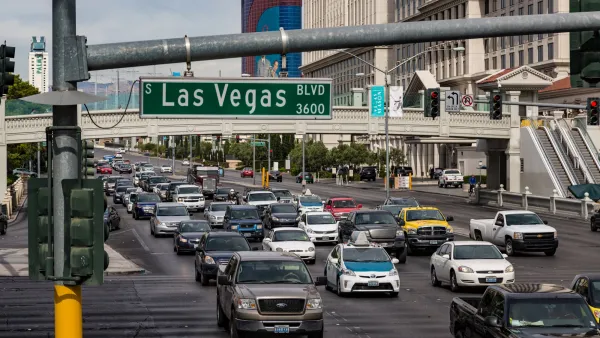
Nevada to Embark on 7-Year Program to Record Mileage of Motorists
Nevada is one of 15 states in the Western Road Usage Charge Consortium that are considering a transition from funding their transportation budgets largely by taxing the gallons of fuel that vehicles burn to charging drivers for miles driven.
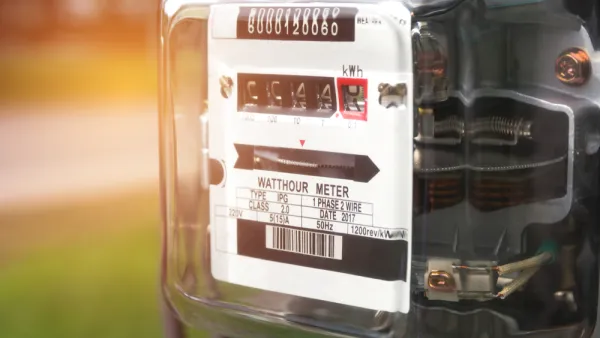
How Much Should Electric Vehicles Be Charged in Lieu of Gas Tax?
Currently, electric vehicles pay a $17.50 annual registration fee in Illinois. A bill to double the 19 cents per gallon gas tax, unchanged in almost 30 years, would also increase the EV fee over 57-fold to $1,000.
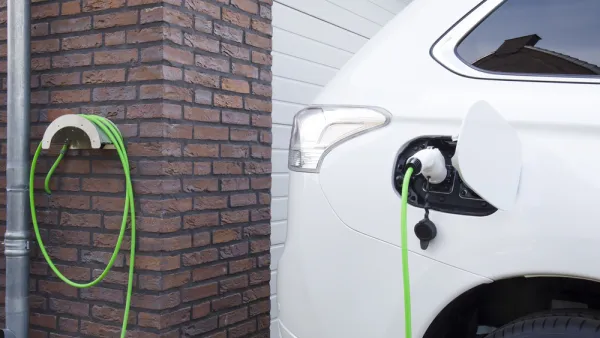
Mileage Fee or Annual Fee for Electric Vehicles?
What's the best way to ensure that electric vehicle drivers pay to maintain the roads they drive on, considering they don't pay fuel taxes? A new report from the UC Davis Institute of Transportation Studies was sent to the California legislature.

Planetizen Federal Action Tracker
A weekly monitor of how Trump’s orders and actions are impacting planners and planning in America.

Amtrak, CN end decades-long dispute with eight-year agreement
The new operating agreement establishes an updated framework for the companies to work together, including processes to resolve disputes.
Nation's most wind-powered state turns to coal as data centers increase energy demand
For the first time in decades, Iowa has increased its generation of coal power.

Alabama scores up to $2.5 billion federal loan for largest infrastructure project in state’s history
The Mobile River Bridge and Bayway Project aims to ease congestion at Alabama’s worst bottleneck.

Trump is considering data centers on 6 states' public land — some state officials say they had no idea
If the administration approves the proposed projects, data center and data center-related developments will cover 17,600 acres of public land.

Despite court ruling, Trump is keeping nearly all wind projects in the US on hold
At least 110 wind energy projects have not heard from the government since a federal judge ruled that the Trump administration's freeze on wind turbine clearances was likely illegal.

FREE Course: Walkable City 1: Why Walkability?
After describing his path towards focusing on walkability as the essence of good planning, Jeff Speck marches through his five principal reasons for making more walkable places.
Reinventing Malls: Planning Alchemy—Turning Gray Fields Into Gold
The course focuses on the opportunities and imperatives that shape reinvention of mall sites.

KFH Group Inc.
Greater Baltimore Committee
Eagle County Government
The Architects Foundation
University of Cincinnati Online
The Pocatello Development Authority
The Urban Renewal Agency of the City of Pocatello