The new operating agreement establishes an updated framework for the companies to work together, including processes to resolve disputes.


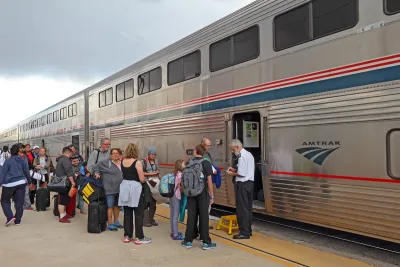
Amtrak and Illinois Central Railroad Company and Grand Trunk Western Railroad Company have signed an eight-year operating agreement outlining Amtrak service on CN’s rail lines. The agreement concludes a decades-long proceeding before the Surface Transportation Board regarding the conditions and operational performance for Amtrak services on CN tracks, where Amtrak saw reduced on-time performance due to conflicts, Noah Kolenda writes for Mass Transit.
“The operating agreement, which came after the pair opted to further extend negotiations in search of a settlement, establishes an updated framework for CN and Amtrak to work together, including a revised performance payment system more closely aligned with the Federal Railroad Administration’s (FRA) on-time performance standard, regular reviews of Amtrak’s schedules and processes to address operational issues and resolve disputes,” Mass Transit reports.
The companies also said they would work towards equipping Amtrak trains on CN’s network with Onboard Shut Enhancers, which helps ensure crossing warning systems at rail grade crossings activate on time.
Read the full story: Amtrak, CN sign eight-year operating agreement, ending decade-long STB dispute
Mixed Reviews on New Passenger Rail Reauthorization Act
Six years ago Congress passed the first Passenger Rail Reauthorization Act, known as PRIIA. Reauthorization was introduced on September 11, in a bill (known as PRRIA) praised by some but also criticized for decreasing Amtrak funding by 40 percent.
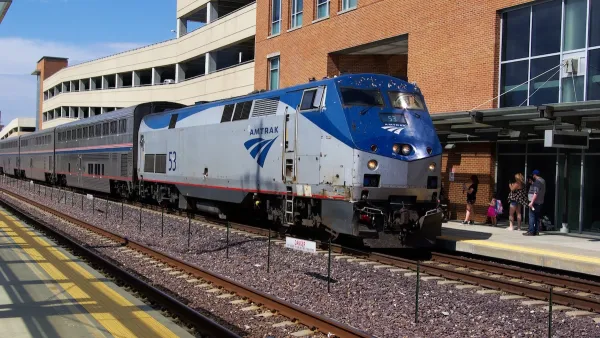
Officials claim feds 'rushed' Amtrak environmental review
Amtrak plans to move their Chicago maintenance facility from an industrial area to a residential one.
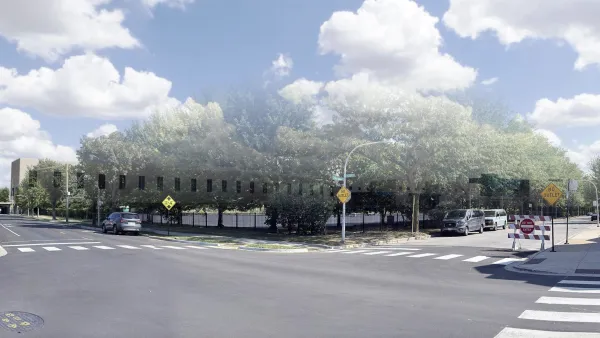
Feds to more closely scrutinize proposed Amtrak facility’s environmental impact
The Federal Railroad Administration had initially said the facility qualified for a less extensive environmental review.

Planetizen Federal Action Tracker
A weekly monitor of how Trump’s orders and actions are impacting planners and planning in America.

Eastern Nebraska is running out of electricity
Data centers and electrification are straining eastern Nebraska’s grid, throttling economic development.

Study reveals best places in the U.S. for cycling, walking
New research from Streetlight Data examines bicycle and pedestrian miles per capita in the 100 largest U.S. cities by population.

Next-generation nuclear reactors are coming to Texas
The reactors will not require towering containment structures thanks to new safety features.

California distributes $1.3 billion to prevent transit service cuts, bolster projects
Twenty-eight projects across California received a portion of the funding.

Pennsylvania Democrats have 15 affordability, clean energy bills for flipped state Senate
Bills in consideration include a bill supporting geothermal energy and a bill supporting solar on warehouses.

FREE Course: Walkable City 1: Why Walkability?
After describing his path towards focusing on walkability as the essence of good planning, Jeff Speck marches through his five principal reasons for making more walkable places.
Reinventing Malls: Planning Alchemy—Turning Gray Fields Into Gold
The course focuses on the opportunities and imperatives that shape reinvention of mall sites.

City of Charlotte
City of Rosemead
Rutgers University, Edward J. Bloustein School of Planning and Public Policy
University of Michigan School for Environment and Sustainability (SEAS)
Hunter College, City University of New York (CUNY)
The Architects Foundation
City of Cambridge
The Pocatello Development Authority
The Urban Renewal Agency of the City of Pocatello