How has the Green Line benefitted the economy of Washington, D.C.? A new report counts the ways.


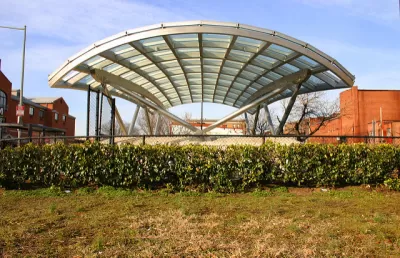
Susan Balding shares news of a new report into the economic effects of the Green Line where it passes through Washington, D.C. The Capitol Riverfront Business Improvement District commissioned the "GreenPrint of Growth 2.0" [pdf] report, five years after an initial report found surprising levels of population and economic growth along the Green Line corridor between the Petworth to Navy Yard stations.
As for the findings on economic growth from the most recent report, Balding writes:
To sum things up: it’s a lot —enough to generate $3.66 billion in tax revenues for the District over the next 20 years. Thanks to the increase in housing and retail near transit, the Green Line corridor has become an increasingly attractive place to live.
Balding breaks down the findings of the report with regard to the housing and retail developments that have arrived on the corridor, along with the resulting job growth in construction and other sectors of the economy. Balding also concludes the article with an appeal for equitable mobility: "As we add more mixed-use development near transit, it’s important to make sure that a diverse group of people are able to access and use it (and yes, this means afford it)."
Read the full story: Housing and jobs are popping up around the Green Line at breakneck pace
Density Increases Near Transit Station in D.C. But Ridership Does Not
D.C.'s ridership is down even as density around stations is up. More residents are choosing to drive or bike.
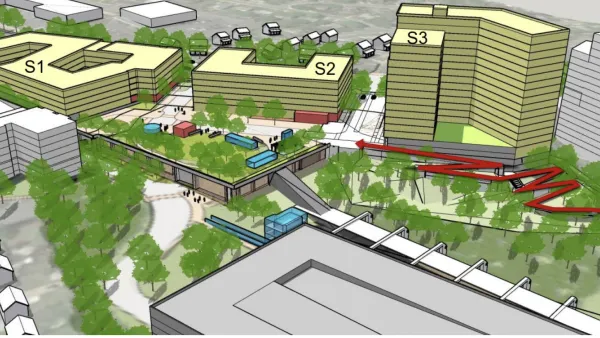
A New Transit Oriented Vision for Fairfax County, Virginia
A new transit station area plan is reaching the finishing line for the Huntington Metro station, serving the WMATA’s Yellow Line in Northern Virginia.
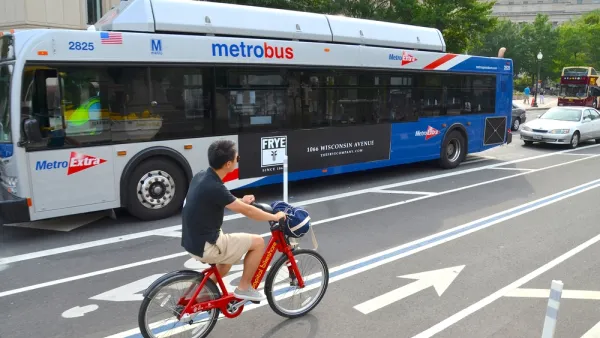
Report Lays Out a New Path for Bus Service in the D.C. Region
Ridership on the WMATA bus system, down an estimated 13 percent between 2012 and 2017, will need drastic innovations to reverse, according to a new report by the Bus Transformation project.

Planetizen Federal Action Tracker
A weekly monitor of how Trump’s orders and actions are impacting planners and planning in America.

Eastern Nebraska is running out of electricity
Data centers and electrification are straining eastern Nebraska’s grid, throttling economic development.

Study reveals best places in the U.S. for cycling, walking
New research from Streetlight Data examines bicycle and pedestrian miles per capita in the 100 largest U.S. cities by population.

Federal government nominates new FTA administrator
Mark Aesch is currently the founder and CEO of a transportation management consulting firm.

Developers reveal $10 billion stadium plan as ‘Hail Mary’ to keep Bears in Chicago
The plan would also boast a public park, high- and mid-rise buildings and a youth sports complex.

As Texas embraces carbon storage, a Black community questions the risks
Texas now issues permits for companies to store carbon dioxide underground. East Texas residents fear safety risks, and skeptics doubt the climate benefits.

FREE Course: Walkable City 1: Why Walkability?
After describing his path towards focusing on walkability as the essence of good planning, Jeff Speck marches through his five principal reasons for making more walkable places.
Reinventing Malls: Planning Alchemy—Turning Gray Fields Into Gold
The course focuses on the opportunities and imperatives that shape reinvention of mall sites.

City of Charlotte
City of Rosemead
Rutgers University, Edward J. Bloustein School of Planning and Public Policy
University of Michigan School for Environment and Sustainability (SEAS)
Hunter College, City University of New York (CUNY)
The Architects Foundation
City of Cambridge
The Pocatello Development Authority
The Urban Renewal Agency of the City of Pocatello