A new transit station area plan is reaching the finishing line for the Huntington Metro station, serving the WMATA’s Yellow Line in Northern Virginia.


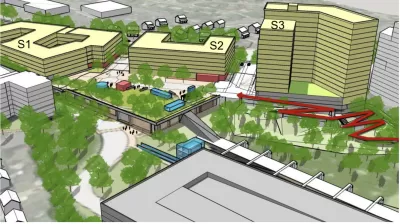
The area surrounding the Huntington Metro station in Fairfax County, Virginia, could soon have a new transit station area plan, prioritizing new transit oriented development that allows for mixed-use development, inclusionary zoning, and additional building heights.
Matt Blitz reports on the approval of the plan amendment by the Fairfax County Planning Commission on November 16. Blitz summarizes the plan as follows:
The plan calls for a mixed-use development on the site including 382,00 square feet of office, retail, and community-use space, a civic plaza, more urban park space, a network of bike and pedestrian paths, a possible hotel, and 15,000 residential units with a minimum of 15% of those being affordable.
Some of the political compromises reached during the plan’s development include lower building heights near homes on Biscayne Drive—85 feet instead of the original 200 feet.
The Fairfax County Board of Supervisors is expected to consider the plan amendment on December 6.
FULL STORY: Huntington Metro area development plan passes planning commission with big height reduction

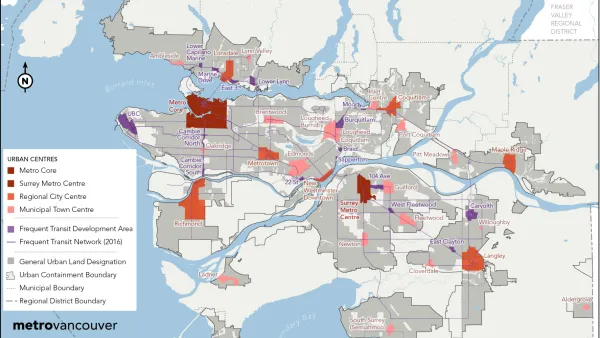
Vancouver Approves New Metro 2050 Regional Plan
The region around Vancouver in British Columbia has a new 30-year regional plan.
New Plans for Transit Oriented Development in South Central L.A.
Los Angeles County recently adopted the Florence-Firestone Transit Oriented District Specific Plan.
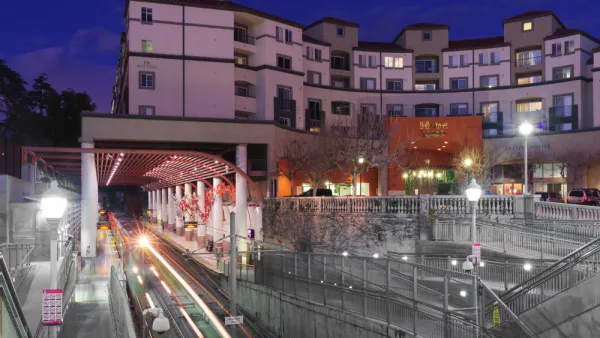
Feds to Award $13 Million for Transit Oriented Development Planning
A newly bolstered competitive grant program administered by the Federal Transit Administration has announced a new round of funding.

Planetizen Federal Action Tracker
A weekly monitor of how Trump’s orders and actions are impacting planners and planning in America.

The state-sanctioned urbicide of Austin
People don’t kill cities. Freeways do.

US to reduce Colorado River water deliveries to Mexico
A new Colorado Treaty amendment reduces Mexico’s Colorado River water allocation by 250,000 acre feet.

Baltimore to break ground on $50 million Transit Priority Project
The project will bring faster bus trips, safer streets and better bike connections to Baltimore.

Airbnb launches $250 million 'last-dollar financing' housing accelerator, makes first investment in Austin
The company will put $6.4 million towards affordable housing development in Texas’ capital.

Guerilla urbanists are building DIY bus stop benches in Chicago
A before-and-after of one of the bus stops with a new bench. The new benches are not officially sanctioned or permitted, but the residents who placed them hope they will be the start of a network of DIY benches across the city.

FREE Course: Walkable City 1: Why Walkability?
After describing his path towards focusing on walkability as the essence of good planning, Jeff Speck marches through his five principal reasons for making more walkable places.
Reinventing Malls: Planning Alchemy—Turning Gray Fields Into Gold
The course focuses on the opportunities and imperatives that shape reinvention of mall sites.

Eagle County Government
Harvard University Graduate School of Design
Nashville Planning Department
The Architects Foundation
University of Cincinnati Online
The Pocatello Development Authority
The Urban Renewal Agency of the City of Pocatello
Journal of the American Planning Association