With Pennsylvania a battleground state and Philadelphia a Democratic stronghold, ensuring that transit-dependent voters get to the polls was a given, but a transit strike beginning Nov. 1 threatened to derail access. The strike was settled Monday.



"A strike that paralyzed public transportation in Philadelphia for a week ended Monday when the Southeastern Pennsylvania Transportation Authority (SEPTA) and a union representing almost 5,000 employees announced a deal on the eve of Election Day," reports John Bacon with USA TODAY.
The deal was struck hours after the transit agency announced it was seeking a court injunction to force its employees back to work. SEPTA said any disruption of public transit would inhibit city residents from voting in Tuesday's elections.
A SEPTA press release states that phased service was implemented on Monday, with "full service to be restored by start of service on Tuesday." It indicates that SEPTA and TWU Local 234 agreed to "a tentative five-year contract."
The tentative contract agreement will now go before TWU Local 234 members for a ratification vote, and to the SEPTA Board for approval.
Bacon adds, "Any issue that might disrupt voter turnout Tuesday would be problematic for Mayor Jim Kenney and other Democratic leaders of this overwhelmingly Democratic city that is expected to provide big numbers for Hillary Clinton's presidential bid.
SEPTA's bus, subway, and trolley services provide about 900,000 rides on weekdays. The Regional Rail services did not strike, but they were reportedly overwhelmed with riders displaced by the transit strike.
In addition to the mayor's press release on the resolution of the transit strike, he also issued two transportation-related press releases on Nov. 7 that will make it safer for those who bike or walk to polling places on future election days.
- He signed "an Executive Order that formally creates the Office of Complete Streets and a Vision Zero Task Force, a major step toward the goal of making Philadelphia streets safer for all users.
- He recognized the indispensable role that "Indego, Philadelphia’s public bike share transportation system, played in keeping Philadelphia moving during the SEPTA service interruption this past week."
-
Indego daily ridership doubled during that period, with a total of more than 24,000 trips. Ridership averaged more than 3600 trips, with a peak of 4300 trips last Friday. This marked an increase over the average weekday ridership of 2,400 trips per day since our spring expansion.
Related on Planetizen:
- Could the Philadelphia Transit Strike Determine Who Becomes the Next President?, November 3, 2016
- Indego Bikeshare in Philadelphia Building on Early Success, August 10, 2015
Read the full story: An early win for Clinton: Transit strike ends in Philly

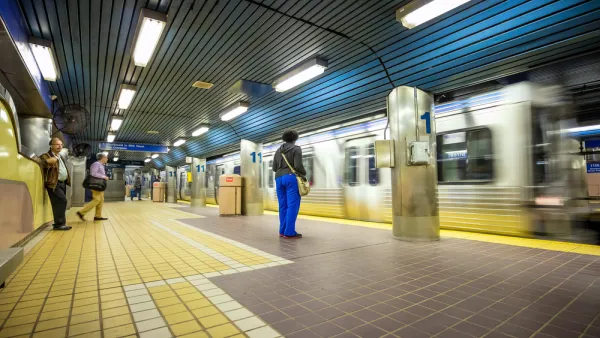
Could the Philadelphia Transit Strike Determine Who Becomes the Next President?
Hundreds of thousand of bus, trolley and subway riders (and potential voters) in Philadelphia have been left to find alternative means of transportation since Nov. 1 due to a strike by the local Transport Workers Union who work for SEPTA.
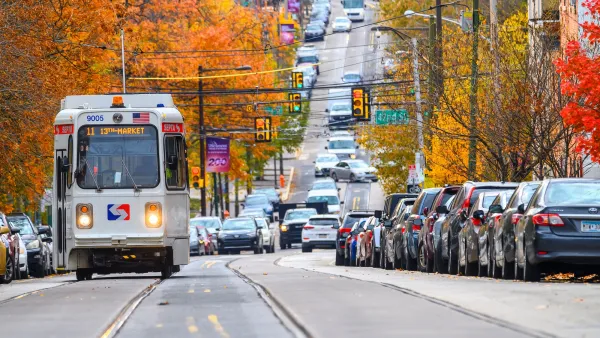
SEPTA Narrowly Avoids Strike, Walkout Still Possible
Negotiations continue this week between SEPTA officials and union leaders.
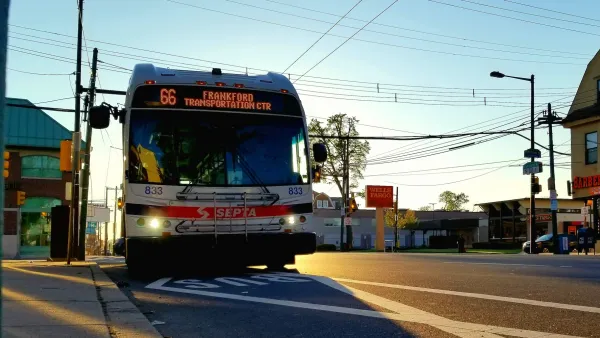
SEPTA's bus-mounted lane enforcement cameras cut travel times by up to 6%
The AI-assisted cameras have issued nearly 200,000 citations to drivers blocking bus lanes.

Planetizen Federal Action Tracker
A weekly monitor of how Trump’s orders and actions are impacting planners and planning in America.

Amtrak, CN end decades-long dispute with eight-year agreement
The new operating agreement establishes an updated framework for the companies to work together, including processes to resolve disputes.

Judges permit Denver to divert 77,000 acre feet from the Colorado River for reservoir expansion
Overuse and climate change have caused the Colorado River’s water levels to plummet.

NYC DOT wants faster, more permanent street upgrades
The city is examining ways to build more concrete infrastructure without getting entangled in 'decades-long' projects.

'Something we’ve never seen before:' rising utility rates could strain city finances nationwide
Data centers, climate change and other factors have caused utility rates in the United States to increase by 38% since 2020.

Trump to overrule local leaders, lease millions of acres of America’s Pacific Island territories’ seafloors to mining companies
International law says that the Indigenous people of America’s territories have a right to prior and informed consent regarding projects that impact their countries.

FREE Course: Walkable City 1: Why Walkability?
After describing his path towards focusing on walkability as the essence of good planning, Jeff Speck marches through his five principal reasons for making more walkable places.
Reinventing Malls: Planning Alchemy—Turning Gray Fields Into Gold
The course focuses on the opportunities and imperatives that shape reinvention of mall sites.

Harvard University Graduate School of Design
KFH Group Inc.
Greater Baltimore Committee
The Architects Foundation
University of Cincinnati Online
The Pocatello Development Authority
The Urban Renewal Agency of the City of Pocatello