While the U.S. District Attorney has stated that he would not target Christie, that hasn't stopped other courts from probing. The Bergen County Municipal Court has issued a summons for Christie relating to the closure of GW Bridge access lanes.


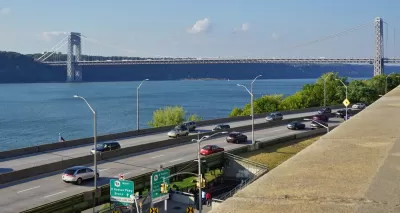
The Sept. 9, 2013 closure of two access lanes from the George Washington Bridge to Fort Lee, supposedly because the Democratic mayor of Fort Lee, Mark Sokolich, chose not to endorse the Republican governor in his 2013 reelection to a second term, has become known as Bridgegate. It is the subject of a federal investigation by U.S. Attorney Paul J. Fishman held at the U.S. District Court for the District of New Jersey in Newark. That trial is in its third week.
Thanks to a citizen activist, the venue now includes the Bergen County Municipal Court in Hackensack.
"A New Jersey municipal court judge issued a summons for New Jersey Gov. Chris Christie (R) on Thursday [Oct. 13], seemingly in relation to Christie’s alleged involvement to the closure of two lanes on the George Washington Bridge in 2013 in a supposed act of political retaliation," reports Sam Levine, associate politics editor for The Huffington Post.
Roy McGeady, presiding judge of the municipal courts of Bergen County, issued the summons, in what could become a new state prosecution. The summons will require Christie to appear in court but does not give law enforcement the authority to arrest him. The case will now go to the Bergen County prosecutor’s office, which will determine whether to indict Christie, NBC New York reported.
The summons follows from a "complaint by Bill Brennan, a retired Teaneck [Bergen County] firefighter and citizen activist, [who] alleges that Christie knew of the closures while they were happening and should have halted them," reports Myles Ma of NJ Advance Media for NJ.com.
He alleges that the governor's inaction constitutes second-degree official misconduct, a charge punishable by five to 10 years in prison.
"I'm satisfied that there's probable cause to believe that an event of official misconduct was caused by Gov. Christie," Municipal Presiding Judge Roy McGeady said. "I'm going to issue the summons."
Brennan's complaint is based on what the federal investigation revealed, specifically the "testimony from David Wildstein, a Christie appointee at the Port Authority who pleaded guilty to his role in the scandal," reports Ma. That investigation is targeting two members of Christie's staff, but not the governor himself.
Wildstein has said in his testimony that he discussed the plot with multiple members of Christie's senior staff before and during the lane closures, which he said was political retribution against Fort Lee Mayor Mark Sokolich for not endorsing the governor in his reelection campaign.
Wildstein also testified that Christie was told about the gridlock at a 9/11 memorial service, as the lanes remained closed in Fort Lee. Brennan says Christie had a legal obligation to stop the lane closures at that point.
Ma reports on how key legislative leaders are reacting to the new development. The state legislature had initially investigated the lane closures, but no actions were taken. This move to a municipal court to determine Gov. Christie's role comes unexpectedly, and judging from the manner it was received by members of the public at McGeady's court, it will be viewed quite favorably.
Read the full story: Judge Issues Summons For Chris Christie In Potential New Bridgegate Case
Bridgegate Winding Down
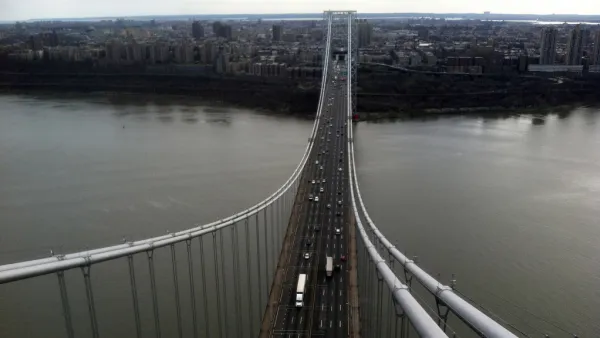
N.J. Gov. Chris Christie was never charged in the scandal that shut down access to the nation's busiest bridge for three days in September 2013 for political retribution. His aide and an appointment to the Port Authority were sentenced to prison.
Bridgegate Implications for New Jersey and Beyond
In The New York Times Sunday Review, Matt Katz, a political reporter for WNYC and New Jersey Public Radio, gives an update on the federal trial for 'Bridgegate' and also paints a bleak picture for New Jersey, and maybe the United States.
'Bridge-Gate' Attorneys Make Their Case: You Can't Sue Over Traffic
Attorneys representing the state of New Jersey responded to the allegations of a class action lawsuit rising from the "bridge-gate" scandal.

Desperate measures: Advocates weigh draining Lake Powell to fill Colorado River
Draining the reservoir could reduce evaporation losses by a couple hundred thousand acre-feet.

Eastern Nebraska is running out of electricity
Data centers and electrification are straining eastern Nebraska’s grid, throttling economic development.

Malls are becoming the midtowns of the future
Mall and office park redevelopments are a generational opportunity to create new nodes of urbanity.

NYC breaks ground on anti-flooding infrastructure project
New York City's new system will reduce stormwater flows to local sewers by 90%.

One Kentucky town’s secret to affordable housing
The Smoketown Community Land Trust has already built seven affordable homes for community members.

Houston gains petal-shaped cooling infrastructure to make streets more ‘delightful’
The city has installed the pavilions along 15 blocks in Houston.

FREE Course: Walkable City 1: Why Walkability?
After describing his path towards focusing on walkability as the essence of good planning, Jeff Speck marches through his five principal reasons for making more walkable places.
Reinventing Malls: Planning Alchemy—Turning Gray Fields Into Gold
The course focuses on the opportunities and imperatives that shape reinvention of mall sites.

City of Rosemead
Rutgers University, Edward J. Bloustein School of Planning and Public Policy
One Hundred Miles
University of Michigan School for Environment and Sustainability (SEAS)
Hunter College, City University of New York (CUNY)
The Architects Foundation
City of Cambridge
Montrose County
The Pocatello Development Authority