N.J. Gov. Chris Christie was never charged in the scandal that shut down access to the nation's busiest bridge for three days in September 2013 for political retribution. His aide and an appointment to the Port Authority were sentenced to prison.


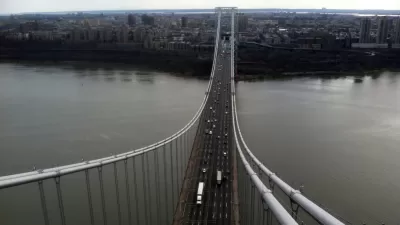
The scandal, initiated by the infamous line uttered by Bridget Anne Kelly, a deputy chief of staff to Gov. Chris Christie (R-N.J.), "Time for some traffic problems in Fort Lee," appears to be coming to a close.
The seven-week trial concluded Wednesday with "Kelly, 44, sentenced to 18 months in prison, (and) Bill Baroni, 45, who served as deputy executive director [and was Christie's top staff appointment] at the Port Authority of New York and New Jersey, sentenced to two years in prison," reports Nick Corasaniti for The New York Times.
Over five days in September 2013, the gridlock ensnared emergency vehicles, school buses and commuters, even as Mr. Baroni ignored [Fort Lee Mayor Mark] Sokolich’s messages seeking an explanation.
A third person, former Port Authority executive David Wildstein, "admitted in federal court on May 1, 2015 to conspiring with ... Baroni and ... Kelly to 'punish' Fort Lee, N.J. [Democratic] mayor Mark Sokolich for not endorsing Christie's re-election bid [in November 2013]," according to NJ.com.
Referring to the lane closures, “Those are the actions out of the playbook of some dictator of a banana republic,” Lee M. Cortes Jr., an assistant United States attorney, said in court on Wednesday. “It is incomprehensible that such actions could take place here, in the United States.”
Christie's Bridge Toll
Gov. Christie had wanted a decisive reelection victory for his presidential aspirations. Though he was never charged, he could never shake his connection to the lane closures.
From the moment Ms. Kelly’s email became public, Mr. Christie’s then soaring political ambitions were dealt a blow from which he would never recover.
Judge Susan D. Wigenton alluded to the political culture his administration created on Wednesday as she handed down her sentences against Mr. Baroni and Ms. Kelly at the federal courthouse in Newark, calling it a toxic 'with us or against us' mentality detrimental to New Jersey residents.
The bridgegate investigation uncovered an unrelated wrongdoing with a connection to Christie that brought down the Chairman of the Port Authority of New York and New Jersey.
"David Samson, a former New Jersey attorney general and a longtime friend of the governor, was charged separately and pleaded guilty to bribery for personal gain after an investigation showed that he had pressured United Airlines to resume a flight to South Carolina near where he has a home," adds Corasaniti. "Mr. Samson was sentenced this month to a year of home confinement."
The lane closings proved to be one of the biggest scandals in New Jersey history, a state that is familiar with official malfeasance.
FULL STORY: 2 Christie Allies Are Sentenced in George Washington Bridge Scandal

Bridgegate Implications for New Jersey and Beyond
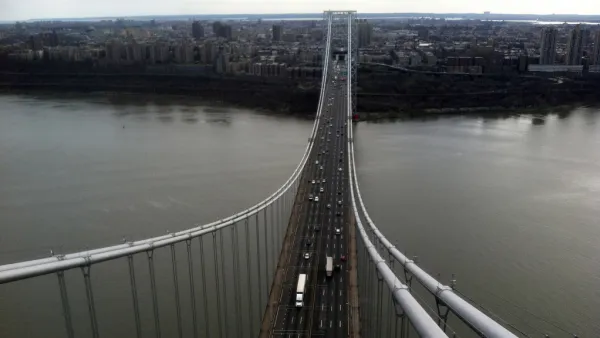
In The New York Times Sunday Review, Matt Katz, a political reporter for WNYC and New Jersey Public Radio, gives an update on the federal trial for 'Bridgegate' and also paints a bleak picture for New Jersey, and maybe the United States.
'Bridge-Gate' Attorneys Make Their Case: You Can't Sue Over Traffic
Attorneys representing the state of New Jersey responded to the allegations of a class action lawsuit rising from the "bridge-gate" scandal.
Three Charged in Gov. Christie's 'Bridgegate' Scandal
A culmination of sorts for the "Bridgegate" scandal—though three former allies of New Jersey Gov. Chris Christie have been indicted (one pleading guilty), Gov. Christie has not been implicated in the controversy.

The state-sanctioned urbicide of Austin
People don’t kill cities. Freeways do.

US to reduce Colorado River water deliveries to Mexico
A new Colorado Treaty amendment reduces Mexico’s Colorado River water allocation by 250,000 acre feet.

New Jersey’s second-largest city bans standalone data centers
Jersey City will continue to allow co-location facilities, such as those meant for research institutions that store their own data.

Amtrak not solely to blame for New Jersey commuter rail's unreliability, report finds
A new study from the Garden State Initiative found that NJ Transit’s budget grew 20% across a 4 year period, but reliability declined significantly over the same period.

EPA erases limits on planet-warming pollution from power plants
Under Monday’s plan, power plants would still have some limits on how much mercury, arsenic and other contaminants they can emit.

Phoenix announces new on-demand transit service, more frequent RAPID buses
Both new services will launch in October, and are part of Phoenix's Project Effective Access Solutions for Easing Congestion.

FREE Course: Walkable City 1: Why Walkability?
After describing his path towards focusing on walkability as the essence of good planning, Jeff Speck marches through his five principal reasons for making more walkable places.
Reinventing Malls: Planning Alchemy—Turning Gray Fields Into Gold
The course focuses on the opportunities and imperatives that shape reinvention of mall sites.

Eagle County Government
Harvard University Graduate School of Design
Nashville Planning Department
The Architects Foundation
University of Cincinnati Online
The Pocatello Development Authority
The Urban Renewal Agency of the City of Pocatello
Journal of the American Planning Association