Jeff Kightlinger, general manager of the Metropolitan Water District of Southern California, explains how the impacts of California’s historic drought are already changing the landscape of the American Southwest.


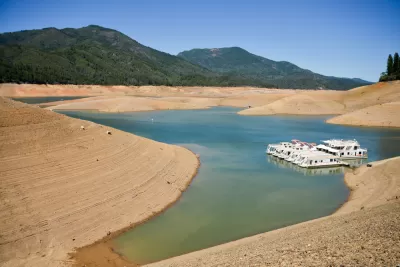
The largest water supplier in Southern California, Metropolitan Water District, oversees 19 million people, 14 cities, 11 water districts, and one county water authority. In the recent historic drought, the Metropolitan Water District (MWD) has made news for establishing the largest water conservation rebate program in the history of country: roughly $450 million in a two-year period with $350 million going to turf rebates and $100 million going to water-efficient home appliances. Going forward, MWD is looking to find even more creative solutions to conserving water and ensuring a sustainable future in Southern California.
General Manager Jeff Kightlinger joined The Planning Report to discuss how climate change impacts on California's water supply are requiring MWD to prioritize differently and move forward with zero expectations of available water.
As Kightlinger puts it simply: "climate change is very real, and we believe we are already seeing the impacts on our water supply." He explains how just the change to getting more rain and less snow can "alone can change everything from when water is available, to how we have to move it, to the best infrastructure for the job."
Kightlinger, a Governor’s appointee to the California’s Bay Delta Vision Blue Ribbon Task Force, also sheds light on MWD challenges and progress to restore habitat and increase biodiversity in the Sacramento-San Joaquin Delta. Finally, Kightlinger explains how MWD is engaging in ongoing discussions on the Colorado River, which is often referred to as the “lifeblood of the American Southwest including Mexico." The Colorado River has been in drought for the last 16 years, and Kightlinger explains that all stakeholders are all going to have to reduce our annual demands on the Colorado River. Kightlinger explains that California, Nevada, and Arizona, which make up the river’s Lower Basin, are "working on contingency plans to develop cooperative inter-state programs that will help each state mitigate and cope with the effects of the drought."
Read more about the future of Southern California's drought strategy in The Planning Report.
FULL STORY: Climate Change Impacts on California's Water Supply Require MWD to Prioritize Differently

New Drought Contingencies Triggered for Upper Colorado River States
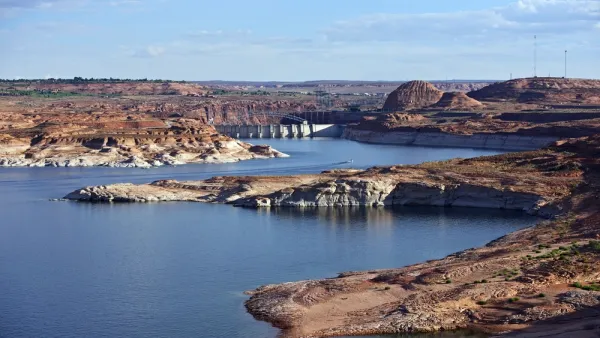
The latest Bureau of Reclamation report on water levels in Lake Powell and Lake Mead trigger new drought contingencies in Colorado, New Mexico, Utah, and Wyoming.
Drought Contingency Plan Triggered for the Colorado River
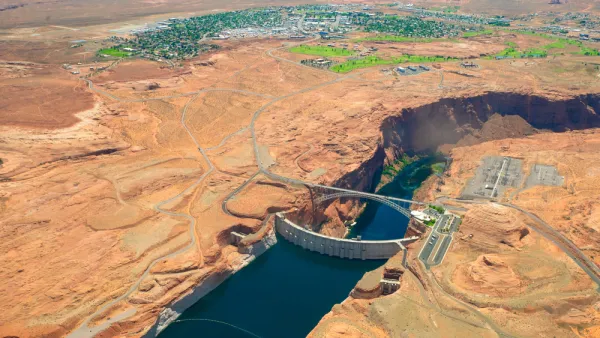
Signs of worsening drought conditions in the American West are triggering early actions for states that depend on water from the Colorado River.
California Water Suppliers Respond to Drought and Climate Change
Jeff Kightlinger, General Manager of the Metropolitan Water District of Southern California, details the ongoing preparation and response his regional water agency has championed in the face of the driest calendar year in the state's history.

Planetizen Federal Action Tracker
A weekly monitor of how Trump’s orders and actions are impacting planners and planning in America.

The state-sanctioned urbicide of Austin
People don’t kill cities. Freeways do.

US to reduce Colorado River water deliveries to Mexico
A new Colorado Treaty amendment reduces Mexico’s Colorado River water allocation by 250,000 acre feet.

Mamdani overhauls NYC's Vision Zero plan with 100 new policy goals
The overhaul aims to reduce traffic deaths and make streets safer for pedestrians, cyclists and drivers through lower speed limits, new safety infrastructure and more.

Amtrak not solely to blame for New Jersey commuter rail's unreliability, report finds
A new study from the Garden State Initiative found that NJ Transit’s budget grew 20% across a 4 year period, but reliability declined significantly over the same period.

EPA erases limits on planet-warming pollution from power plants
Under Monday’s plan, power plants would still have some limits on how much mercury, arsenic and other contaminants they can emit.

FREE Course: Walkable City 1: Why Walkability?
After describing his path towards focusing on walkability as the essence of good planning, Jeff Speck marches through his five principal reasons for making more walkable places.
Reinventing Malls: Planning Alchemy—Turning Gray Fields Into Gold
The course focuses on the opportunities and imperatives that shape reinvention of mall sites.

Eagle County Government
Harvard University Graduate School of Design
Nashville Planning Department
The Architects Foundation
University of Cincinnati Online
The Pocatello Development Authority
The Urban Renewal Agency of the City of Pocatello
Journal of the American Planning Association