The future of cap-and-trade in California may be uncertain, but the $391 million allocated Tuesday from the program for greenhouse gas-reducing transit capital projects is real. A plan to release $1.2 billion of carbon revenue has been introduced.


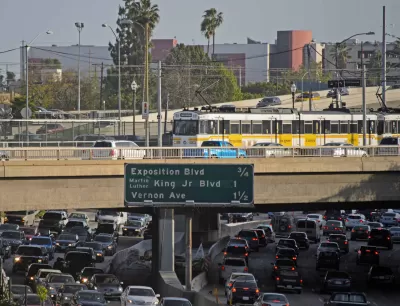
"Transportation officials have selected 14 public transit projects across California for a slice of proceeds from the state's auction of greenhouse gas pollution credits, almost $391 million in spending between now and the summer of 2018," reports John Myers, Sacramento bureau chief for the Los Angeles Times.
The list of projects unveiled Tuesday includes more than $109 million for Los Angeles' subway system, including funds for the planned connection to LAX. Another $28 million would help fund a streetcar project in Orange County linking Santa Ana and Garden Grove.
More on the grants to Metro's Red and Purple lines, and the Orange County Streetcar were reported by LA Curbed. The Purple line also received good news on the legal front posted here on Tuesday.
Another streetcar project to receive funds from the Transit and Intercity Rail Capital Program, funded by cap-and-trade auction proceeds, was the Downtown/Riverfront Streetcar Project that would serve Sacramento and West Sacramento. It received $30 million.
"In total, 41 local governments submitted more than $3 billion in grant requests," reports Tony Bizjak for The Sacramento Bee. A complete list of the awards and a detailed summary is available on the California State Transportation Agency news release.
As for other funds, "Senate leader Kevin de León is making a new effort to unsnarl a two-year budget gridlock over money generated from the state's cap-and-trade program," reports Melanie Mason, state government and politics correspondent for the Los Angeles Times.
The $1.2-billion spending plan, released Wednesday, would include money for cleaner cars, energy efficient upgrades and urban parks. [See legislation.].
California's landmark cap-and-trade program, in which businesses purchase permits to pollute, has raised more than $4 billion -- all of which must be used to fund efforts to reduce greenhouse gas emissions. But for the last two years, Gov. Jerry Brown and top lawmakers have been unable to agree on how to spend $1.4 billion generated by the program.
Mason explains the problem in a related article on the embattled program:
Sixty percent of the proceeds are directed each year to certain projects, including the bullet train, transit and affordable housing programs. The rest is haggled over in the budget process.
Also on Tuesday, the California Air Resources Board (CARB) held their quarterly auction of carbon allowances. Sales from the May auction were extremely disappointing.
Not only is the future of the only state-controlled cap-and-trade program in the U.S. uncertain, but legislation to authorize carbon reduction goals past the year 2020 is looking doubtful.
Read the full story: Almost $391 million in cap-and-trade dollars awarded to public transit projects across California

Compromise Reached on $1.4 Billion in California Cap-and-Trade Proceeds
An earlier announcement awarded almost $400 million to transit agencies, but left a larger chunk of these funds still unsettled. On Wednesday, leaders agreed on a $900 million expenditure plan to cut emissions and address social concerns.
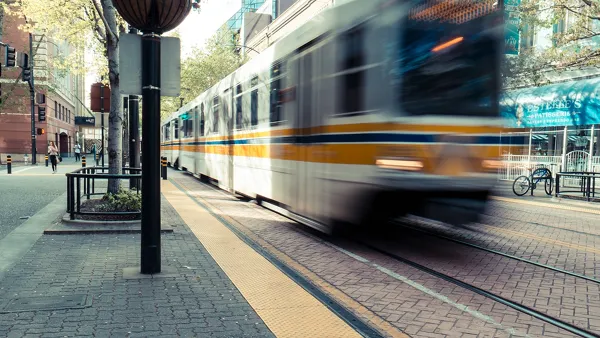
Business Owners Vote to Fund Sacramento Streetcar Operations
The two-thirds threshold proved to be no obstacle for Sacramento streetcar proponents in a special election held June 21, when at least *250 businesses owners voted to tax themselves to fund operations of the proposed streetcar.
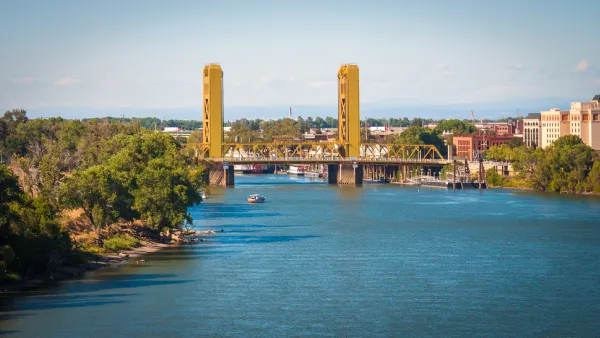
The Details of Sacramento's Proposed Downtown Streetcar Line
The cities of West Sacramento and Sacramento have high hopes for a streetcar line planned for some of the most beautiful and urban neighborhoods in the region. The Trump Administration could still change the course of the project, however.

Planetizen Federal Action Tracker
A weekly monitor of how Trump’s orders and actions are impacting planners and planning in America.

Amtrak, CN end decades-long dispute with eight-year agreement
The new operating agreement establishes an updated framework for the companies to work together, including processes to resolve disputes.

Judges permit Denver to divert 77,000 acre feet from the Colorado River for reservoir expansion
Overuse and climate change have caused the Colorado River’s water levels to plummet.

Boston has spent millions making the Green Line more accessible — and there’s no end in sight
While the city has invested millions into expanding and adding platforms to the Green Line to make it more accessible, new train cars set to arrive next year will be too tall for disabled passengers to board without raising the current platforms.

Idaho may see an 18% drop in federal surface transit funding — the largest estimated cut in the US
Transit systems in rural communities are much more reliant on federal funding to provide their services.

How ‘post-disaster gentrification’ alters neighborhoods after natural calamities
After hurricanes, fires or other calamities, the original residents of a community are often replaced by younger, wealthier residents.

FREE Course: Walkable City 1: Why Walkability?
After describing his path towards focusing on walkability as the essence of good planning, Jeff Speck marches through his five principal reasons for making more walkable places.
Reinventing Malls: Planning Alchemy—Turning Gray Fields Into Gold
The course focuses on the opportunities and imperatives that shape reinvention of mall sites.

City of Wisconsin Rapids
Harvard University Graduate School of Design
KFH Group Inc.
The Architects Foundation
University of Cincinnati Online
The Pocatello Development Authority
The Urban Renewal Agency of the City of Pocatello