The Republican and Democratic parties both claim to understand the importance of infrastructure, but they show support in vastly different ways.


Yonah Freemark digs into the information about what each of the two major political parties plan to do about infrastructure in the United States. On one side, the Republican Party platform [pdf] is pushing for a more limited federal role. On the other side, both the Democratic Party platform [pdf] and Hillary Clinton have pushed for expanded investments in infrastructure.
To create the analysis, Freemark digs into the official party platforms of both parties, together with an infrastructure plan released by the Hillary Clinton campaign. The campaign of Donald Trump has not released a similar infrastructure plan. Freemark then organizes the analysis on several themes, namely the role of the federal government, funding, public transportation and intercity rail, non-motorized modes, climate change, and project management. Freemark also adds a brief description of the policy agenda on these issues from the Libertarian and Green parties.
Read the full story: Both parties claim support for investing in infrastructure. But how will they do it?
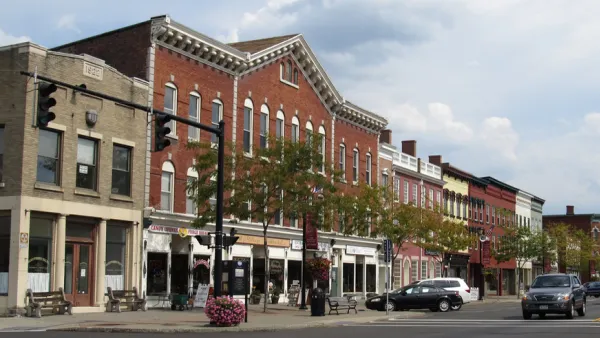
Does Place Matter Anymore? Cities and the 2016 Election
Cities have appeared to figure very little into the presidential election up to now. To get a sense of whether this impression is accurate, I spent some time looking at the two party platforms, and the two candidate's websites.
Do Republicans Hate Cities?
Author Kevin Baker offers a historical perspective of the Republican Party's shift to the "anti-urban party".

Executive Order Pauses Infrastructure, Clean Energy Funds
Trump’s order puts a freeze on unspent funding from the Inflation Reduction Act and the Infrastructure Investment and Jobs Act.

Planetizen Federal Action Tracker
A weekly monitor of how Trump’s orders and actions are impacting planners and planning in America.

Washington state to charge fee to drivers with fuel-efficient cars
Revenue from the fee will go towards supporting the state’s highways.
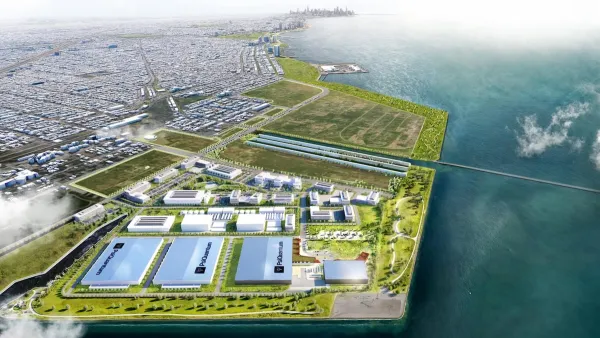
Illinois considers spending $1 billion in taxpayer money on data center
A quantum computing campus and data center are currently under construction in Chicago.

Did data centers change how voters cast their ballots?
Texas, Ohio, and Georgia all flipped party control. But in rural counties, the effect of local data centers was mixed.

Amtrak invests in eight new Airo trainsets
The new trainsets will begin serving passengers in 2031.

HUD to end aid for mixed-immigration-status households
The new rule is projected to impact 80,000 people, nearly half of whom are children.

FREE Course: Walkable City 1: Why Walkability?
After describing his path towards focusing on walkability as the essence of good planning, Jeff Speck marches through his five principal reasons for making more walkable places.
Reinventing Malls: Planning Alchemy—Turning Gray Fields Into Gold
The course focuses on the opportunities and imperatives that shape reinvention of mall sites.

City of Charlotte
City of Rosemead
Rutgers University, Edward J. Bloustein School of Planning and Public Policy
University of Michigan School for Environment and Sustainability (SEAS)
Hunter College, City University of New York (CUNY)
The Architects Foundation
University District Partnership