They could opt for a one percent, 30-year infrastructure tax, a .75 percent, 20-year transportation sales tax, approve both, or reject both. The two competing measures arise from differences between the county's 31 cities and county commissioners.


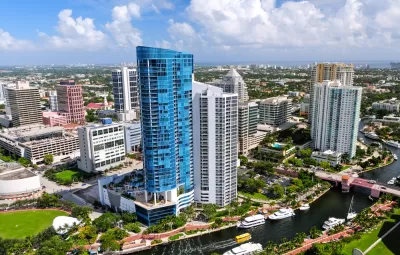
It's turning into a referendum of sorts between city leaders and county commissioners in Broward County, Florida, home to Fort Lauderdale, Pembroke Pines, and Hollywood, its three most populous cities. The county, with an estimated 2015 population of 1,896,425, is the second most populous in the state after Miami-Dade.
The county's 31 cities, acting as members of the Broward Metropolitan Planning Organization (MPO), opted in May to place a one percent, 30-year infrastructure sales tax that cities, with 60 percent going to them; the remainder to the county. "It can be used on curbs, gutters, flood control, fire trucks, city buildings, preparing for climate change and improving local roads," writes Brittany Wallman, the Sun Sentinel's county government reporter.
Tamarac Mayor Harry Dressler argued that aging infrastructure is a national, state, county and city crisis. He said the infrastructure surtax would allow cities to reduce property tax rates, to reduce the tax burden on homeowners.
Using a countywide sales tax to reduce local property taxes might seem incompatible for a regional transportation planning organization that lists its vision to "transform transportation in Broward County to achieve optimum mobility with emphasis on mass transit...."
As noted back in April, the effort to place a sales tax measure before voters began with a 7-1 vote by the Broward County Commission to fund countywide road and transit improvements. Ultimately that did not sit well with MPO members, as noted on May 6, who wanted a greater share of the 70-30, county-cities split.
Ignoring MPO-member pleas to avoid placing a competing measure on the ballot, county commissioners voted 5-3 on May 24 to place a .75 percent, 20-year transportation tax on the ballot.
Unlike the previously proposed transportation tax, this one would flow 100 percent to the county, Transportation Director Chris Walton said, and would enable the buildout of 32 miles of light rail*. [Broward County Commissioner Tim Ryan, chief architect of the transportation tax,] said it also would be used for enhanced bus system, traffic light synchronization, improvement and expansion of regional roads, greater community bus service and upgrades to school safety zones.
A final vote for the city-sponsored, or MPO, tax is needed June 14, the county attorney's office said, adds Wallman.
The county sales tax now is 6 percent. Depending on the outcome of November's vote, the tax will:
- Increase to 6.75 percent
- Increase to 7.00 percent
- Increase to 7.75 percent
- Remain at 6.00 percent
Broward County rail service
*This correspondent couldn't identify the light rail line referenced above by Transportation Director Walton. Broward County is served by the commuter rail line, Tri-Rail. Planetizen indicated last September that new service between between Miami and Palm Beach was moving forward.
There is also a Tri-Rail Coastal Link "dedicated to reintroducing passenger rail service to the historic downtowns of
South Florida along the Florida East Coast Rail Corridor." The new commuter service will run on tracks parallel to I-95 on the eastern side. Current service is on tracks on the western side.
The South Florida Regional Transportation Authority (SFRTA) has completed the design phase for a 2.7 mile streetcar called the Wave for Fort Lauderdale. "The first phase includes a 1.4 mile downtown loop scheduled to open in 2016," per Wikipedia.
Finally, All Aboard Florida, now called Brightline, is a 'higher-speed', 240-mile intercity rail line between Miami and Orlando, with service between Miami, Fort Lauderdale and West Palm Beach projected to start next year.
Hat tip to Planetizen reader David Daniels.
FULL STORY: Two proposed sales tax hikes headed to November ballot in Broward

Broward County Voters Approve One Sales Tax Measure but Reject Another; Neither Passes
Had it not been for the political compromise that enabled it to be placed on the ballot, voters would have narrowly passed a county transportation sales tax measure. In neighboring Palm Beach County, a straight-forward sales tax measure passed.
Roads Come Before Transit for Broward, Florida Metropolitan Planning Organization
County commissioners had approved a one-cent sales tax measure to improve roads and transit throughout the county, but MPO members, dominated by city representatives, prefer an undefined infrastructure tax with a majority of funds returned to cities.
Higher Cost Estimates Could Doom Fort Lauderdale Streetcar
While the 2.8 mile Wave Streetcar project has secured $195 million, proposals for design and construction are coming in higher than expected, which would leave Broward County and Fort Lauderdale responsible for half the extra cost.

Planetizen Federal Action Tracker
A weekly monitor of how Trump’s orders and actions are impacting planners and planning in America.

The state-sanctioned urbicide of Austin
People don’t kill cities. Freeways do.

US to reduce Colorado River water deliveries to Mexico
A new Colorado Treaty amendment reduces Mexico’s Colorado River water allocation by 250,000 acre feet.

Mamdani overhauls NYC's Vision Zero plan with 100 new policy goals
The overhaul aims to reduce traffic deaths and make streets safer for pedestrians, cyclists and drivers through lower speed limits, new safety infrastructure and more.

Amtrak not solely to blame for New Jersey commuter rail's unreliability, report finds
A new study from the Garden State Initiative found that NJ Transit’s budget grew 20% across a 4 year period, but reliability declined significantly over the same period.

EPA erases limits on planet-warming pollution from power plants
Under Monday’s plan, power plants would still have some limits on how much mercury, arsenic and other contaminants they can emit.

FREE Course: Walkable City 1: Why Walkability?
After describing his path towards focusing on walkability as the essence of good planning, Jeff Speck marches through his five principal reasons for making more walkable places.
Reinventing Malls: Planning Alchemy—Turning Gray Fields Into Gold
The course focuses on the opportunities and imperatives that shape reinvention of mall sites.

Eagle County Government
Harvard University Graduate School of Design
Nashville Planning Department
The Architects Foundation
University of Cincinnati Online
The Pocatello Development Authority
The Urban Renewal Agency of the City of Pocatello
Journal of the American Planning Association