Several decades ago, public transit was a distinctly low-quality way of getting around. Now, if we can believe TV and movies depicting the near future, all that has changed. Transit has become aspirational.


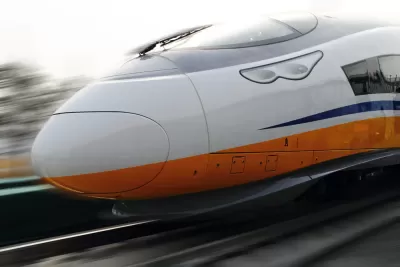
Asian and European entertainment often depicts subways, buses, even high-speed rail as part of the fabric of daily living, without comment or irony. We aren't quite there yet, but according to Alex Marshall, the American consciousness around public transportation has shifted since the 1970s. Now it's cool.
Marshall begins with a quote from Robert Pirsig's Zen and the Art of Motorcycle Maintenance (published in 1974), classifying public transit alongside G.I. shoes and basic cereals: as the essence of "square," of "bad quality."
That perception has changed. "Pirsig's comment highlighted for me the gradual transformation in how we regard public transportation. It is now seen as part of an urban lifestyle, and this has affected how it is portrayed in popular culture. Public transportation now symbolizes not a quality-less realm but the contrary, a sign of the good life or a thrilling component of a possible future."
In modern movies and TV like "Human Target," "Mr. Robot," and Her, the near future is a time of gleaming trains. To many of us, good public transportation has become something to aspire to. "Because it's about more than tracks and trains. It's about the definition of how you want your city to be; it's about quality in the Pirsig sense."
Read the full story: From 'Her' to 'Mr. Robot': Movies and TV Make Public Transit Hip
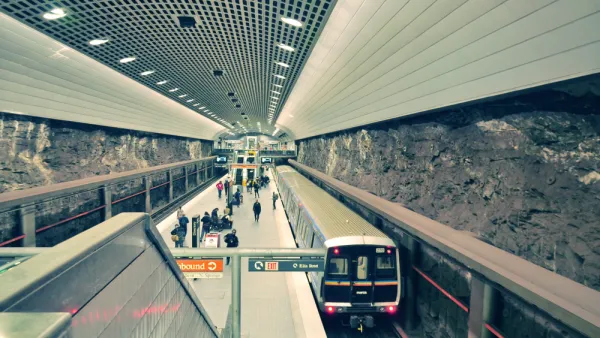
Atlanta Transit Agency Issues $1.3 Billion Budget
The Metropolitan Atlanta Rapid Transit Authority says it is ‘well-positioned’ to resume pre-pandemic operations and make capital improvements in the coming years.
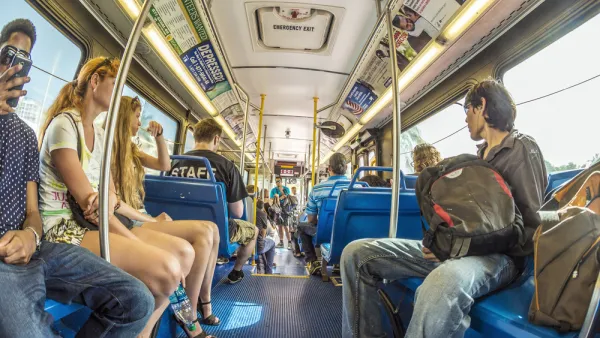
To Fight Climate Change, Support Public Transit
Electric cars may garner a lot of attention these days, but significantly reducing carbon emissions and urban congestion means investing in high-quality mass transit.
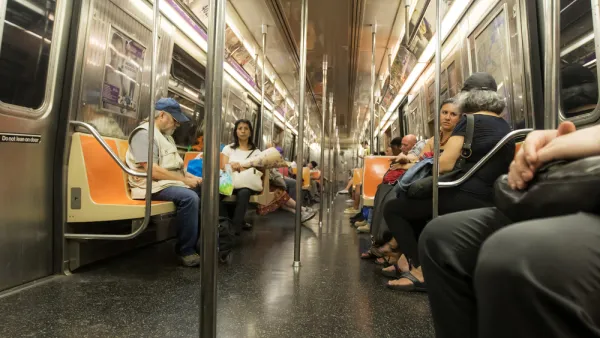
Transit Riders Want An Improved Experience Post-Pandemic, Survey Says
A survey of public transit users indicates riders want to see more tech features that improve their experience, such as trip planning and improved payment platforms.

Planetizen Federal Action Tracker
A weekly monitor of how Trump’s orders and actions are impacting planners and planning in America.

Washington state to charge fee to drivers with fuel-efficient cars
Revenue from the fee will go towards supporting the state’s highways.

Illinois considers spending $1 billion in taxpayer money on data center
A quantum computing campus and data center are currently under construction in Chicago.

Senate passes bill overhauling permitting
The bill still needs to pass the House.

Did data centers change how voters cast their ballots?
Texas, Ohio, and Georgia all flipped party control. But in rural counties, the effect of local data centers was mixed.

Amtrak invests in eight new Airo trainsets
The new trainsets will begin serving passengers in 2031.

FREE Course: Walkable City 1: Why Walkability?
After describing his path towards focusing on walkability as the essence of good planning, Jeff Speck marches through his five principal reasons for making more walkable places.
Reinventing Malls: Planning Alchemy—Turning Gray Fields Into Gold
The course focuses on the opportunities and imperatives that shape reinvention of mall sites.

City of Charlotte
City of Rosemead
Rutgers University, Edward J. Bloustein School of Planning and Public Policy
University of Michigan School for Environment and Sustainability (SEAS)
Hunter College, City University of New York (CUNY)
The Architects Foundation
University District Partnership